- English
- French
- German
- Portuguese
- Spanish
- Russian
- Japanese
- Korean
- Arabic
- Greek
- German
- Turkish
- Italian
- Danish
- Romanian
- Indonesian
- Czech
- Afrikaans
- Swedish
- Polish
- Basque
- Catalan
- Esperanto
- Hindi
- Lao
- Albanian
- Amharic
- Armenian
- Azerbaijani
- Belarusian
- Bengali
- Bosnian
- Bulgarian
- Cebuano
- Chichewa
- Corsican
- Croatian
- Dutch
- Estonian
- Filipino
- Finnish
- Frisian
- Galician
- Georgian
- Gujarati
- Haitian
- Hausa
- Hawaiian
- Hebrew
- Hmong
- Hungarian
- Icelandic
- Igbo
- Javanese
- Kannada
- Kazakh
- Khmer
- Kurdish
- Kyrgyz
- Latin
- Latvian
- Lithuanian
- Luxembou..
- Macedonian
- Malagasy
- Malay
- Malayalam
- Maltese
- Maori
- Marathi
- Mongolian
- Burmese
- Nepali
- Norwegian
- Pashto
- Persian
- Punjabi
- Serbian
- Sesotho
- Sinhala
- Slovak
- Slovenian
- Somali
- Samoan
- Scots Gaelic
- Shona
- Sindhi
- Sundanese
- Swahili
- Tajik
- Tamil
- Telugu
- Thai
- Ukrainian
- Urdu
- Uzbek
- Vietnamese
- Welsh
- Xhosa
- Yiddish
- Yoruba
- Zulu
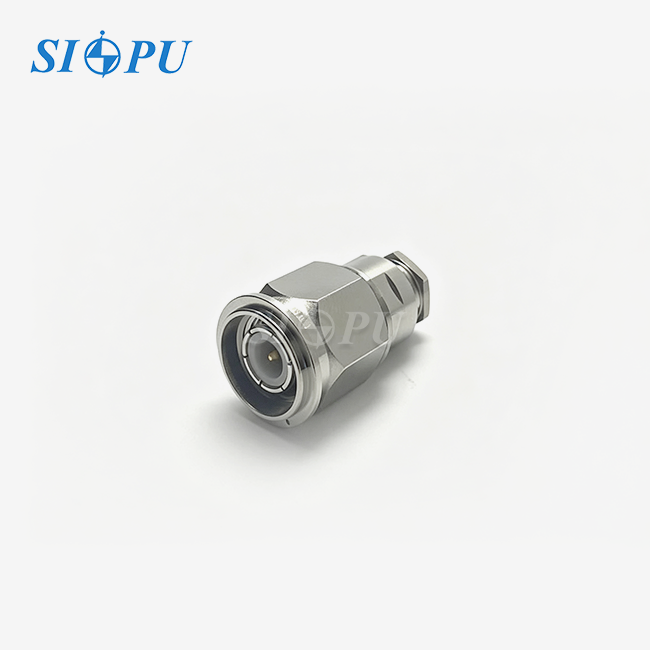
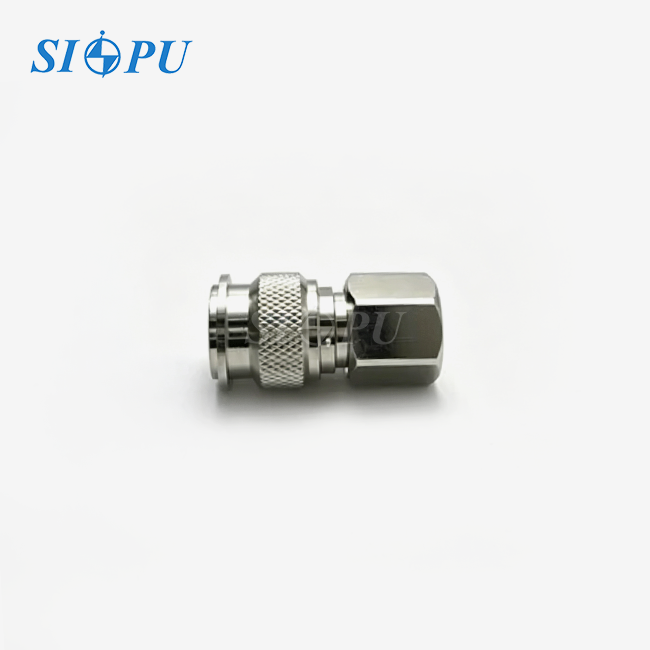
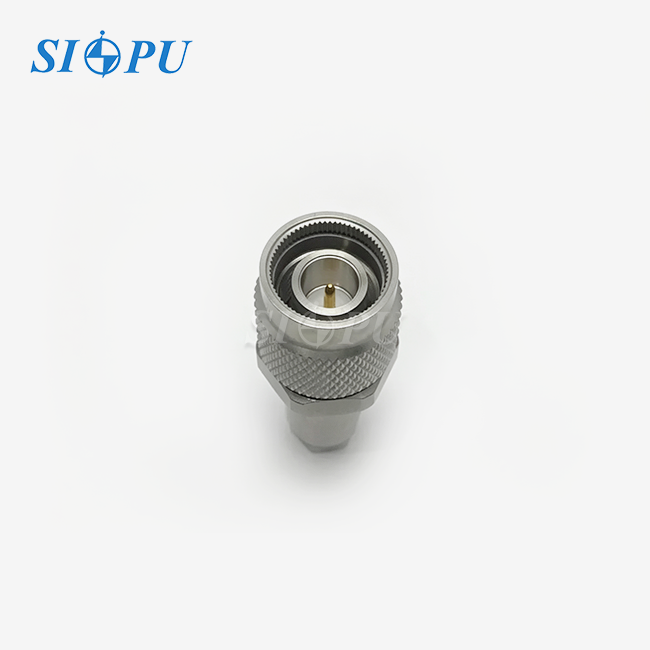
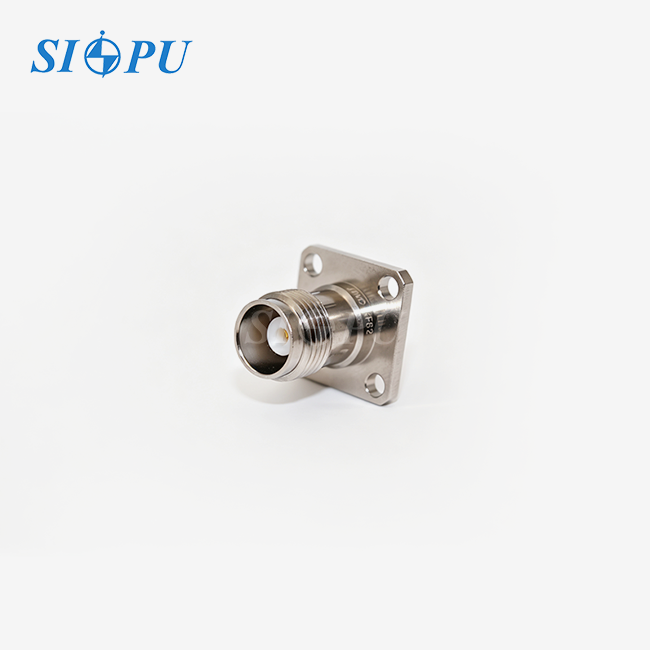
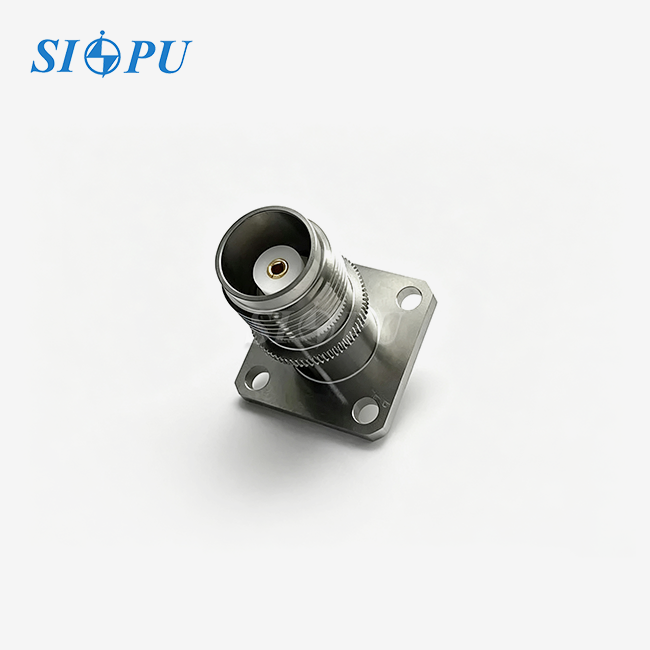
TNC Connector Flange
Characteristic Impedance: 50 Ω
Mounting Method: Flange-mount structural design
Cable Compatibility: Compatible with RG178/U cable
Manufacturing Capability: Supporting both prototype samples and volume production
Price Advantage: In-house manufacturing with cost-effective pricing
Service Advantage: High-precision RF testing ensures reliable electrical performance
TNC Connector Flange - High-Performance RF Panel Mount Solution
SIPU RF Technology manufactures precision-engineered TNC Connector Flange components designed for secure panel and bulkhead installations in demanding RF environments. Our SIPU-TNC-KF2 model integrates a threaded Neill-Concelman interface with robust flange mounting, delivering superior mechanical stability across DC-11GHz frequency range.
The product offers 50Ω characteristic impedance and ≤1.3 VSWR, ensuring excellent signal integrity in extreme vibration environments. The flange construction ensures excellent grounding performance and hermetic sealing for environmental protection.
Our connection is made of military-grade materials (brass outer conductor with a nickel coating, beryllium bronze center contact with gold plating, and PTFE dielectric) and can operate from -65℃ to +125℃. This long term reliable panel mount system is designed for 500 mating cycles and 1,500V dielectric withstanding voltage for telecommunications, aerospace and defence applications.
Technical Specifications
| Parameter | Value |
|---|---|
| Model | SIPU-TNC-KF2 |
| Characteristic Impedance | 50Ω |
| Frequency Range | DC-11GHz |
| VSWR | ≤1.3 |
| Insertion Loss | ≤0.06√F(GHz)dB |
| Dielectric Withstanding Voltage | 1,500V |
| Insulation Resistance | ≥5,000MΩ |
| Contact Resistance (Center) | ≤2.0mΩ |
| Contact Resistance (Outer) | ≤0.2mΩ |
| Operating Temperature | -65℃ to +125℃ |
| Mating Cycles | 500 times |
| Interface Configuration | Straight, TNC Female |
| Cable Compatibility | RG178/U |
| Outer Conductor Material | Brass with nickel plating |
| Center Conductor Material | Beryllium bronze with gold plating |
| Dielectric Material | PTFE |
What Makes TNC Connector Flange Essential
The TNC Connector Flange combines a threaded coupling mechanism with integrated mounting plate, addressing critical installation challenges where standard connectors fail. Unlike bayonet-style alternatives, the threaded design prevents accidental disconnection under shock and vibration.
The flange mounting provides multiple advantages. It establishes a direct chassis ground path, reducing electromagnetic interference. The plate enables O-ring integration for IP-rated environmental sealing. And it distributes mechanical stress across mounting points rather than concentrating load on the connector body.
This design proves invaluable in applications where connector reliability directly impacts system performance. The secure attachment eliminates intermittent connections that plague vibration-prone installations.
Key Performance Advantages
Our flange-mount design ensures rock-solid installation for equipment panels and enclosure walls. The precision-machined flange provides consistent mounting torque and prevents rotation during cable attachment.
Compatible with RG178/U coaxial cable, this connector delivers stable impedance matching and minimal signal reflection. The controlled-tolerance interface maintains electrical performance across the entire 11GHz operational bandwidth.
The threaded TNC interface offers superior vibration resistance compared to quick-disconnect alternatives. This makes it ideal for mobile platforms, field equipment, and installations subject to mechanical stress.
Compact dimensions allow dense panel layouts without sacrificing accessibility. You can maximize connector density in test racks, communication systems, and instrumentation enclosures.
Quality Assurance Process
Each production batch undergoes comprehensive quality verification to ensure consistent performance. Our inspection protocols focus on critical parameters that determine real-world reliability.

Electrical testing utilizes precision instrumentation to verify dielectric withstanding voltage and insulation resistance. Every connector meets the specified 1,500V breakdown threshold and ≥5,000MΩ isolation before shipment.
Plating quality receives special attention through batch testing. We measure coating thickness and adhesion strength to guarantee corrosion resistance and low contact resistance over the connector's service life.
Atch‑focused inspection is performed on plating quality, including plating thickness, adhesion strength and corrosion‑resistance testing, to guarantee corrosion resistance and low contact resistance throughout the product’s service life.
Mechanical inspection validates dimensional accuracy and mating interface quality. Our process ensures proper thread engagement and center contact alignment for optimal RF performance.

Primary Application Environments
Aerospace and avionics systems depend on flange-mount connectors for flight control and cockpit instrumentation. The secure mounting withstands extreme vibration while maintaining signal integrity in safety-critical applications.
Outdoor telecommunications infrastructure utilizes these connectors as weatherproof bulkhead entry points. When paired with appropriate sealing, the flange enables IP67/IP68 protection for 5G base stations and macro cell installations.
Military defense equipment incorporates flange-mounted connectors in tactical radios and electronic warfare systems. The multi-point mounting provides structural integrity to survive field transport and combat conditions.
Test and measurement laboratories benefit from the stable panel mounting in RF analyzers and signal generators. The consistent mechanical interface ensures repeatable measurements and simplified equipment configuration.

Frequently Asked Questions
Q:What advantages does the threaded TNC interface provide over BNC connectors?
A:The threaded coupling provides better stability of the connection and resistance to vibration. The BNC bayonet mount provides for rapid connection but might loosen with mechanical force. TNC threads provide constant contact pressure, which improves high frequency performance and prevents inadvertent disconnection in harsh conditions.
Q:Flange mounting improves connection durability by:
A:Flange attachment spreads mechanical stresses across a number of mounting points instead of straining the body of the connection. This eliminates wear on the interface and prevents the housing from rotating while attaching the cable. This direct chassis contact also provides improved electrical grounding and the ability to seal against the environment.
Q:What temperature extremes can this connector withstand?
A:Our product operates reliably from -65℃ to +125℃. The PTFE dielectric maintains stable electrical properties across this range, while the metal components resist thermal expansion issues that compromise connection quality.
Q:Can I use this connector for outdoor installations?
A:Yes, when properly sealed with compatible gaskets. The flange design accommodates O-ring installation between the mounting plate and equipment panel, enabling weather-resistant assemblies suitable for outdoor telecommunications and industrial applications.
Q:What is the expected service life?
A:The connector is rated for 500 mating cycles under normal operating conditions. Actual service life depends on installation quality, environmental exposure, and handling practices. Proper torque application and protection from contamination maximize operational longevity.

Ready to Upgrade Your RF Connections?
Contact our TNC Connector Flange's team at info@sipuconn.com for application support, custom specifications, or sample requests.
Contact us directly for customized solutions, quotations and long-term strategic cooperation.