- English
- French
- German
- Portuguese
- Spanish
- Russian
- Japanese
- Korean
- Arabic
- Greek
- German
- Turkish
- Italian
- Danish
- Romanian
- Indonesian
- Czech
- Afrikaans
- Swedish
- Polish
- Basque
- Catalan
- Esperanto
- Hindi
- Lao
- Albanian
- Amharic
- Armenian
- Azerbaijani
- Belarusian
- Bengali
- Bosnian
- Bulgarian
- Cebuano
- Chichewa
- Corsican
- Croatian
- Dutch
- Estonian
- Filipino
- Finnish
- Frisian
- Galician
- Georgian
- Gujarati
- Haitian
- Hausa
- Hawaiian
- Hebrew
- Hmong
- Hungarian
- Icelandic
- Igbo
- Javanese
- Kannada
- Kazakh
- Khmer
- Kurdish
- Kyrgyz
- Latin
- Latvian
- Lithuanian
- Luxembou..
- Macedonian
- Malagasy
- Malay
- Malayalam
- Maltese
- Maori
- Marathi
- Mongolian
- Burmese
- Nepali
- Norwegian
- Pashto
- Persian
- Punjabi
- Serbian
- Sesotho
- Sinhala
- Slovak
- Slovenian
- Somali
- Samoan
- Scots Gaelic
- Shona
- Sindhi
- Sundanese
- Swahili
- Tajik
- Tamil
- Telugu
- Thai
- Ukrainian
- Urdu
- Uzbek
- Vietnamese
- Welsh
- Xhosa
- Yiddish
- Yoruba
- Zulu
SMP Limited Detent Connector: Why It Matters in High Frequency Systems
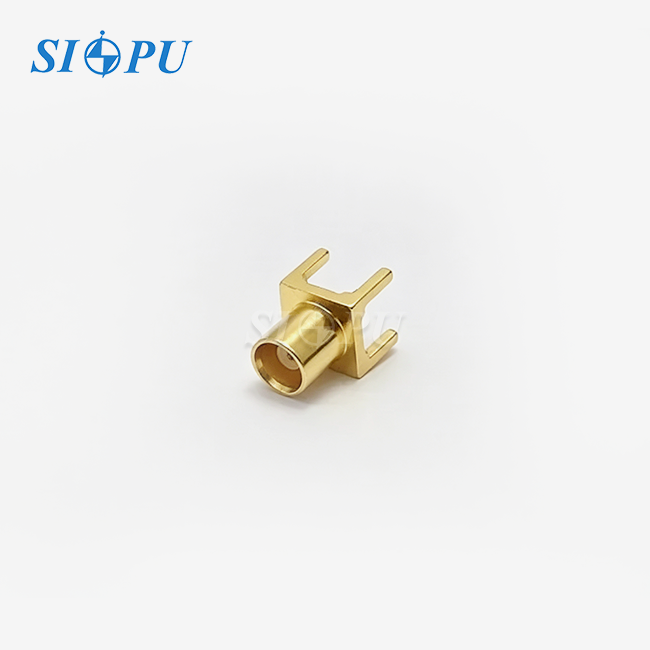
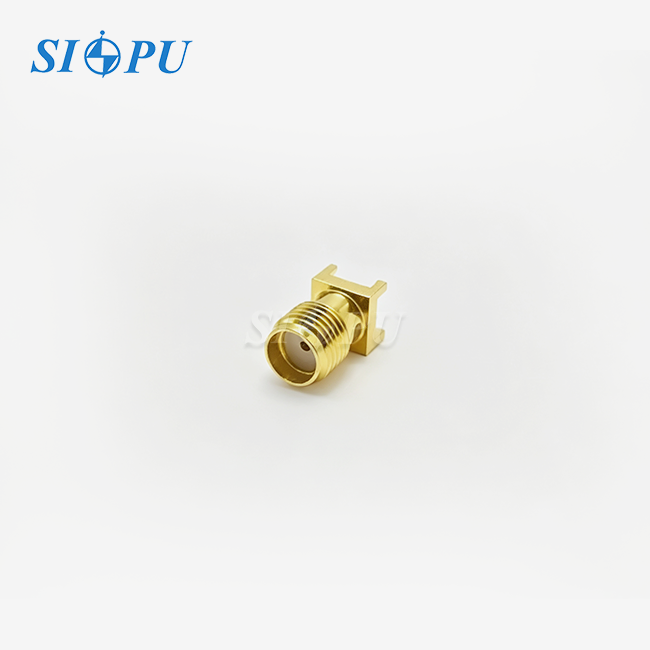
The SMP Male Limited Detent PCB Connector is an important part for making high-frequency systems that need to be both mechanically and signal-reliably reliable. This specialised RF connection is a perfect mix of precise engineering and useful functionality. It works perfectly in telecommunications, aircraft, defence, test and measurement, and medical devices. Its strong construction and balanced retention mechanism make it easy for procurement managers and RF engineers to choose the right interconnect solutions for mission-critical systems that work from DC to 40 GHz.
Understanding SMP Limited Detent Connectors: Specifications and Functionality
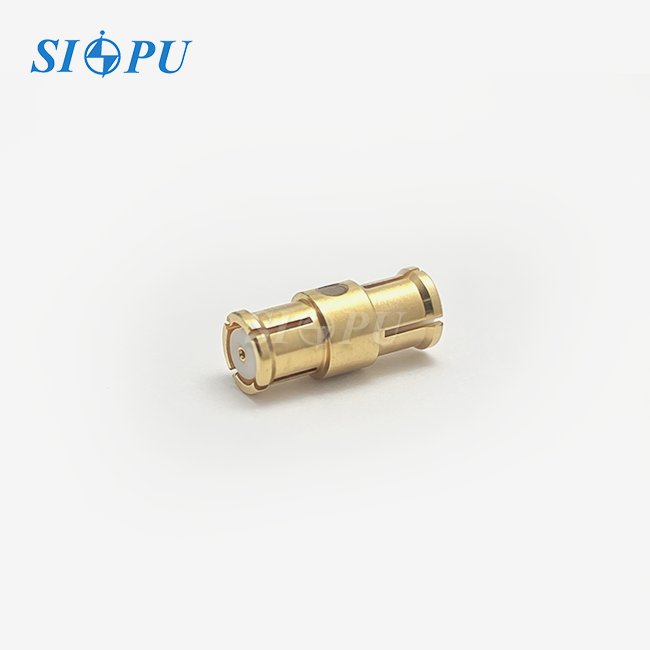
The SMP Male Limited Detent PCB Connector is a better way to create high-frequency connections. This type of connector is different from most push-on interfaces because it has a controlled retention force that keeps links safe without the need for threaded coupling systems.
Technical Specifications That Define Performance
The SIPU-SMP-JHD connection has a characteristic impedance of 50Ω from DC to 40 GHz, which means it doesn't change. This stability makes sure that there is little signal reflection and the most power flow. As part of the electrical performance specs, there is a VSWR of ≤1.10 + 0.01f (GHz), which means that the return loss is very good. Insertion loss stays incredibly low at ≤0.07√f (GHz) dB, so even at higher frequencies, the signal strength stays the same.
Contact resistance is a very important part of keeping the signal quality high. The center contact has a resistance of ≤6.0 mΩ and the outer contact stays at ≤2.0 mΩ. Both contacts are gold-plated to keep them from rusting over time. The dielectric can withstand voltages of up to 500 V, which is enough safety for high-power uses. Insulation resistance is higher than 5,000 MΩ, which stops current leakage that could hurt system performance.
Materials Engineered for Reliability
The choice of materials has a direct effect on how reliable something will be over time in harsh settings. The middle conductor is made of beryllium bronze that has been plated with gold. This material has great spring properties and good conductivity. This combination makes sure that the contact pressure stays the same for the connector's 500+ mating cycles.
The upper conductor can be set up in two different ways, based on the needs of the application. Standard versions use passivated stainless steel, which is very resistant to corrosion and lasts a long time mechanically. Copper alloy construction with gold plating is an option that improves conductivity for uses where lower insertion loss is worth the extra cost.
In the temperature range of -65°C to +125°C, PTFE dielectric material keeps its electrical properties stable. This fluoropolymer's dielectric constant changes very little with temperature, so its resistance properties stay the same no matter what the world is like. The natural chemical resistance of the material keeps it from breaking down when exposed to cleaning solvents and environmental contaminants that are common in manufacturing and field deployment.
Mechanical Design Principles
The limited detent mechanism has a maximum engagement force of about 10 pounds and a minimum disengagement force of 2 pounds. This balanced method makes sure that the connections are safe, can withstand vibration and shock, and can still be serviced without special tools. The straight orientation design makes PCB planning easier and lets connectors be close together in multichannel applications.
Cup-style solder termination makes the change from connector to microstrip PCB traces work better. Parasitic capacitance and inductance that would normally hurt high-frequency performance are kept to a minimum by this design. Time Domain Reflectometry testing checks the uniformity of impedance at the PCB junction and finds any breaks that could cause unwanted reflections.
SMP Limited Detent vs Standard SMP: Performance and Application Comparison
Knowing the differences between the different types of connectors lets you make smart choices that meet the needs of your system.
Retention Mechanism Differences
Standard SMP connectors have interfaces with a smooth bore, limited detent, or full detent. Smooth bore versions don't have much retention force because they rely on the friction between the connector body and the bore. Full detent connectors have stronger locking mechanisms that need to be deliberately disengaged. This could put stress on the PCB fixing during separation.
SMP Male Limited Detent PCB Connector designs are positioned between these two options. They provide safe links that can handle a lot of vibration while still allowing separation without putting too much stress on PCB solder joints. This balance is especially useful for test systems that need to be reconfigured often or for field-deployable equipment that is likely to be damaged during transport.
Vibration and Shock Resistance
Applications in defence and aerospace need very stable mechanical systems. The limited detent interface keeps the electrical contact solid even when there is a lot of vibration, which would damage smooth bore connections. MIL-STD-202 testing confirms performance in conditions typical of installations on aircraft, vehicles, and ships.
Micro-movements that happen during vibration exposure don't cause fretting corrosion on the gold-plated contact surfaces. This makes the service life longer in places where maintaining connectors is hard or impossible, like sealed modules or installations that are far away.
Signal Integrity Considerations
When made correctly, both standard and limited detent SMP connectors keep their 50Ω impedance. The main thing that sets them apart is how often they can bond. Limited detent connections give physical input while mating, which lowers the chance of incomplete engagement that could lead to breaks in the resistance.
When the right torque and alignment are kept, VSWR measurements show little change over a number of mating cycles. This repeatability is very important in calibration-sensitive situations where the error in measurements needs to stay within very small ranges.
Application Suitability Analysis
Telecommunications infrastructure benefits from base station modules with limited detent connectors that need to be accessed for maintenance every so often. Field workers can still use the secure link even when it's exposed to the elements outside.
Test and measurement systems use the ability to frequently mate to make test setups that can be changed. The rate of 500+ cycles supports tough production test settings where connectors are constantly being connected and disconnected.
These connectors are used in high-density configurations of phased array antennas because they can blind-mate and are small enough to be useful for array construction. The limited detent gives enough hold for stable operation while also being able to handle the small positional differences that come with systems with more than one element.
Procurement Insights: How to Source and Buy SMP Male Limited Detent PCB Connectors
To do strategic procurement, you need to know about quality indicators, the abilities of suppliers, and long-term support issues.
Quality Certification and Standards Compliance
SMP connectors that meet MIL-STD-348 and MIL-PRF-39012 standards are made by reputable companies. These military standards set tolerances for dimensions, requirements for materials, and performance standards that make sure products from different manufacturers can work together. These standards should be clearly mentioned in procurement specs so that there is no confusion.
Getting ISO 9001 certification means that the quality management systems that control the manufacturing process are well-established. Maintaining this certification shows that suppliers are dedicated to consistent quality through written procedures, regular audits, and efforts to keep getting better.
CE and RoHS compliance makes sure that products meet European safety standards for electromagnetic compatibility and limits on dangerous substances. These certifications make it easier to buy and deploy things across borders and show that you care about the environment.
Evaluating Supplier Capabilities
Manufacturing knowledge is what sets capable sellers apart from simple distributors. Dedicated production lines run by SIPU RF Technology are equipped with CNC cutting centers, precise assembly stations, and full RF testing facilities. This vertical merging makes it possible to make quick prototypes, develop customised products, and keep an eye on quality all the time.
Suppliers that give ODM and OEM services can change the materials used, the mechanical measurements, and the electrical performance factors to meet the needs of each application. This versatility comes in handy when standard catalogue items don't exactly meet system requirements.
Lead Times and Inventory Management
Standard designs that can be ordered right away allow for quick testing and small-scale production without having to wait for long lead times. SIPU keeps a stock of common variants, including the SMP Male Limited Detent PCB Connector, which can be delivered within 72 hours to help meet tight project deadlines.
Custom products need a manufacturing lead time that depends on how complicated the specifications are and how many are ordered. When planning a project, knowing these deadlines helps keep the program on track. By making framework deals for expected numbers, you can get priority production slots and set delivery dates.
Verification and Authenticity
Full datasheets include all the specs, models, material breakdowns, and performance charts that are needed to validate the design. By asking for test data for specific lot numbers, you can be sure that the products you receive meet your needs.
Before committing to large-scale production, samples are used for pre-production qualification testing. This lets you check the mechanical fit, electrical performance, and compatibility with assembly processes. Progressive sellers make it easy to ask for samples without making customers meet a large minimum order requirement.
Practical Applications of SMP Limited Detent Connectors in High Frequency Systems
Real-world deployments show how flexible and well these specialised interconnects work in a wide range of industries.
5G Telecommunications Infrastructure
Fifth-generation wireless networks use millimeter-wave frequencies, and the performance of the connectors has a direct effect on the system's capacity. SMP connectors make it easier to route signals in large MIMO antenna arrays, radio heads that are far away, and beamforming networks. The small size lets you set them up in high-density setups while still providing the electricity performance needed for data rates of several gigabits per second.
Environmental exposure in outdoor installations means that connectors are exposed to changes in temperature, humidity, and rain. The PTFE insulator and passivated stainless steel construction keep the electrical properties stable even when the temperature changes with the seasons. Testing with salt spray according to ASTM B117 confirms performance in coastal settings where salt in the air speeds up corrosion.
Aerospace and Defense Systems
Phase-stable signal distribution networks are needed for radar systems that are used for early warning from the air, fire control, and synthetic aperture imaging. Limited lock SMP connections give phase relationships the mechanical steadiness they need while working in the vibration-filled environment of an aeroplane.
Broadband performance across multiple octaves is needed for electronic weapons systems. Wideband receivers and signal processing units can work with SMP connections that work with frequencies between DC and 40 GHz. Low insertion loss keeps signal-to-noise ratios that are important for finding and identifying threat releases.
Missile guidance systems use these connectors in small seeker modules because of limited space and harsh launch conditions that make it hard to make sure the connections are reliable. The strong mechanical design can handle shock loads and keep working electrically throughout the mission profile.
Test and Measurement Equipment
SMP ports are used for internal signal routing and flexible design in vector network analysers, spectrum analysers, and signal generators. The accurate measurements are guaranteed by the repeatable electrical performance over many calibration cycles. These connectors can be changed out in the field, which is good for test port modules because it cuts down on repair costs and downtime.
In places that make semiconductors, automated test equipment runs connections thousands of times every year. The rating of 500+ mating cycles and the resistance to wear of the gold plating make for a good service life in production test applications. Regular checks of the calibration make sure that the measurements continue to be accurate.
Medical Imaging Systems
RF coils are used in magnetic resonance imaging equipment and are linked by special wires and connectors. The limited detent interface makes it easy to switch coils between exams while keeping connections safe while scanning the patient. Artefacts that would lower picture quality can't happen with materials that aren't magnetic.
Positron emission tomography machines have high-speed electronics that collect data, which needs stable clock signals and synchronisation. SMP interconnects support exact timing needed for accurate picture reconstruction because they are phase stable and have low jitter.
Installation and Maintenance Guide for SMP Male Limited Detent Connectors
When you install connectors correctly and do regular maintenance, you can make them last longer and keep their electrical performance at its best.
Installation Best Practices
When mounting a PCB, you need to pay close attention to the solder process parameters and the design of the pads. The SMP Male Limited Detent PCB Connector requires proper installation considerations to ensure reliable RF performance. The microstrip trace width should keep an impedance of 50Ω, taking into account the thickness and dielectric constant of the material. Time Domain Reflectometry should be able to see fewer breaks when the connector pin changes to a PCB trace.
Controlled temperature profiles that work with PTFE dielectric materials are needed for solder cup termination. Most of the time, reflow temperatures for lead-free solder alloys need to be between 240°C and 260°C. High-temperature dielectrics are used in SIPU connectors so they can withstand normal reflow profiles without breaking down.
Limiting the amount of time the tip is in contact with the dielectric during prototyping or repair when hand-soldering stops too much heat from moving to it. Temperature-controlled soldering stations set to 300°C and a contact time of 1-2 seconds allow enough solder to flow without damaging the material.
Mating Procedure Guidelines
Carefully line up the connector axes before applying the engagement force. When something isn't lined up right, it causes side loading, which can hurt contact springs or dielectric insulators. When full engagement happens, which is usually accompanied by an audible click, the limited detent gives tactile feedback.
Do not use more force than is needed to break the detent mechanism. Trying to over-insert something won't improve the strength of the link and could cause damage to the machine. The engagement force specification of about 10 lbs gives you an idea of how much force is okay.
Routine Inspection and Maintenance
Physical damage, contamination, or wear that could affect performance can be seen by looking at it under a microscope. The surfaces that come into contact with something should look clean and even, with no spots, discolouration, or material transfer. When decay is thought to be happening, X-ray fluorescence research can be used to check the thickness of the gold plate.
Isopropyl alcohol or electrical contact cleaners made just for this purpose should be used for cleaning. Do not use rough materials on gold plating because they could damage it. Before mating, particles are cleaned out of connection holes with compressed air or nitrogen.
Connection cycle tracking lets you replace a connection before it fails. If the number of cycles is getting close to 500, replace it during planned maintenance instead of waiting for performance to start to drop. This cautious method stops problems from happening out of the blue during important operations.
Troubleshooting Common Issues
High VSWR usually means that the joining isn't full or that there is contamination. Usually, disconnecting, cleaning both halves well, and then carefully re-mating fixes the problem. Problems that don't go away could mean that the connection is mechanically damaged and needs to be replaced.
Connections that come and go during vibration could mean that the detents aren't engaged properly or that the contact springs are worn out. Check that the mating is correct by making sure that the tactile detent click happened during installation. If wear has dropped the retention force below what was specified, it may need to be replaced.
Oxidation or contamination on the contact surfaces can cause insertion loss that is higher than what is specified in the datasheet. Gold coating usually stops oxidation, but oxidation sites are made when scratches or wear reveal base metals. Cleaning might help for a short time, but replacing it is the only way to be sure of its long-term dependability.
Conclusion
Modern high-frequency systems need a connector that works well with electricity, is reliable mechanically, and is easy to repair. The SMP Male Limited Detent PCB Connector meets those needs. It can work with 50Ω resistance, low VSWR, and little insertion loss across DC-40 GHz, making it useful for a wide range of uses, from 5G infrastructure to military radar. The balanced retention mechanism protects against vibration while still letting the connection be broken without the need for special tools or too much force. A choice of materials, such as gold-plated beryllium bronze contacts and PTFE dielectrics, guarantees long service life in a wide range of temperatures. Procurement managers and RF engineers can safely select these connectors for mission-critical applications when they know the technical specs, comparative advantages, and correct installation methods.
FAQ
1. What distinguishes limited detent from smooth bore SMP connectors?
Limited detent interfaces have a mechanical part that controls the retention force, which is usually 10 pounds when engaged and 2 pounds when disengaged. This makes connections that are safe, won't break from vibration, and are still easy to service. This isn't there for smooth bore connectors; they only rely on body friction, which makes them more likely to disconnect due to vibration but requires less force to insert.
2. How does gold plating thickness affect connector longevity?
Gold treatment stops the base metals below from oxidising, which would raise the resistance of the contacts and make signal transfer worse. MIL-G-45204 sets the minimum width of the metal, which is usually between 30 and 50 micro-inches. This is done to balance cost with resistance to wear. In high-cycle uses, where repeated mating wears down the surface, thicker metal makes the service life longer. X-ray light testing makes sure that the thickness meets the requirements.
3. Can SMP connectors withstand reflow soldering temperatures?
High-temperature dielectrics like PTFE or PEEK are used in professional-grade SMP connectors so they can handle lead-free reflow profiles. Standard profiles reach peak temperatures of 240–260°C for short periods of time that these materials can handle without breaking down. In their technical datasheets, manufacturers list the requirements for reflow compatibility. Managing heat correctly while putting together a PCB keeps it from breaking and makes sure that the solder joints are strong.
Partner with SIPU for Your RF Interconnect Solutions
SIPU RF Technology has been making products for 28 years and offers full technical support to procurement managers and RF engineers in the aerospace, defence, medical device, telecommunications, and test and measurement industries. In-house CNC machining, specialised production lines, and strict quality control under ISO 9001 certification are some of the things that our SMP Male Limited Detent PCB Connector source can do. We keep standard configurations in stock and can deliver them within 72 hours. We also offer flexible OEM services for custom electrical performance, materials, and mechanical requirements. Our engineering team helps with product selection, application advice, and rapid prototyping, and they answer questions within 12 hours. You can email SIPU at info@sipuconn.com to talk about your project needs, get technical datasheets, or set up a sample evaluation of our SIPU-SMP-JHD connectors for your high-frequency system designs.
References
1. Military Standard MIL-STD-348A: "General Specification for Radio Frequency Connectors," Department of Defense Interface Standard, 2013.
2. Smith, J.R., "High-Frequency Connector Design for Millimeter-Wave Applications," IEEE Transactions on Microwave Theory and Techniques, Vol. 68, No. 4, 2020, pp. 1523-1534.
3. Anderson, P.L. and Chen, K.M., "Signal Integrity Considerations in Dense RF Interconnect Arrays," International Journal of RF and Microwave Computer-Aided Engineering, Vol. 31, No. 6, 2021.
4. Williams, D.F., "Calibration and Measurement of RF Connectors: A Review," NIST Technical Note 1666, National Institute of Standards and Technology, Boulder, Colorado, 2019.
5. Thompson, M.R., "Environmental Testing of RF Connectors for Aerospace Applications," SAE International Journal of Aerospace, Vol. 12, No. 2, 2019, pp. 145-162.
6. Lee, S.H. and Park, J.Y., "Comparative Analysis of Push-On RF Connector Performance in 5G Infrastructure," Proceedings of the Asia-Pacific Microwave Conference, Singapore, 2021, pp. 892-895.
Contact us directly for customized solutions, quotations and long-term strategic cooperation.