- English
- French
- German
- Portuguese
- Spanish
- Russian
- Japanese
- Korean
- Arabic
- Greek
- German
- Turkish
- Italian
- Danish
- Romanian
- Indonesian
- Czech
- Afrikaans
- Swedish
- Polish
- Basque
- Catalan
- Esperanto
- Hindi
- Lao
- Albanian
- Amharic
- Armenian
- Azerbaijani
- Belarusian
- Bengali
- Bosnian
- Bulgarian
- Cebuano
- Chichewa
- Corsican
- Croatian
- Dutch
- Estonian
- Filipino
- Finnish
- Frisian
- Galician
- Georgian
- Gujarati
- Haitian
- Hausa
- Hawaiian
- Hebrew
- Hmong
- Hungarian
- Icelandic
- Igbo
- Javanese
- Kannada
- Kazakh
- Khmer
- Kurdish
- Kyrgyz
- Latin
- Latvian
- Lithuanian
- Luxembou..
- Macedonian
- Malagasy
- Malay
- Malayalam
- Maltese
- Maori
- Marathi
- Mongolian
- Burmese
- Nepali
- Norwegian
- Pashto
- Persian
- Punjabi
- Serbian
- Sesotho
- Sinhala
- Slovak
- Slovenian
- Somali
- Samoan
- Scots Gaelic
- Shona
- Sindhi
- Sundanese
- Swahili
- Tajik
- Tamil
- Telugu
- Thai
- Ukrainian
- Urdu
- Uzbek
- Vietnamese
- Welsh
- Xhosa
- Yiddish
- Yoruba
- Zulu
SMP Female Right Angle Connector for RG405 Buyer’s Guide for Engineers
In high-frequency radio frequency (RF) systems, choosing the proper connection might mean achieving or failing performance criteria. The unique SMP Female Right Angle Connector for RG405 solves major challenges in high-density, space-constrained assemblies where signal integrity must be maintained. This guide covers the most important technical factors, buying strategies, and examples for choosing connectors for defence, aerospace, test, and communication infrastructure. You may use this resource to make wise selections as an RF engineer evaluating performance criteria or a procurement manager assessing cost and reliability.
Understanding SMP Female Right Angle Connectors for RG405
What Defines an SMP Female Right Angle Connector
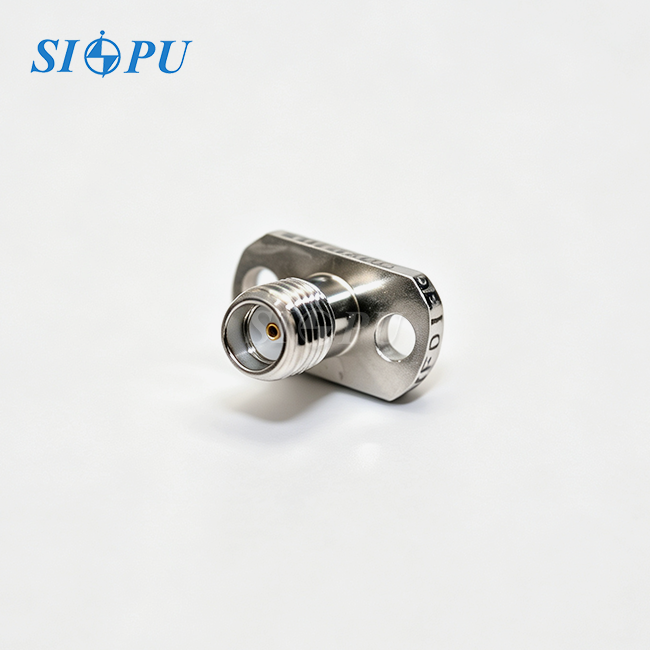
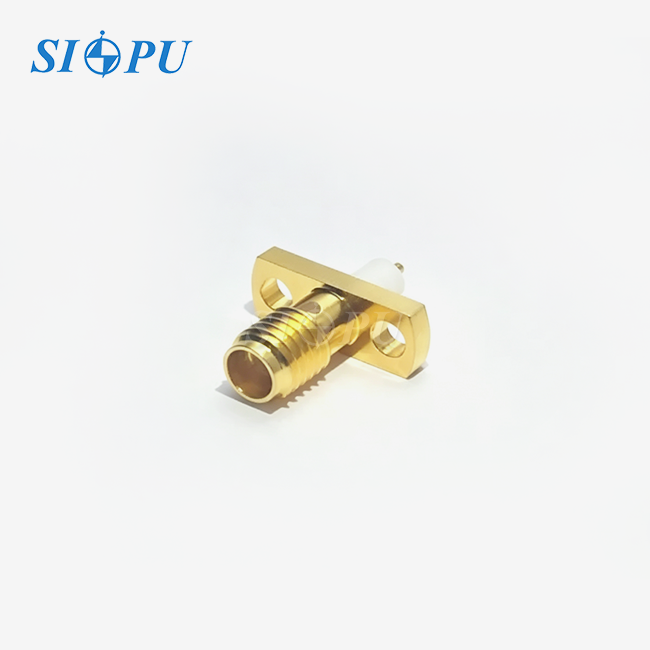
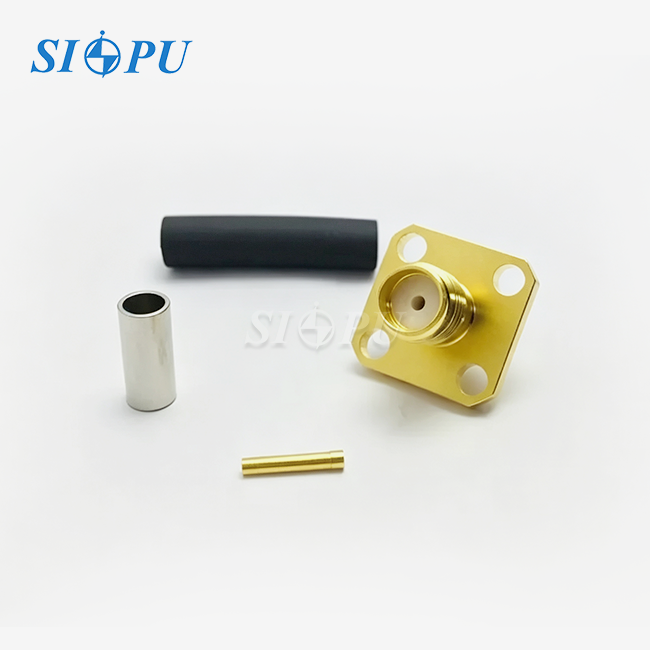
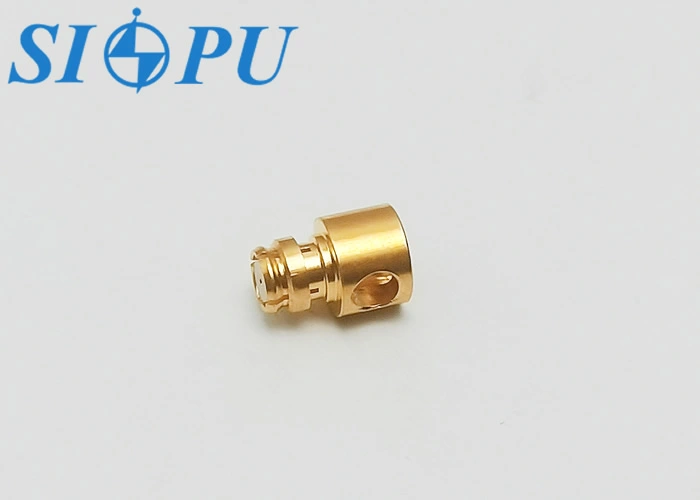
The SMP interface uses sub-miniature push-on connectors to enable blind-mate connections in microwave systems with many pieces. SMP connections snap together linearly, but threaded connectors like SMA require room and rotation during coupling. Female versions include holes for male bullet contacts. Right-angle connectors shift signal flow by 90 degrees, allowing wires to run parallel to circuit boards or chassis walls.
In modular RF systems with limited vertical room, this arrangement is a must. The SMP Female Right Angle Connector for RG405 is designed to work with RG405 semi-rigid coaxial wire, which has a width of 0.086 inches and is often used in microwave frequencies. This pairing makes sure that the impedance is controlled and that there isn't much signal distortion at the connector-cable interface.
Key Electrical and Mechanical Specifications
Knowing the parameters in the datasheet makes it easier to match the connector's abilities to the needs of the application. The 50Ω characteristic impedance is standard for RF systems in the industry, so it will work with existing infrastructure. 5G millimeter-wave bands, satellite downlinks, and radar subsystems that work in X-band and K-band spectrums can all use frequency performance up to 26.5 GHz.
The VSWR of ≤1.1+0.02F(GHz) indicates excellent impedance matching across frequencies. Return loss would be better than 17.7 dB at 10 GHz, where the greatest VSWR is 1.3:1. This is sufficient for most commercial and military needs. The formula for insertion loss is -0.07√F(GHz) dB. At 25 GHz, the greatest loss per link is 0.35 dB, which maintains signal strength in multistage systems.
Material choice affects durability and electricity. Beryllium copper provides the contacts the spring tension they require to operate effectively together, while gold finishing on both the center and outside wires avoids oxidation and keeps the contact resistance low. The resistance of the central contact remains below 6.0 mΩ and that of the outside contact stays below 2.0 mΩ. This reduces signal loss. For severe situations like aircraft and outdoor phone systems, PTFE dielectric insulation is robust at -65°C to +125°C.
Why Right-Angle Configuration Matters
Right-angle design tackles a long-standing challenge in tiny assemblies: routing wires without bending them too much, which might reduce phase stability or insertion loss. Phased array antennas use hundreds of RG405 cables to connect a beamforming grid to millimetre-spaced radiating elements. If the connection was straight, the cable would have to curve abruptly after it, creating a mechanical stress point that may reflect the signal. The right-angle variant enables the cable naturally flow over the mounting surface, maintaining the wire's minimal bend radius and array phase consistency.
Comparing SMP Female Right Angle Connectors with Alternative Solutions
SMP Versus SMA Connectors
SMA connections are the most used threaded RF interface because they are mechanically secure and field-serviceable. But their threaded coupling requires torque wrenches installed properly and with rotational space. High-density modules with dozens of connections are hard to access and tighten SMA connectors. The SMP push-on mechanism doesn't spin, reducing mating effort and installation time while maintaining electrical performance up to 26.5 GHz.
The trade-off is preservation strength. SMA connections feature a stronger pull-off force because they engage with a thread, making them ideal for busy cable handling. SMP connections employ full or smooth bore detents to maintain connection. Full detent variants retain better in vibration-prone environments like aeroplanes, whereas smooth bore versions make disengagement simpler in fast-setup test setups.
Right-Angle Versus Straight SMP Connectors
It is thought that straight SMP connections have the best VSWR performance and the lowest insertion loss because they keep the signal path constant. But in real installations, where space is limited, this benefit is often lost because the cable has to be bent sharply right after the connector. The SMP Female Right Angle Connector for RG405 form hides the change within a controlled impedance structure, which usually results in less than 0.1 dB more loss compared to installing a straight connection with a sharp bend.
The best choice is based on the application context. When cables run perpendicular to the board, like in backplane connections, straight connectors work well. Right-angle connectors work great for stacking boards on top of each other, mounting modules on a chassis, and any other situation where routing cables parallel to the mounting plane lowers the overall height of the assembly or makes cable management easier.
SMP Female Versus Male Connector Selection
In SMP connectors, the gender label is different from thread-coupled interfaces. The female connector has a hole in it that the male connector's bullet contact fits into. Most cable systems have male connectors on both ends that connect to female panel-mount or PCB-mount connectors on devices. The connector serves as the fixed plug. It is usually soldered to the ends of RG405 cables or mounted on boards to accept male bullet contacts from other cables or modules.
Maintaining uniform gender assignments when building interconnect systems stops species from mating with each other that aren't compatible. Female connectors are usually found on equipment panels and internal boards. These keep the center pin from getting damaged, while male connectors are found on cables and can be replaced if they get broken.
Procurement Guide: How to Source SMP Female Right Angle Connectors for RG405
Leading Manufacturers and Quality Standards
Many well-known RF connection vendors satisfy demanding military and aerospace specifications. Precision connections have been produced by Amphenol RF, TE Connectivity, and HUBER+SUHNER for years. ISO 9001 and AS9100-certified testing equipment and quality systems are abundant at these firms. These firms usually provide product information, including S-parameter files for simulations and design validation.
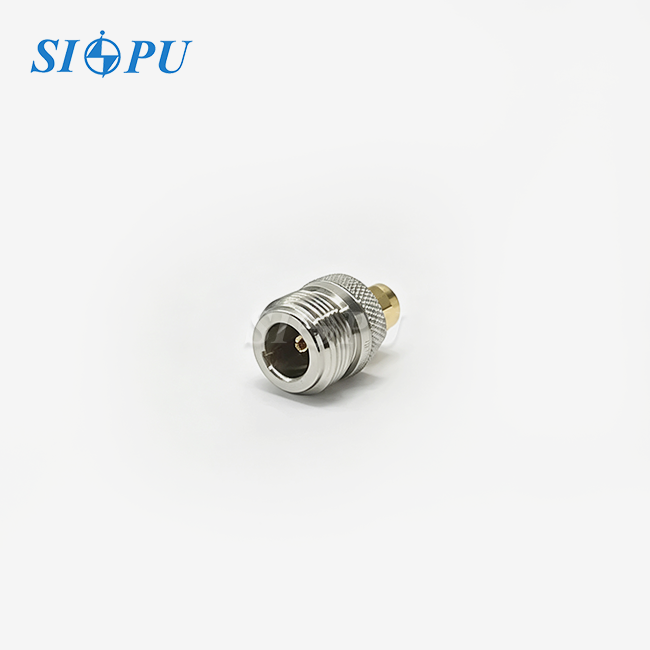
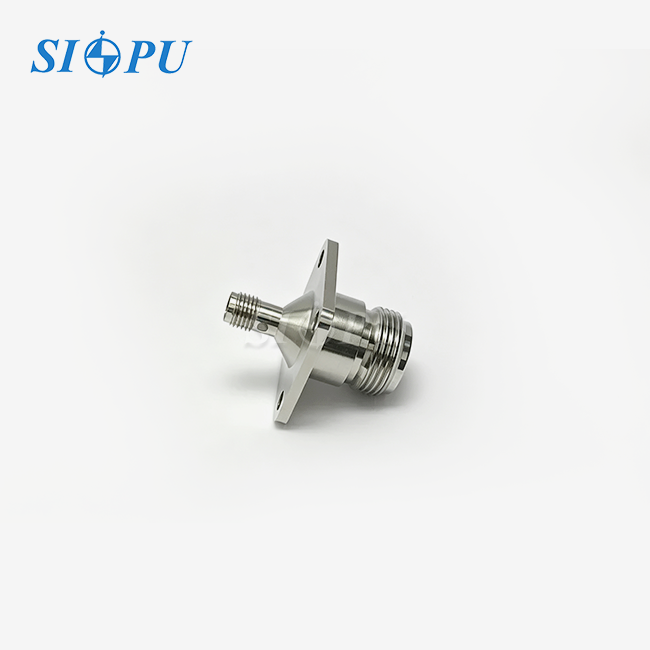
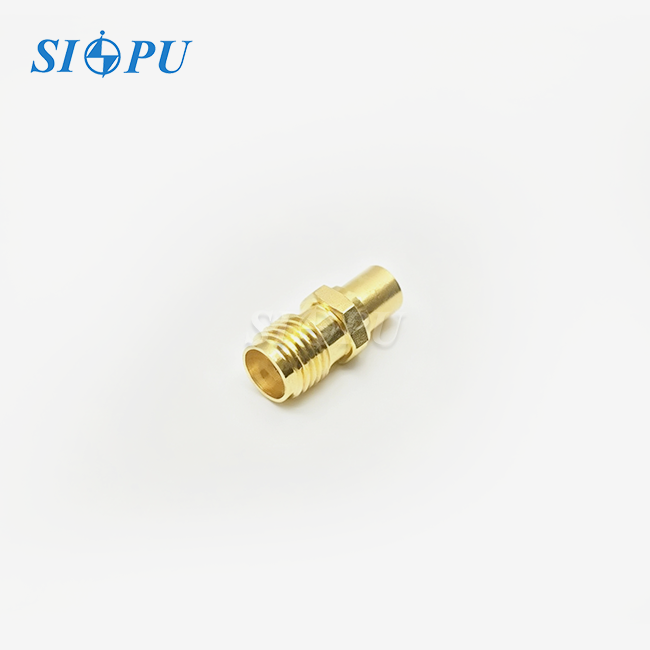
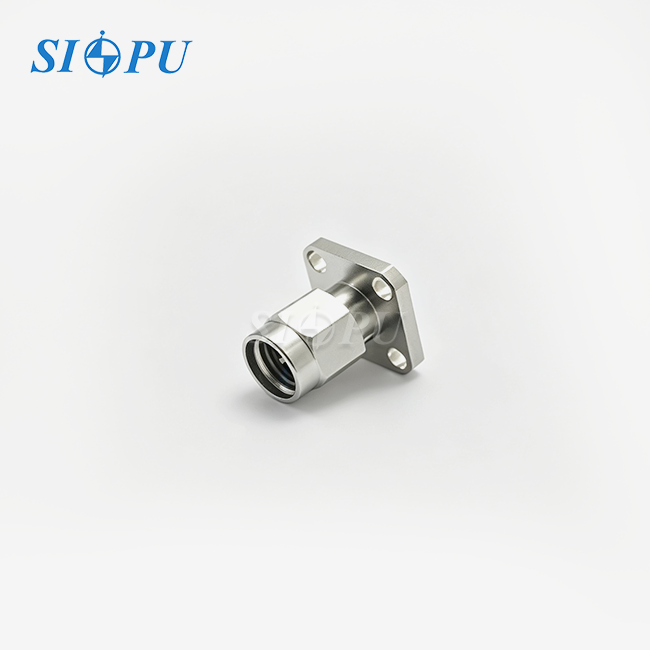
This webpage is for SIPU RF Technology, which solely manufactures RF and microwave connections. SIPU has made items for 25 years using GJB, MIL, and IEC standards. Excellent customer service and military-grade tech. Their SMP Female Right Angle Connector for RG405 is CNC-machined and RF-tested. Because it comes straight from the plant, wholesalers don't markup it and quality is maintained.
Understanding Pricing Structures and Lead Times
Connector pricing varies based on performance grade, material specifications, and order quantity. In small amounts, standard commercial-grade SMP connectors cost about $10 to $20 each. On the other hand, military-grade versions that meet MIL-STD-348 can cost up to $30-60 each. When you buy more than 100 pieces, the volume price starts to matter, and for production runs of 1,000 or more units, savings can reach 30 to 40 percent.
Lead times vary on whether things are catalogued or custom-made. Distributors supply most typical setups within 72 hours. Custom requirements with new materials, plating options, or size adjustments take four to eight weeks to manufacture, depending on the production queue and complexity. SIPU prioritises unique orders with specific manufacturing lines and logistics. They provide 24-hour technical help and timely shipment for urgent tasks.
Each supplier has different minimum order amounts. Large distributors may sell single items at list price, but to buy directly from the manufacturer, you usually need to buy at least 25 to 100 items. To get the best buying economics, you need to predict connector needs across multiple projects in order to balance inventory holding costs against volume prices.
Verifying Product Authenticity and Compliance
Defence and aerospace supply chains struggle with counterfeit parts. Building confidence with suppliers and implementing verification methods will prevent low-quality items. Reliable vendors provide certificates of compliance that specify materials, plating thickness, and test results. Chain-of-custody documentation tracks items from production to sale. This is required for AS9100 and ITAR programs.
Before ordering in bulk, request samples to ensure mechanical and electrical compatibility. Network analyser measurements of insertion loss, return loss, and phase stability corroborate the datasheet. Mechanical examination verifies dimensions and mating interface quality. SIPU provides comprehensive sample assistance so engineers may test connections before buying lots.
Practical Applications and Advantages of SMP Female Right Angle Connectors for RG405
Telecommunications and 5G Infrastructure
Massive MIMO antenna solutions that boost 5G network capacity include beamforming topologies with hundreds of phase-coherent RF channels. The SMP Female Right Angle Connector for RG405 connects several radio devices and antenna arrays in FR2 millimeter-wave bands 24–40 GHz. Because the connection is tiny, antenna packagers may add more radiating elements per square metre, increasing network speed.
Remote radio heads on cell towers face temperature variations, water infiltration, and mechanical vibrations. The gold-plated beryllium copper framework and PTFE insulator maintain electrical characteristics from -65°C to +125°C. Push-on mating connections are simpler to install in the field than threaded connectors. This saves tower crews time and money installing connections.
Aerospace and Defense Applications
Fighter jets and ground air defence sites use active electronically scanned array radar systems with signal pathways tuned to hundreds or thousands of transmit/receive modules. The SMP Female Right Angle Connector for RG405 allows modular radar "brick" systems to blind-mate, which is crucial. Technicians may modify or install modules in narrow aircraft spaces without seeing mating connections. This reduces aircraft downtime and maintenance time.
The connection can handle axial misalignment of up to 0.010 inches and radial misalignment of up to 0.020 inches. This makes it possible for thermal expansion and mechanical tolerances in composite aeroplane structures to be met. Vibration resistance that meets MIL-STD-202 standards protects the connection during high-G manoeuvres and engine vibration. The durability of 500 cycles of mating supports the maintenance schedules of military platforms that are meant to last 30 years.
Test and Measurement Equipment
RF signal routes must be reconfigured repeatedly for automated test equipment with varied device-under-test configurations. Switching matrices with SMP Female Right Angle Connectors for RG405 enable switching test setups fast without threaded connections. The blind-mate function allows robotic handling systems automatically link and disconnect, speeding testing in product-heavy environments.
National measurement standards are followed by calibration laboratories that employ network analysers above 40 GHz, where connection repeatability affects measurement variance. The SMP interface's spring-loaded contact mechanism maintains electrical properties after many matings, which is crucial for exact metrology. The low insertion loss of 0.35 dB at 25 GHz maintains low-level signal characterisation dynamic range and decreases measuring system loss.
Industrial Electronics and IoT Systems
Industrial IoT routers with millimeter-wave wireless backup lines can work in factories that have changing temperatures, dust, and electromagnetic interference. In these tough conditions, the SMP Female Right Angle Connector for RG405 makes connections reliable. The right-angle shape lets electronics fit flush against mounting rails or container walls, which makes the best use of control cabinet room.
Automated manufacturing systems that use 24 GHz RF identification and positioning are helped by the connector's ability to keep its phase even when the temperature changes. Accurately measuring position depends on phase coherence across the RF front end, which means that connections must keep the electrical length stable. The PTFE dielectric and controlled mechanical tolerances make sure that phase variation stays within the system's acceptable range of temperatures in the industrial range.
How to Choose the Right SMP Female Right Angle Connector for Your Needs
Defining Application Requirements
Before choosing a connector, you need to describe the operating environment and the electrical needs. Write down the range of frequencies that your signals cover, including any harmonics or other content that doesn't belong to the main frequencies. An 18 GHz transceiver might make harmonics at 36 GHz, so the function of the connection needs to be checked up to the third harmonic. The SIPU SMP Female Right Angle Connector for RG405 standard leaves room for these kinds of situations.
Environmental factors affect the choices of materials and building methods. Outdoor telecommunications equipment has to deal with temperature changes from below freezing to above 50°C during the day. This means that the joints need to be able to handle these changes and lock completely. When lab instruments are kept in climate-controlled rooms, they don't have to follow as many strict environmental rules. This could help keep costs down by using commercial instead of military specifications.
Mechanical considerations including PCB space, cable routing pathways, and maintenance effect connection shape. Make sure the connecting places have adequate space for the cable's bend radius. A 0.5-inch bend radius is required for RG405 cable. If there's not enough room, the wire must be bent tighter, which reduces electrical performance and accelerates mechanical breakdown.
Evaluating Electrical and Mechanical Parameters
The system link budget is directly affected by insertion loss. Cascade analysis shows how connector loss affects architectures with more than one stage. A receiver chain with four connectors that each lose 0.3 dB lowers the system's sensitivity by 1.2 dB, which is the same as 25% less transmit power. Link budget predictions are more likely to be correct if you choose connectors based on their measured insertion loss instead of just using the highest numbers listed on the datasheet.
System return loss and impedance matching are affected by the VSWR standards. Maintaining VSWR below 1.5:1 across the whole band is hard for connector design in broadband applications that span multiple octaves. The SIPU connector has a frequency performance of ≤1.1+0.02F(GHz), which means it works well from DC to 26.5 GHz. This specification works with wideband systems and doesn't need frequency-specific matching networks.
Mating cycle durability determines how long a connector will last in situations where it needs to be maintained or reconfigured on a regular basis. Test equipment connections may go through thousands of mating cycles a year, which means they need connectors that are rated for long-term use. The minimum rating of 500 cycles is good for most uses, but some designs can handle 1,000 cycles or more for harsh conditions. By weighing cycle rate against cost, you can avoid over-specifying for uses that won't disconnect very often.
Assessing Supplier Capabilities and Support
Supplier technical support typically trumps product specifications. Engineers require impedance matching, heat management, and mechanical integration specialists for specific situations. Design throughout development by manufacturers with qualified application engineers may save you a lot of money on redesigns.
Customisation lets you satisfy application demands that catalogue items can't. SIPU can customise electrical performance, materials, and mechanical dimensions for customers thanks to its ODM/OEM expertise. Private systems that require the greatest connectivity choices to stand out benefit from this versatility.
Quality certificates and compliance documentation simplify qualification in regulated businesses. Manufacturers of aerospace and medical products must follow materials and procedures carefully and have AS9100 and ISO 13485 certifications. SIPU satisfies ISO 9001 and GJB military requirements, providing crucial applications with quality. CE and RoHS regulations ensure global product safety.
Long-term investment is protected by warranty, failure analysis, and replacement part availability. Knowing what the guarantee doesn't cover—usually abuse, over-tightening, or exceeding electrical ratings—helps you manage things appropriately. SIPU provides complete technical assistance, including product selection, use, and troubleshooting. Customer support answers issues within 12 hours and is friendly.
Conclusion
The best SMP Female Right Angle Connector for RG405 depends on your application's electrical performance, mechanical limits, environmental requirements, and cost. The connection is suited for aircraft, telecommunications, and test equipment because to its low insertion loss, good VSWR, and 26.5 GHz frequency range. The right-angle arrangement optimises space while managing impedance to maintain signal integrity. Successful procurement requires more than product requirements. You should also evaluate the seller's quality processes, personalisation, and professional assistance. You may choose connections that will last the life of your system by methodically evaluating these aspects to your application's demands.
FAQ
1. What distinguishes Full Detent from Smooth Bore in this connector type?
Full detent mechanisms bind the mating pair together with the highest retention force. These are ideal for high-vibration aerospace and defence applications that need connection integrity under mechanical stress. Smooth Bore designs reduce retention force, making many connections simpler to detach and blind-mate in test equipment and modular systems that are often changed. Choose based on whether you want the safest connection or the simplest service entrance.
2. Can this connector accommodate flexible equivalents of RG405 cable?
Semi-rigid RG405, flexible SS405, and hand-bent 0.086-inch wires work with the connection. Semi-rigid cables are hard to form, therefore flexible cables are simpler to install in convoluted routing. Electrical performance may vary amongst cables due to dielectric consistency and insulation efficacy. Before buying a lot of cable, use a network analyser to verify its performance.
3. How does the right-angle version's frequency limit compare to straight configurations?
Both layouts may approach 40 GHz in well-designed versions, however right-angle variations may have a higher VSWR at high frequencies owing to the 90-degree impedance shift. Most applications don't worry about the 0.05 VSWR differential at 40 GHz. If straight connector wires must be bent hard to fit, right-angle connections work better. Because produced bends induce greater impedance discontinuities than controlled internal transitions.
4. What termination method provides optimal signal integrity with RG405 cable?
By reducing transition length and maintaining impedance, soldering the cable jacket to the connection body and the center wire to the contact pin maximises signal integrity. Temperature must be managed to protect the PTFE dielectric and ensure solder connections. Pollution may reduce insulator resistance, therefore cleaning and flux selection prevent it. Some high-volume manufacturers provide crimp-style terminations. Although less efficient, these terminations speed up and improve assembly.
Partner with SIPU for Reliable SMP Connector Solutions
Engineers and purchasing managers looking for a reliable SMP Female Right Angle Connector for RG405 provider will find SIPU RF Technology's industrial know-how and customer-focused service to be very helpful. With 25 years of experience making military-grade interconnects and a full set of RF testing tools, we can guarantee consistent quality. With factory-direct supply, there are no markups for distributors, and you can still communicate quickly and make changes as needed. Standard RF connectors are in stock and can be delivered within 72 hours. We also have dedicated production lines that can meet specific needs and give them priority logistics. Our expert team offers full application support, from choosing the right product to helping with installation and fixing problems. Contact our team at info@sipu-rf.com to talk about your specific needs and get a detailed quote, whether you need samples to make sure the design works or large quantities delivered quickly.
References
1. Amphenol RF. (2021). SMP Connector Series Technical Specification. Amphenol Corporation Technical Documentation.
2. Institute of Electrical and Electronics Engineers. (2019). IEEE Standard for Precision Coaxial Connectors at RF, Microwave and Millimeter-wave Frequencies. IEEE Std 287-2007 (Revision).
3. Myer, D. P. (2018). High-Frequency Connector Design and Testing. Microwave Journal, Vol. 61, Issue 4, pp. 78-92.
4. Pozar, D. M. (2020). Microwave Engineering, 5th Edition. John Wiley & Sons, Hoboken, New Jersey.
5. Rosenberger Hochfrequenztechnik. (2020). Blind-Mate Connector Systems for High-Density RF Applications. Technical White Paper Series.
6. U.S. Department of Defense. (2017). MIL-STD-348B: Military Standard for Radio Frequency Connector Interfaces. Defense Standardization Program Office.
Contact us directly for customized solutions, quotations and long-term strategic cooperation.