- English
- French
- German
- Portuguese
- Spanish
- Russian
- Japanese
- Korean
- Arabic
- Greek
- German
- Turkish
- Italian
- Danish
- Romanian
- Indonesian
- Czech
- Afrikaans
- Swedish
- Polish
- Basque
- Catalan
- Esperanto
- Hindi
- Lao
- Albanian
- Amharic
- Armenian
- Azerbaijani
- Belarusian
- Bengali
- Bosnian
- Bulgarian
- Cebuano
- Chichewa
- Corsican
- Croatian
- Dutch
- Estonian
- Filipino
- Finnish
- Frisian
- Galician
- Georgian
- Gujarati
- Haitian
- Hausa
- Hawaiian
- Hebrew
- Hmong
- Hungarian
- Icelandic
- Igbo
- Javanese
- Kannada
- Kazakh
- Khmer
- Kurdish
- Kyrgyz
- Latin
- Latvian
- Lithuanian
- Luxembou..
- Macedonian
- Malagasy
- Malay
- Malayalam
- Maltese
- Maori
- Marathi
- Mongolian
- Burmese
- Nepali
- Norwegian
- Pashto
- Persian
- Punjabi
- Serbian
- Sesotho
- Sinhala
- Slovak
- Slovenian
- Somali
- Samoan
- Scots Gaelic
- Shona
- Sindhi
- Sundanese
- Swahili
- Tajik
- Tamil
- Telugu
- Thai
- Ukrainian
- Urdu
- Uzbek
- Vietnamese
- Welsh
- Xhosa
- Yiddish
- Yoruba
- Zulu
What is a TNC Male Connector? A Detailed Explanation
A TNC male connector is a precision rf coaxial connector that uses a threaded coupling mechanism to terminate coaxial cables for high-frequency signal transmission. Originally developed by Neill and Concelman, TNC stands for Threaded Neill-Concelman. The threaded interface directly solves the vibration-loosening problem found in standard BNC bayonet connectors. The TNC male connector nickel plated RG316 variant pairs a nickel-plated brass body with a gold-plated center contact and PTFE dielectric, covering DC to 11 GHz at 50 Ω impedance—making it a dependable choice for base stations, antenna OEM assemblies, and industrial RF test systems.
Understanding the TNC Male Connector
What Sets TNC Apart from SMA and BNC?
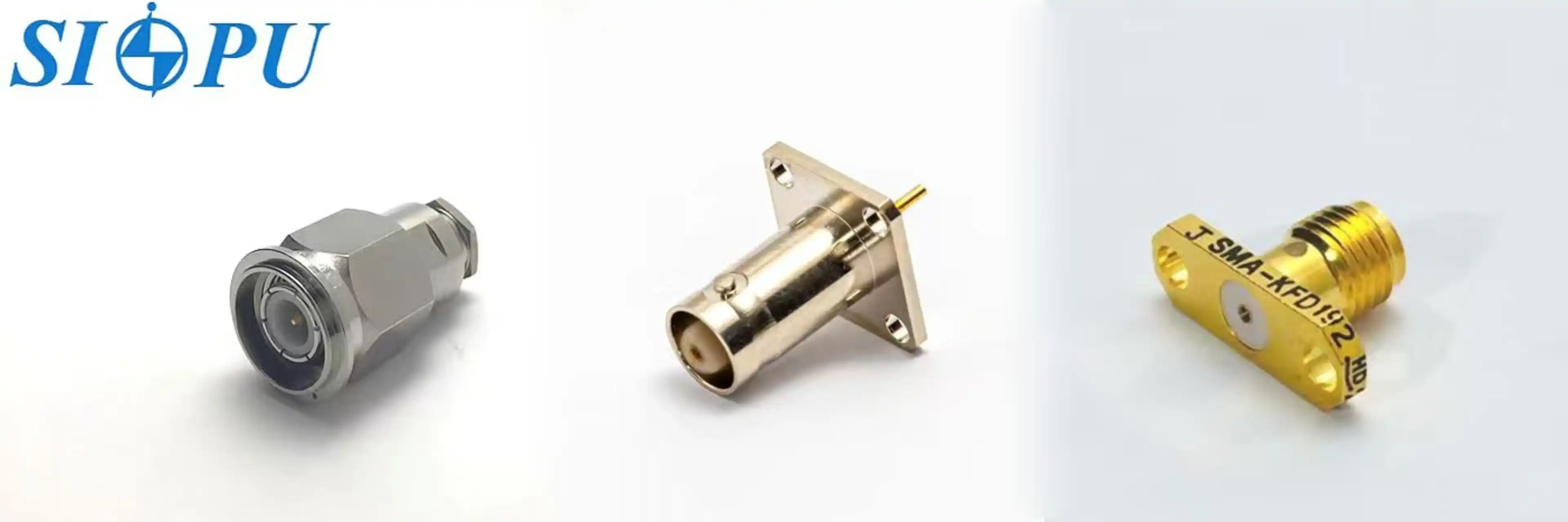
A 50 Ω impedance is shared by the tnc connector, SMA, and BNC. However, it is its M/F thread interface that makes it useful in harsh conditions. BNC connectors have a quarter-turn bayonet lock that can come loose if they are vibrated for a long time. SMA connectors are smaller, but they can handle higher frequencies. Because of this, they are more likely to get damaged during installation in the field. The TNC format is in the middle. It has a body that is big enough for rough outdoor termination but threaded securely enough to stay locked on an antenna mast or avionics rack that is moving.
Core Electrical Specifications for RG316 Compatibility
TNC male connector nickel plated RG316 is a coaxial wire made of silver-plated copper and Teflon insulation. It has a standard impedance of 50 Ω and an outer diameter of about 2.5 mm. In order to keep VSWR low, a connection made for RG316 needs to have a resistance that exactly matches that. We can see that SIPU's TNC male plug nickel plated RG316 type (SIPU-TNC-J3-1) has a VSWR of -1.30 and an insertion loss of -0.06√F(GHz) dB from DC to 11 GHz. From -65 °C to +125 °C, the PTFE insulator keeps those numbers the same, and the insulation resistance stays at ≥5,000 MΩ the whole time.
The Role of Nickel Plating in Signal Integrity
Nickel plating on the outside of the brass body makes the surface 400–600 HV hard, which is about four times harder than bare brass. Because it is so hard, the fretting rust at the thread contact areas doesn't happen. This is what causes DC resistance creep over time. Center-contact resistance stays at ≤2.0 mΩ thanks to the gold-plated bronze center contact. This means that the signal stays strong even after 500 documented mating cycles. These measured values give procurement engineers a quality base that they can use to track quality changes from batch to batch.
How to Use and Install a TNC Male Connector with RG316 Cable
Cable Preparation Steps
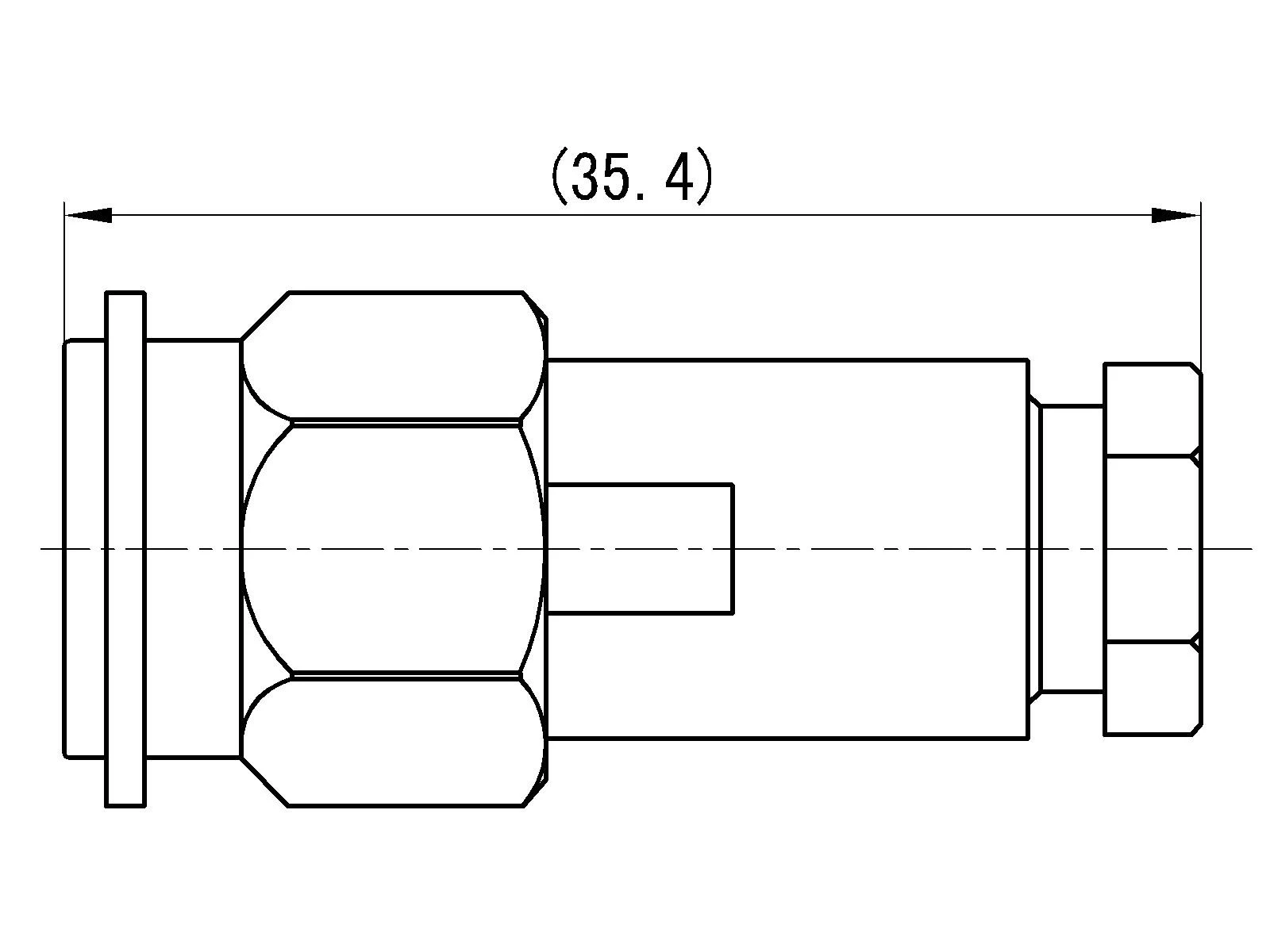
First, cut the RG316 jacket to the length shown on the assembly drawing for the connector, which is usually 12–15 mm. Just neatly fold the braid shield back, and then cut the PTFE dielectric to show the right length of the center conductor. When stripping, don't score the silver-plated copper center conductor. A nick makes a stress riser that raises the contact resistance and shortens the fatigue life.
Crimping and Assembly Best Practices
Slide the crimp ferrule onto the cable first, then put the center pin in. Use a hex crimp tool that has been calibrated and is the right size for RG316 (usually 0.128 in hex). To get even tension around the braid, crimp the ferrule with a single, hard stroke. Put thread-locking glue on the tail end of the connection body and thread it onto the wire subassembly. Use the torque recommended by MIL-C-39012 to tighten. Do not go over the rated torque, or you could stretch the silicon rubber closing ring too far.
Verifying Dimensions and Avoiding Common Errors
Before mating, use a Go/No-Go gage to check the center-pin protrusion and make sure it meets the MIL-C-39012 tolerances for size. A pin set too far back will damage the female plug when it shakes, while a pin set too high will damage the electrical contact. The silicon rubber closing ring built into SIPU adds another layer of protection against water getting in. This is especially important for base stations and antennas that are installed outside, where IP security is important.
Comparing Nickel Plated TNC Male Connectors with Other Finishes and Types
Nickel vs. Gold vs. Brass Plating
Each surface finish has a unique set of applications. Here are the main things that make them different:
- Nickel plating delivers 400–600 HV hardness, strong oxidation resistance, and a cost point roughly 60–70 % lower than full gold plating. It is the preferred choice for industrial and telecom OEM applications where connectors face repeated mating and outdoor exposure.
- Gold plating offers the lowest contact resistance and best conductivity, making it ideal for precision test ports, but its softness (around 200 HV) means faster wear in high-cycle applications.
- Bare brass is inexpensive but oxidizes quickly in humid environments, leading to contact resistance rise within months of field deployment.
Nickel plating is the best way to get connectors that will last for years in base station and antenna OEM situations, where they may only be put once but need to work well for years.
TNC vs. SMA vs. BNC in RF OEM Design
SMA connectors can work at 18 GHz or higher, but their small threads often cross-thread when they're out in the field. BNC connections join quickly, but they tend to shake. TNC connectors work from DC to 11 GHz and have a thread that can handle the vibrations that come from vehicle-mounted radios and antennas on roofs. In the 0.5–6 GHz frequency range that 4G/5G base station feeder lines usually work in, TNC gives the right frequency ceiling without being as fragile as SMA.
Selecting the Best TNC Male Connector Nickel Plated for RG316 Cable
Key Technical Metrics to Evaluate
The following details should be used as a starting point when looking for a threaded RF connector for high-frequency cable assemblies. Before you choose a supplier, compare these factors to the link budget for your system:
- VSWR ≤ 1.30 across the full operating bandwidth
- Insertion loss ≤ 0.06√F(GHz) dB to preserve signal margin
- Dielectric withstanding voltage ≥ 1,500 V for safety in high-power antenna feeds
- Operating temperature −65 °C to +125 °C for outdoor and avionics duty
- 500 mating cycles minimum for OEM production and field service
These numbers are not goals; they are guarantyd values on SIPU's SIPU-TNC-J3-1 datasheet and can be checked by a vector network analyzer (VNA) and a high-pot tester during incoming inspection.
Certifications and Compliance Standards
If a connector can be made into goods that are sold in more than one market, it depends on how well it meets international compliance standards. There is proof that SIPU's TNC male connector nickel plated RG316 unit meets the requirements of RoHS, REACH, IEC, CE, and UL. The shape of the interface meets the requirements of IEC 60169-25 and MIL-STD-348, so it can work with female TNC ports from any manufacturer in the world that follows those standards.
Matching Connector Choice to Industry Demand
When telecom OEM engineers are making 5G macro base station feed lines, they need connectors that can handle UV light and changes in temperature. Engineers who work on test tools need low VSWR to be consistent over thousands of connection rounds. Before committing to large orders, both groups can benefit from asking for mixed-model samples. This is a procurement practice that SIPU actively supports, with sample turnaround times designed to meet short qualification timelines.
Advantages of Nickel Plated TNC Male Connectors with RG316 Cable for B2B Applications
A flexible Teflon coaxial wire and a TNC male connection assembly made of nickel plated RG316 provide quantifiable operating advantages. Why is this combo a good choice for B2B RF procurement?
- Corrosion resistance in salt-spray environments: Nickel plating passes 48–96 hours of salt-spray testing per MIL-STD-202 Method 101, protecting connections on coastal base stations and maritime antenna systems.
- Mechanical stability under vibration: The threaded coupling maintains contact force under continuous vibration loads that would cycle a bayonet connector into intermittent contact within hours.
- Thermal performance across a wide range: PTFE dielectric and silicon rubber sealing maintain electrical specifications from −65 °C to +125 °C, covering arctic deployments to engine-bay telemetry.
- Supply chain consistency: Multi-layer batch inspection—including plating thickness, adhesion force, VNA performance, and RoHS screening—ensures that the connector received in production lot 50 matches lot 1 in every measurable parameter.
RF engineers in base stations, industrial IoT, and test equipment OEM settings worry about three things when they buy things: changes in specifications between batches, the risk of losing a source, and the cost of having to redo work in the field because a connection failed. These benefits directly address these concerns.
Conclusion
It is well-designed that the TNC male connector nickel plated RG316 can be used in RF applications that need both accurate electrical signals and long-lasting mechanical parts. Its nickel-plated body avoids corrosion, its threaded interface keeps connections from coming loose due to shaking, and its PTFE dielectric keeps 50 Ω impedance stable from DC to 11 GHz over a wide temperature range. This connector is a reliable long-term choice for OEM procurement teams looking for connectors for base stations, industrial RF systems, or test equipment because it meets international standards, has been certified, and is quality controlled at the batch level.
Frequently Asked Questions
1. Why choose nickel plating over gold for the connector body?
Nickel offers surface hardness of 400–600 HV compared to gold's approximately 200 HV. That hardness advantage translates directly into longer wear life in applications with frequent mating cycles. For industrial and telecom OEM production, nickel plating provides adequate corrosion resistance at a lower cost per unit.
2. Can this connector be used with RG174 cable?
RG174 and RG316 share a similar outer diameter, but RG316 uses a Teflon dielectric rated to higher temperatures. The ferrule bore and center-pin dimensions of SIPU's TNC male connector nickel plated RG316 are sized specifically for RG316's silver-plated copper cladding. Using it with RG174 may produce impedance discontinuity at the cable junction.
3. Is this connector weatherproof?
Standard TNC connectors are weather-resistant. The silicon rubber sealing ring in SIPU's design adds moisture protection. For a certified IP67 or IP68 rating, pair the connector with an internal O-ring and an adhesive-lined heat-shrink sleeve over the crimp ferrule.
4. What is the practical frequency ceiling for a TNC–RG316 assembly?
The connector itself is rated to 11 GHz. However, RG316 cable attenuation rises steeply above 3 GHz (approximately 1.5 dB/m at 3 GHz and 2.8 dB/m at 6 GHz). Most practical system designs using this assembly target the DC–6 GHz range.
5. How do I achieve the best VSWR during installation?
Use a calibrated crimp tool for the RG316 hex size, strip the PTFE dielectric cleanly without nicking the center conductor, and verify center-pin protrusion with a Go/No-Go gauge before mating.
Get a Sample of SIPU's TNC Male Connector Nickel Plated RG316 Today
Since 1998, SIPU has been making high-precision RF connectors for telecom, military, and industrial OEM companies all over North America. With prototype samples available to support your engineering qualification, our TNC male connector nickel plated RG316 (model SIPU-TNC-J3-1) ships from stock. As a reliable provider of TNC male connector nickel plated RG316, we back up every order with ISO 9001 quality management, full compliance documentation, and support from our U.S. partner JNP Supplies LLC in Seattle. To start the inquiry process right away, send your specs or RFQ to info@sipu-rf.com or go to sipuconn.com.
References
1. International Electrotechnical Commission. IEC 60169-25: Radio-Frequency Connectors – Part 25: R.F. Coaxial Connectors with Inner Diameter of Outer Conductor 6.5 mm (0.256 in) with Screw Coupling (Type TNC). IEC, 2003.
2. U.S. Department of Defense. MIL-STD-348B: Interface Standard for RF Connector Interfaces for MIL-PRF-39012 Connectors. DoD, 2012.
3. U.S. Department of Defense. MIL-C-39012: Connectors, Coaxial, Radio Frequency, General Specification for. DoD, 1998.
4. Harper, Charles A. Electronic Packaging and Interconnection Handbook. 4th ed. McGraw-Hill, 2005.
5. Straw, R. Dean (ed.). The ARRL Handbook for Radio Communications. American Radio Relay League, 2020.
6. Montrose, Mark I. EMC and the Printed Circuit Board: Design, Theory, and Layout Made Simple. IEEE Press / Wiley, 1999.
Contact us directly for customized solutions, quotations and long-term strategic cooperation.