- English
- French
- German
- Portuguese
- Spanish
- Russian
- Japanese
- Korean
- Arabic
- Greek
- German
- Turkish
- Italian
- Danish
- Romanian
- Indonesian
- Czech
- Afrikaans
- Swedish
- Polish
- Basque
- Catalan
- Esperanto
- Hindi
- Lao
- Albanian
- Amharic
- Armenian
- Azerbaijani
- Belarusian
- Bengali
- Bosnian
- Bulgarian
- Cebuano
- Chichewa
- Corsican
- Croatian
- Dutch
- Estonian
- Filipino
- Finnish
- Frisian
- Galician
- Georgian
- Gujarati
- Haitian
- Hausa
- Hawaiian
- Hebrew
- Hmong
- Hungarian
- Icelandic
- Igbo
- Javanese
- Kannada
- Kazakh
- Khmer
- Kurdish
- Kyrgyz
- Latin
- Latvian
- Lithuanian
- Luxembou..
- Macedonian
- Malagasy
- Malay
- Malayalam
- Maltese
- Maori
- Marathi
- Mongolian
- Burmese
- Nepali
- Norwegian
- Pashto
- Persian
- Punjabi
- Serbian
- Sesotho
- Sinhala
- Slovak
- Slovenian
- Somali
- Samoan
- Scots Gaelic
- Shona
- Sindhi
- Sundanese
- Swahili
- Tajik
- Tamil
- Telugu
- Thai
- Ukrainian
- Urdu
- Uzbek
- Vietnamese
- Welsh
- Xhosa
- Yiddish
- Yoruba
- Zulu
How to Choose the Right SMA Female to N Male Adapter for Your Project
Choosing the right SMA female to N male adapter starts with understanding your system's frequency range, impedance requirements, and mechanical environment. A good adapter keeps the 50Ω impedance constant from DC to 11GHz, keeps the VSWR low, and gives you consistent insertion loss all the way through your signal chain. If you use the wrong adapter, it can cause reflected mistakes, measurement drift, or early mechanical failure in RF test labs, OEM production lines, and field deployments. This guide walks you through the key technical and procurement factors that matter most when selecting an SMA female to N male adapter for professional applications.
Understanding SMA Female to N Male Adapters: Basic Concepts and Specifications
Before you buy this adapter, it's helpful to know what it's meant to do and when its specs matter.
Connector Gender and Interface Design
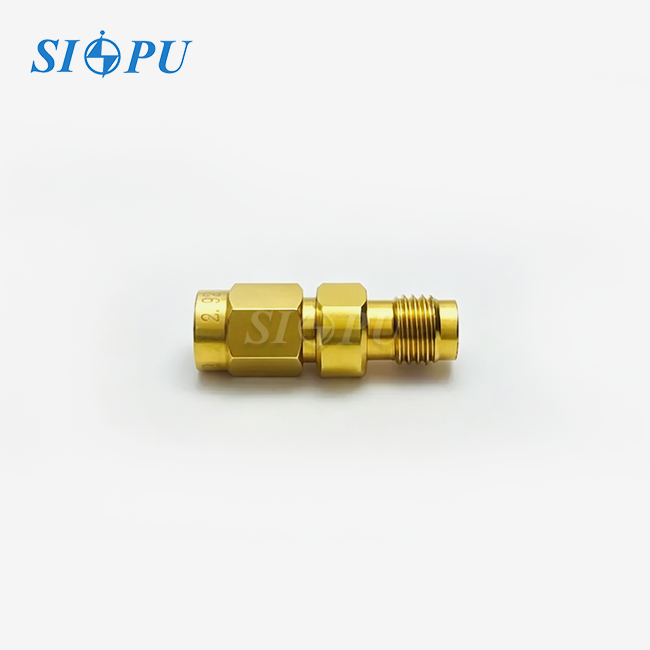
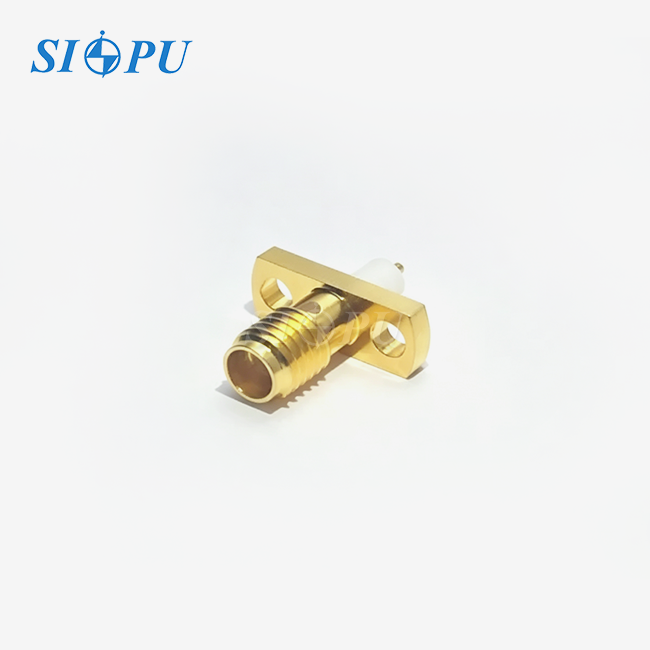
There are fine threads inside the SMA female side, and the center contact is buried. On the other hand, the N male side has a center pin that sticks out and a larger threaded coupling. There are two types of connections in this set. These connectors are used in almost all RF equipment, from portable spectrum monitors to outdoor base station infrastructure. If you get the gender mix right, there is no mechanical stress and the mating contact is safe to touch.
Key Electrical Specifications to Review
The impedance is the first number to look at. Changes to either set of connectors cause reflection losses that mess up readings or lower the send efficiency. They only work at 50©. This adapter should have an insertion loss of 0.06% of F(GHz)dB and a VSWR of 1.3 across the working band. In real life, the SIPU-SMA/N-KJ works well for most telecom, test, and RF transmission tasks from DC to 11GHz, which is a wide range.
Material Selection and Mechanical Longevity
Because adapters are made of different materials, they work for different amounts of time. Brass that has been nickel-plated on the outside of the wire doesn't rust, and it's safe enough to use in the lab or the field. The middle part is made of gold-plated beryllium bronze. It can be joined about 500 times, which is a good number for test stands that are used every day for calibration. The contact resistance is only 3.0m©. PTFE insulator stays electrically stable at temperatures between -65°C and +125°C.
Core Criteria for Selecting the Right Adapter for Your Project
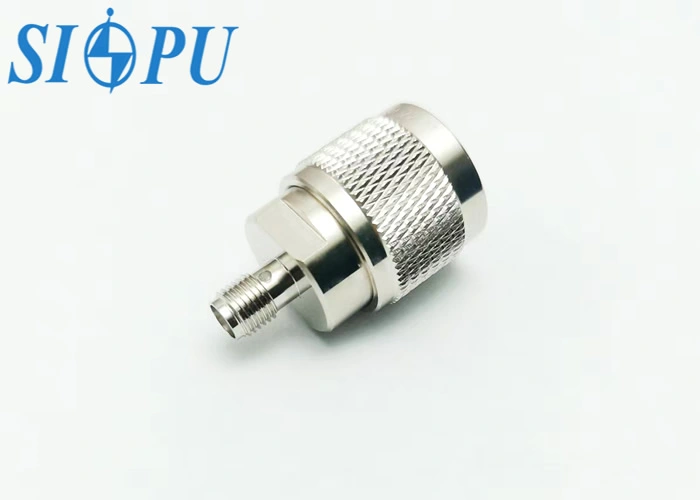
Now that you know what the standards are, you need to make sure that those numbers match what your project needs.
Frequency Range and Signal Integrity
As a general rule, the adapter should be able to handle a little more frequency than the machine. A rate of DC-11GHz works well for most LTE, sub-6GHz 5G, ISM-band, and test instrument needs. Low insertion loss is important for people who want to make broad signals or try phase-locked loop intermodulation. In a lab that is set up correctly, even a difference of 0.1dB at 6GHz can cause readings to be off.
Build Quality and Environmental Compliance
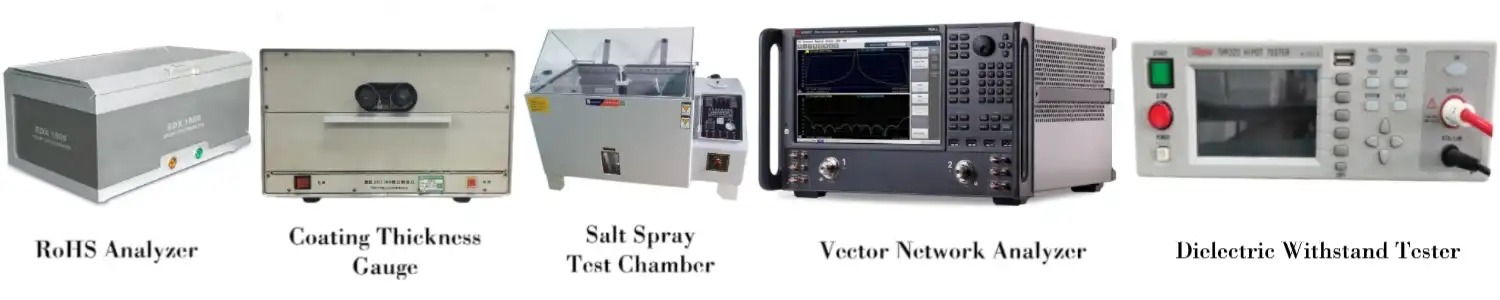
You should think about both unit performance and batch consistency when you buy things for a lab. Look for SMA female to N male adapter suppliers who check the bond strength and plating thickness on all of their products, not just the qualification samples. Items that want to sell in the US and Europe need to follow RoHS rules. When nickel plating brass, it's important to stick to the limits for nickel release set by contact safety rules. For goods that are used a lot in test settings, this is especially important.
Supplier Reliability and Supply Chain Stability
A big fear for RF engineers who are working on going from prototypes to production is often making sure there is a steady supply. The program is much less likely to fail if the supplier keeps stock in the US, lets you order mixed-SKU small batches, and can answer engineering questions within 12 hours. If you want to buy something, you should check the supplier's ISO 9001 certification, quality paperwork, and sample-to-volume ramp capability before you make a decision.
Comparing SMA to N Type Adapters in the Market
The market for inter-series RF adapters includes several well-established names, each with distinct positioning.
Established Brands and Their Positioning
Amphenol and Pasternack both offer SMA-to-n adapters with solid performance data and wide distribution. Times Microwave focuses on high-power and low-PIM solutions often specified for base station applications. TE Connectivity brings scale and component integration depth for OEM production environments. These brands generally cover DC to 18GHz, carry broad certifications, and appear on approved vendor lists for large infrastructure programs. Their pricing reflects brand premium and domestic inventory costs in North American distribution.
Where SIPU-SMA/N-KJ Fits in This Landscape
SIPU's SIPU-SMA/N-KJ is designed for engineers who need electrical performance at the lab level, the ability to track where the parts were made, competitive pricing for buying small batches of multiple SKUs, and direct technical support. SIPU has been making RF connectors for 28 years, is ISO 9001 certified, and has production lines that are aligned to MIL, GJB, and IEC standards. This gives them the level of process discipline that national test laboratories and OEM production environments need. Support in the United States is handled by JNP Supplies LLC in Seattle, Washington.
Pricing and Procurement Flexibility
Single-unit pricing from major distributors typically ranges from $8 to $25 per SMA female to N male adapter, depending on material grade and brand. SIPU provides sample pricing for a variety of SKUs, quick procurement (1–3 months), and volume flexibility that works well for both engineering trial phases and production ramp-up at the same time. This pricing structure is good for procurement managers who need to test a number of different types of connectors before deciding on a single bill-of-materials line.
Installation and Usage Best Practices
If you don't put the adapter properly, it won't work right even if it meets all the requirements.
Torque Specifications and Tooling
To get N-type connectors tight to about 1.36 N·m (12 in-lb), you should use a torque wrench that has been calibrated. SMA links need about 0.45 N·m (4 in-lb) less force. If you tighten too much, the center contact will bend, which will raise the contact resistance. Micro-motion takes place when you under-tighten, and it drops the VSWR over time. To protect the knurled coupling nut from damage, you should never use pliers. Instead, you should use a connector-specific wrench.
Avoiding Common Installation Errors
Engineers will mix up connectors more often than most people think. Make sure that the N side has male threads and the SMA side has female threads (internal threads and socket center contact) before joining. Use a magnifying glass to get a good look at both sides before you use it for the first time. If you get a burr or bend the pin on a gold-plated beryllium bronze contact, the connection will quickly become less strong. Isopropyl alcohol and a lint-free swab should be used to clean them before they are put in calibrated measurement chains.
Maintaining Performance Over Time
Keep track of the steps you take to connect the tools you use for daily tests. After 500 cycles, a contact that is used three times a day will no longer work. If adapters are changed regularly instead of waiting for a measurement to go wrong, specification drift can't lead to mistakes in the way tests are done now.
Tailoring Your Choice: Matching Adapter Selection to Specific B2B Needs
Different industries place different demands on the same connector type.
Test and Measurement Laboratories
When lab engineers connect power amplifiers to vector network analyzers or spectrum analyzers, they need adapters that have tight control over VSWR and batch documentation that can be tracked. With an insulation resistance of ≥5,000MΩ and a dielectric withstanding voltage of 1,000V, the SIPU-SMA/N-KJ can safely be used in high-voltage test setups. Batch-level quality records make it easier to keep track of internal calibration documentation.
OEM Production and Test Fixture Applications
Production line test fixtures cycle through hundreds of connections per day. Adapter durability, dimensional consistency across production batches, and fast replenishment lead times are the primary selection criteria here. SIPU's dedicated production lines for custom orders and 72-hour delivery on standard stock items directly address the schedule risk that OEM test managers face during product qualification phases.
Telecom Infrastructure and Field Deployment
Connecting N-type antenna feedlines to SMA-based RF modules in outdoor enclosures requires silicon rubber sealing and a wide operating temperature range. The SIPU-SMA/N-KJ's -65°C to +125°C rating and corrosion-resistant nickel-plated brass body handle both arctic and desert deployment conditions without degradation.
Conclusion
To pick the correct SMA female to N male adapter, you need to do more than just look at the frequency rating. If the parts are good, the batches are consistent, and the supplier you work with is dependable, your system will work as it should for as long as it should. This SIPU-SMA/N-KJ meets all of these needs. Its specs have been checked, its quality processes can be watched, and it comes with a number of buying choices that can be used for both small study projects and large-scale production. Make sure the adapter you pick works for the project you're in charge of, whether it's a national test lab, an OEM production line, or a telecom infrastructure project. This will keep the project on track and protect the money you spent on the equipment.
FAQ
1. What frequency range does an SMA female to N male adapter typically support?
The SIPU-SMA/N-KJ operates from DC to 11GHz, which covers most telecommunications, sub-6GHz 5G, and test measurement applications. Some competing products extend to 18GHz, but DC-11GHz is sufficient for the majority of lab and field use cases.
2. How do I reduce signal loss when using this type of adapter?
Keep mating cycles within the rated limit, apply correct torque, and inspect contacts before each connection. Low insertion loss — ≤0.06√F(GHz)dB — is a material and design property, but mechanical condition at the interface is equally important.
3. Is this adapter suitable for 5G test applications?
Yes. Sub-6GHz 5G NR testing falls well within the DC-11GHz operating band. The adapter's VSWR ≤1.3 and 50Ω impedance continuity support accurate vector network analyzer measurements in 5G component qualification workflows.
4. How many mating cycles should I expect before replacing an adapter?
The rated service life is 500 mating cycles. In high-frequency test environments where connections happen multiple times daily, plan for scheduled replacement rather than reactive substitution.
5. Does this adapter meet RoHS requirements?
Yes. SIPU conducts RoHS testing on every production batch, and the SIPU-SMA/N-KJ meets international environmental compliance requirements for distribution in the U.S. and European markets.
Request a Quote from SIPU — Your Trusted SMA Female to N Male Adapter Supplier
SIPU RF Technology has been making extra-fine RF adapters and plugs since 1998. They have ISO 9001 certification and follow production rules that are the same as MIL, GJB, and IEC rules. With the SIPU-SMA/N-KJ, test labs, OEM production teams, and telecom projects can be sure of its electrical performance, track its quality down to the batch level, and choose how to buy it. Our SMA female to N male adapter partner in the U.S., JNP Supplies LLC, helps people there in their own language. For samples, to talk about special needs, or to place a large order, you can email us at info@sipu-rf.com or visit sipuconn.com.
References
1. Pozar, D. M. Microwave Engineering, 4th Edition. Wiley, 2011.
2. IEEE Standard 287-2007. IEEE Standard for Precision Coaxial Connectors (DC to 110 GHz). IEEE, 2007.
3. MIL-PRF-39012F. Connectors, Coaxial, Radio Frequency, General Specification for. U.S. Department of Defense, 2016.
4. IEC 61169-15. Radio-Frequency Connectors — Part 15: Sectional Specification for Type N Connectors. IEC, 2013.
5. Agilent Technologies. Specifying Calibration Standards and Kits for Agilent Vector Network Analyzers. Application Note 1287-11, 2011.
6. Amphenol RF. RF Connector Application Guide: Coaxial Connector Selection and Installation Practices. Amphenol RF Technical Publications, 2019.
Contact us directly for customized solutions, quotations and long-term strategic cooperation.