- English
- French
- German
- Portuguese
- Spanish
- Russian
- Japanese
- Korean
- Arabic
- Greek
- German
- Turkish
- Italian
- Danish
- Romanian
- Indonesian
- Czech
- Afrikaans
- Swedish
- Polish
- Basque
- Catalan
- Esperanto
- Hindi
- Lao
- Albanian
- Amharic
- Armenian
- Azerbaijani
- Belarusian
- Bengali
- Bosnian
- Bulgarian
- Cebuano
- Chichewa
- Corsican
- Croatian
- Dutch
- Estonian
- Filipino
- Finnish
- Frisian
- Galician
- Georgian
- Gujarati
- Haitian
- Hausa
- Hawaiian
- Hebrew
- Hmong
- Hungarian
- Icelandic
- Igbo
- Javanese
- Kannada
- Kazakh
- Khmer
- Kurdish
- Kyrgyz
- Latin
- Latvian
- Lithuanian
- Luxembou..
- Macedonian
- Malagasy
- Malay
- Malayalam
- Maltese
- Maori
- Marathi
- Mongolian
- Burmese
- Nepali
- Norwegian
- Pashto
- Persian
- Punjabi
- Serbian
- Sesotho
- Sinhala
- Slovak
- Slovenian
- Somali
- Samoan
- Scots Gaelic
- Shona
- Sindhi
- Sundanese
- Swahili
- Tajik
- Tamil
- Telugu
- Thai
- Ukrainian
- Urdu
- Uzbek
- Vietnamese
- Welsh
- Xhosa
- Yiddish
- Yoruba
- Zulu
How to Choose an N Male Connector for RG142B Cable
Choosing the right N male connector for RG142B cable is one of the most consequential decisions an RF engineer makes. RG142B/U is a double-shielded, PTFE-insulated coaxial cable rated for high-temperature and high-frequency use, and it demands a connector that matches its 50Ω impedance precisely. When a connector isn't matched right or isn't up to par, it can cause VSWR spikes, signal leakage, and mechanical failures that add up to expensive system downtime. This guide walks you through all the important parts, like electrical specs, materials, evaluating suppliers, and upkeep, so you can confidently source.
Understanding the N Male Connector for RG142B Cable
It is important to know what this connector does and why its properties are important in real deployments before you compare products.
Definition and Core Function
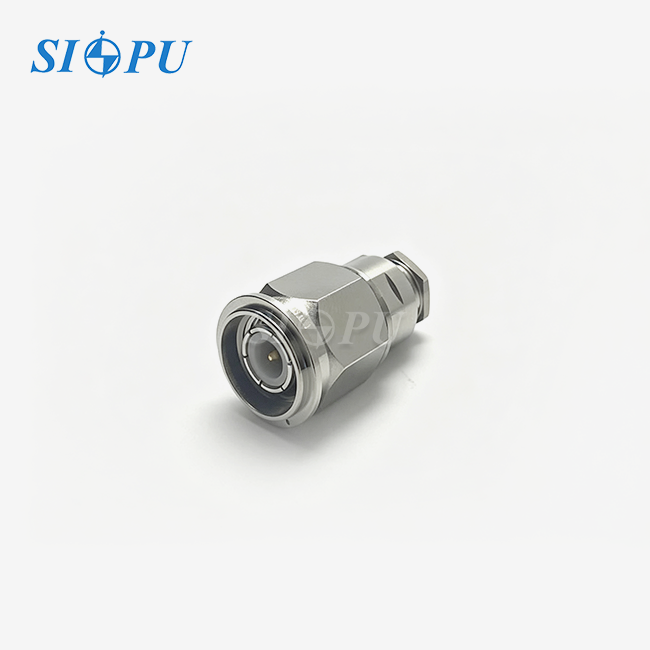
An N male connector for RG142B cable is a 50Ω RF interface with threads that is used to terminate RG142B/U coaxial cable without breaking the continuity of the impedance. When pressure is applied, the threaded coupling locks both mating faces together. This stops the small moves that weaken contact resistance over time. IEC 61169-16 says that the N-type interface works with 50Ω systems and frequencies ranging from DC to 11 GHz. This makes it one of the most flexible RF connection types currently in use.
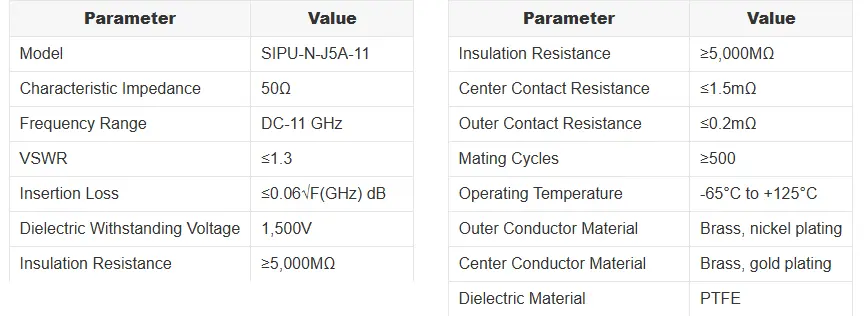
Key Electrical Parameters
There are three numbers that tell you if a connection works with your device. VSWR should be less than 1.3 for the whole working band. The formula for insertion loss is ≒0.06√F(GHz) dB. This makes it possible to predict losses at each frequency step. The insulation resistance should be higher than 5,000M and the dielectric must be able to withstand at least 1,500V. These numbers are directly related to the safety of power handling in base station and power amplifier assemblies.
Material and Structural Attributes
The outer conductor of a good N male connector for RG142B cable is made of brass that has been nickel-plated. This keeps it from rusting without affecting its ability to carry electricity. The center contact is made of brass that has been covered in gold. This keeps the resistance of the contact at 1.5mΩ. The PTFE separator keeps the form stable from -65°C to +125°C, and the body's threads can handle up to 500 times of joining. These aren't just marketing claims; they come from MIL-STD-348 and IEC rules that all real manufacturers follow and test with every new batch.
Comparing N Male Connector Options for RG142B Cable
Not every RF connector type suits every application. Understanding where the N male format stands relative to alternatives helps you justify the specification to procurement teams.
N Male vs. TNC and BNC
tnc connectors share the N-type thread concept but cap out around 11 GHz with reduced power handling. BNC connectors use a bayonet lock suited for low-frequency lab work below 4 GHz. When your system runs 4G/5G base station frequencies or power amplifier outputs, neither TNC nor BNC offers the mechanical strength or dielectric withstanding voltage that an N male connector for RG142B cable provides. The N-type's larger body also accommodates the 4.95mm outer diameter of RG142B without adapter transitions that introduce reflection points.
N Male vs. SMA
SMA connectors work well up to 18 GHz in small forms, but their small thread diameter makes them easily broken when they are vibrated or mated over and over again in the field. The N male interface is much better at handling mechanical abuse in places like equipment cabinets and rack-mounted RF systems where technicians often connect and disconnect cables. It has been tested and found to mate more than 500 times under MIL-C-39012 conditions. This is higher than many other SMA types, which are only rated for a few cycles in high-torque settings.
Brass vs. Stainless Steel Body Options
Brass bodies with nickel plating deliver excellent conductivity and cost efficiency for most telecom and industrial deployments. Stainless steel bodies add corrosion resistance in maritime or chemically aggressive environments but cost more and carry slightly higher contact resistance due to the material's lower conductivity. For the majority of base station OEM applications, brass with nickel plating—as used in the SIPU-N-J5A-11—provides the right balance of performance, longevity, and procurement economy.
How to Select the Right N Male Connector for Your RG142B Cable Needs?
Specification sheets help narrow down the choices, but evaluating the suppliers is what seals the deal. Here are the most important things to keep in mind during both prototype and volume procurement cycles.
Matching Electrical Specs to Your System
Start with your power level and frequency cap. For systems that work at 11 GHz and have RF power in the kilowatt range, you need a connector that can handle DC to 11 GHz, VSWR ≤1.3, and 1,500V of dielectric withstanding voltage. All three can be met by the SIPU model SIPU-N-J5A-11. It is important to make sure that the connector's impedance is 50Ω from one end to the other. If it isn't, return loss will build up across a multi-connector RF path.
Evaluating Supplier Reliability
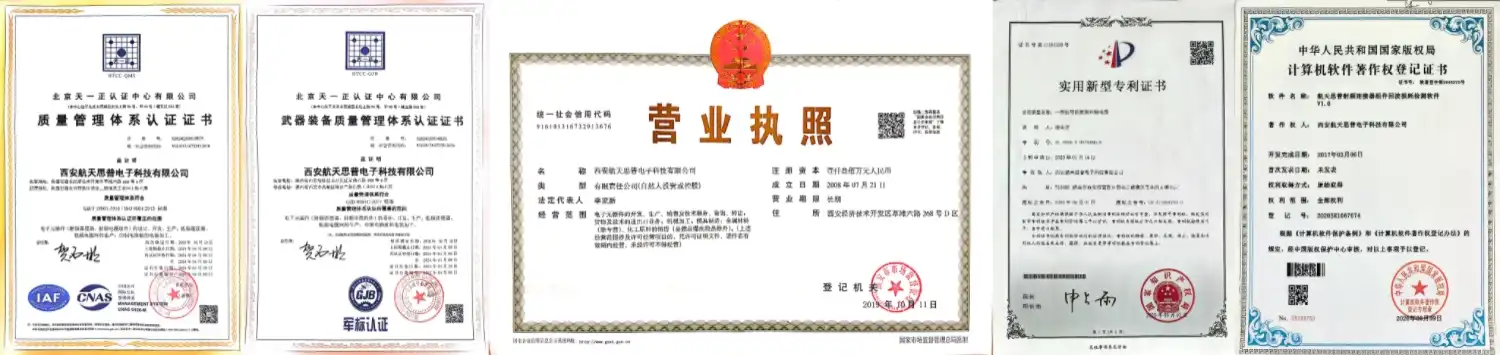
A lot of connector providers fail OEM producers when it comes to batch-to-batch uniformity. Important things to look for in a supplier are whether they have dedicated production lines, test reports that can be traced back to the lot they were made for, and ISO 9001 certification. SIPU RF Technology was established in 1998 and has its main office in Xi'an, China. It is certified by ISO 9001 and follows CE and RoHS rules. With 25 years of experience making things and CNC machines right there in the office, the N male connector for RG142B cable you get in the sixth month of production will be the same as the sample you approved in the first month.
Prototyping and Lead Time
Base station OEM procurement often has short decision cycles of just one to three months, so they need a supplier who can get samples to them quickly. SIPU has basic things in stock and can send them within 72 hours. For custom orders, they have their own production lines. This is important when your tech team needs to test the RF performance of a product before committing to making it. If you ask for sample and production pricing at the same time, you won't be surprised by prices when you move from the prototype to the production run.
Maintenance and Longevity of N Male Connectors on RG142B Cable
If you install and take care of a connection the right way, it will last longer than many of the other parts in the system. Here's what keeps service performance high.
Routine Inspection and Cleaning
If the mating interface is outside or in a place with a lot of humidity, check it every six months. Isopropyl alcohol (≥99%) on lint-free swabs can be used to get rid of oxidation layers on the center pin and outer touch surfaces. You should never use rough materials on gold-plated contacts because they remove the layer of metal that keeps the resistance of the contacts below 1.5mΩ. Even small amounts of dirt on the center pin raise the contact resistance, which directly leads to higher insertion loss at higher frequencies.
Torque and Mechanical Handling
When mating N-type connectors, use 0.7 to 1.1 Nm (6 to 10 in-lbs) of coupling force, which is what the maker recommends and what people have done in the field. When vibrations happen, connections that aren't tight enough loosen, making intermittent contact. Connections that are too tight bend the mating threads. For installations in places where vibrations are likely to happen, like mobile base stations or RF equipment mounted on vehicles, use a torque wrench that has been calibrated.
Troubleshooting Signal Degradation
If the VSWR readings go up after installation for no reason, check the connector before putting the cable back in. A bent center pin, a split PTFE dielectric, or coating wear on the outer contact will all show up on a vector network analyzer in their own unique way. Time-domain reflectometry (TDR) finds the spot in the assembly where the discontinuity is. If these problems are caught early, they don't cause damage to RF components further up the chain.
Procurement Tips: Sourcing N Male Connectors for RG142B Cable
Where to Source?
When buying B2B RF connectors, working directly with the manufacturer always works better than buying from a marketplace. Marketplaces collect stock from many levels of wholesalers, which makes it hard to check the traceability of each lot. You can get lot-specific test records, plating thickness certificates, and RoHS compliance documentation by working directly with a manufacturer like SIPU. These are all things that are needed for system-level certification in defense and telecom programs.
Pricing and Volume Strategy
The price of a connector changes depending on the material, finishing type, and number of orders. For most OEM uses, brass bodies with standard nickel/gold plating are the most cost-effective choice. Price breaks for large amounts of units usually happen at 500, 1,000, and 5,000 units. When you ask for a mixed sample-and-production price during the inquiry stage, you give your purchasing team a full picture of the costs before they approve the engineering sample.
Verifying Authenticity and Documentation
Before placing an order for production, make sure you have the following: an ISO 9001 certificate, a declaration of compliance with RoHS and REACH, a dielectric withstanding voltage test report (1,500V verified), and a dimensional inspection report confirming that the cable is compatible with RG142B/U. If a supplier can't provide these papers within 48 hours of being asked, they shouldn't move on to the sample step.
Conclusion
It's not enough to just match the thread size when choosing the right coaxial plug for N male connector for RG142B cable. You need electrical performance that has been tested across DC to 11 GHz, a 50Ω impedance match, a dielectric that can withstand 1,500V of voltage, and a supplier that can show consistency from batch to batch through documented quality control. The SIPU-N-J5A-11 meets these needs because it has gold-plated center contacts, nickel-plated brass outer wires, a PTFE dielectric, and mating stability of at least 500 cycles. If you use these specs along with direct-manufacturer buying, you can lower both technical risk and supply chain uncertainty across your whole production program.
FAQ
1. What frequency range does this connector support?
With a VSWR of less than 1.3, the N male connector for RG142B cable works from DC to 11 GHz. This covers all current 4G and 5G base station frequency bands below 6 GHz. It also covers most test and measurement tasks in that range.
2. Can I use this connector with standard RG142 or RG400 cable?
The outside diameters of RG142, RG142B, and RG400 are all about the same. The SIPU-N-J5A-11 works best with RG142B/U tolerances, but it can also be used with RG142 and RG400 cables that have the same outer width.
3. How many mating cycles can I expect?
According to MIL-C-39012 testing settings, the connection can be mated more than 500 times. This includes both fixed installs and test labs that need to be set up and changed often.
4. Does this connector meet export compliance requirements?
Yes. There is no special export control classification for DC–11 GHz operation at 1,500V dielectric withstanding voltage. The connection meets the standards for RoHS, REACH, CE, and IEC, which are accepted by governments around the world.
5. What documentation can SIPU provide?
Each batch of products made by SIPU comes with ISO 9001 certification, RoHS and REACH declarations, dielectric withstanding voltage test reports, and plating thickness verification records.
Get Your N Male Connector for RG142B Cable from SIPU RF Technology
With 25 years of experience making things in-house, SIPU RF Technology makes N male connector for RG142B cable solutions that meet IEC 61169-16, MIL-STD-348, and ISO 9001 standards. Standard stock ships in 72 hours, while special versions are made on their own production lines. SIPU covers the whole process, from making a prototype sample to mass production, as a straight N male connector for RG142B cable manufacturers. To get a quote or technical datasheet right away, email our engineering team at info@sipu-rf.com or go to sipuconn.com.
References
1. International Electrotechnical Commission. IEC 61169-16: Radio-Frequency Connectors — Part 16: Sectional Specification for Type N Connectors. IEC, 2013.
2. U.S. Department of Defense. MIL-STD-348B: Radio Frequency Connector Interfaces for MIL-DTL-3655, MIL-DTL-55339, MIL-DTL-83517. DoD, 2012.
3. U.S. Department of Defense. MIL-C-39012: Connectors, Coaxial, Radio Frequency, General Specification for. DoD, 1994.
4. Pozar, David M. Microwave Engineering, 4th ed. Wiley, 2011.
5. Hirose Electric Co. RF Connector Application Guide: Impedance Matching and Cable Termination Best Practices. Hirose Technical Publications, 2019.
6. Amphenol RF. Coaxial Connector Design and Application Reference Manual. Amphenol RF Technical Library, 2020.
Contact us directly for customized solutions, quotations and long-term strategic cooperation.