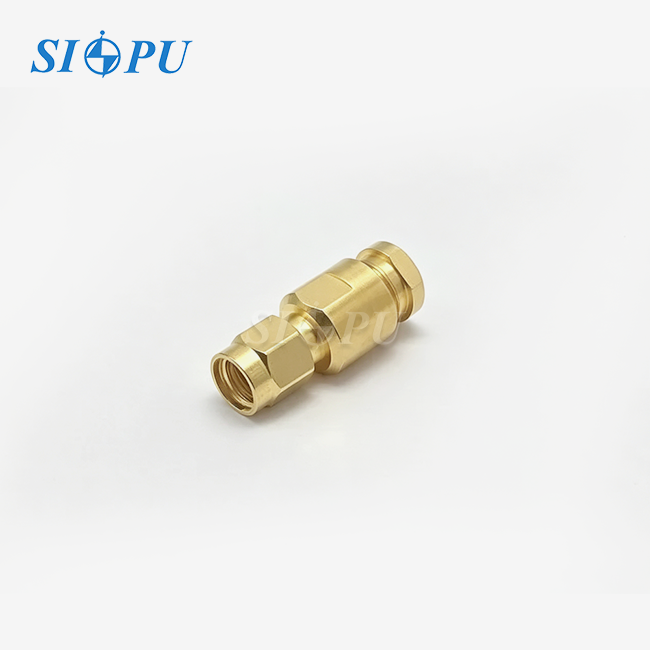
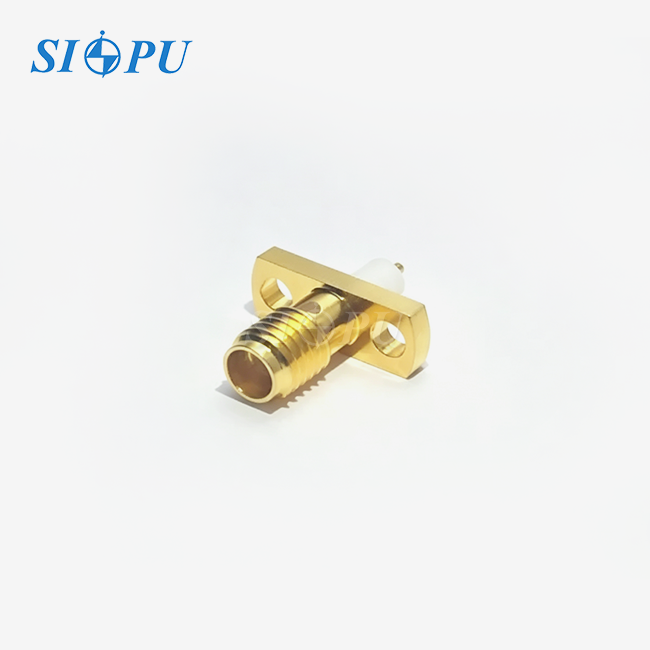
- English
- French
- German
- Portuguese
- Spanish
- Russian
- Japanese
- Korean
- Arabic
- Greek
- German
- Turkish
- Italian
- Danish
- Romanian
- Indonesian
- Czech
- Afrikaans
- Swedish
- Polish
- Basque
- Catalan
- Esperanto
- Hindi
- Lao
- Albanian
- Amharic
- Armenian
- Azerbaijani
- Belarusian
- Bengali
- Bosnian
- Bulgarian
- Cebuano
- Chichewa
- Corsican
- Croatian
- Dutch
- Estonian
- Filipino
- Finnish
- Frisian
- Galician
- Georgian
- Gujarati
- Haitian
- Hausa
- Hawaiian
- Hebrew
- Hmong
- Hungarian
- Icelandic
- Igbo
- Javanese
- Kannada
- Kazakh
- Khmer
- Kurdish
- Kyrgyz
- Latin
- Latvian
- Lithuanian
- Luxembou..
- Macedonian
- Malagasy
- Malay
- Malayalam
- Maltese
- Maori
- Marathi
- Mongolian
- Burmese
- Nepali
- Norwegian
- Pashto
- Persian
- Punjabi
- Serbian
- Sesotho
- Sinhala
- Slovak
- Slovenian
- Somali
- Samoan
- Scots Gaelic
- Shona
- Sindhi
- Sundanese
- Swahili
- Tajik
- Tamil
- Telugu
- Thai
- Ukrainian
- Urdu
- Uzbek
- Vietnamese
- Welsh
- Xhosa
- Yiddish
- Yoruba
- Zulu
How to Select SMP Male Straight Thread Mount Connector Step by Step
Selecting the right SMP male straight thread mount connector starts with understanding your application's frequency range, mechanical environment, and PCB integration requirements. This connector type supports DC to 40 GHz, making it suited for high-speed RF and microwave systems. You need to verify key parameters — VSWR, insertion loss, impedance, and environmental ratings — then compare suppliers against delivery, sample availability, and batch consistency. The sections below walk through each decision point so procurement engineers can move from datasheet review to qualified bulk order with confidence.
Understanding SMP Male Straight Thread Mount Connectors
Read the specs and ask for prices before you look at this link. You need to know what it is and how it works in your system.
What the Connector Is?
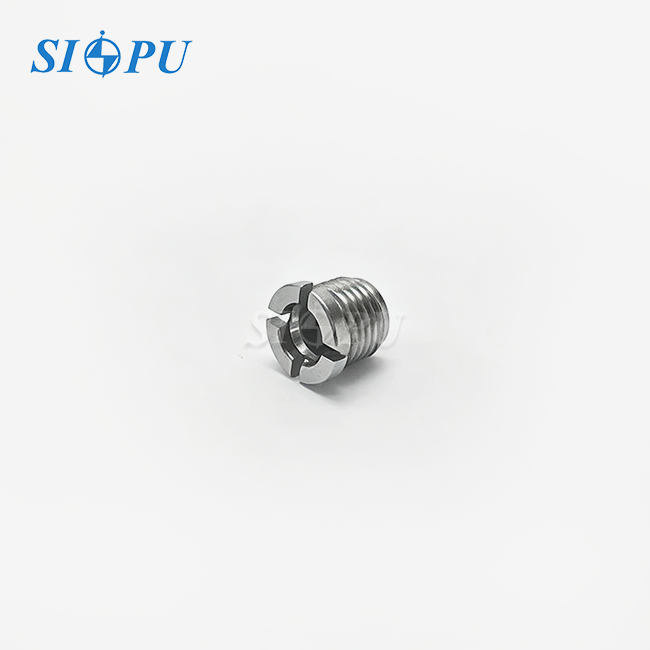
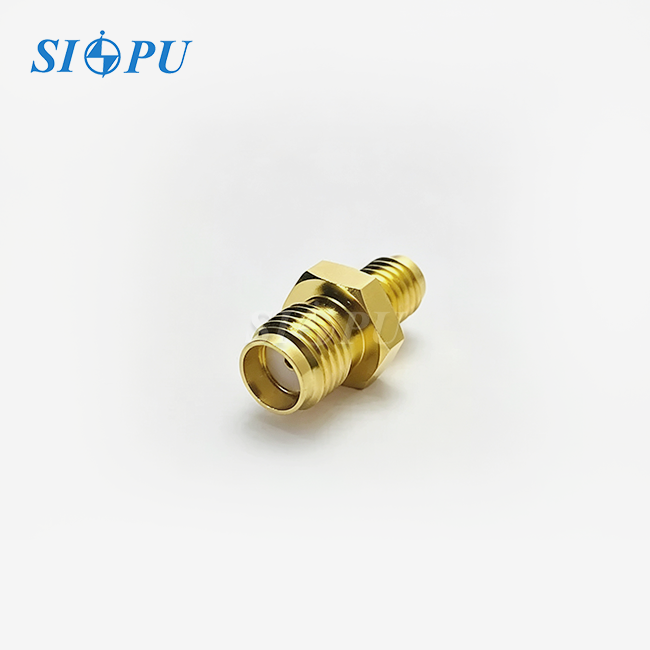
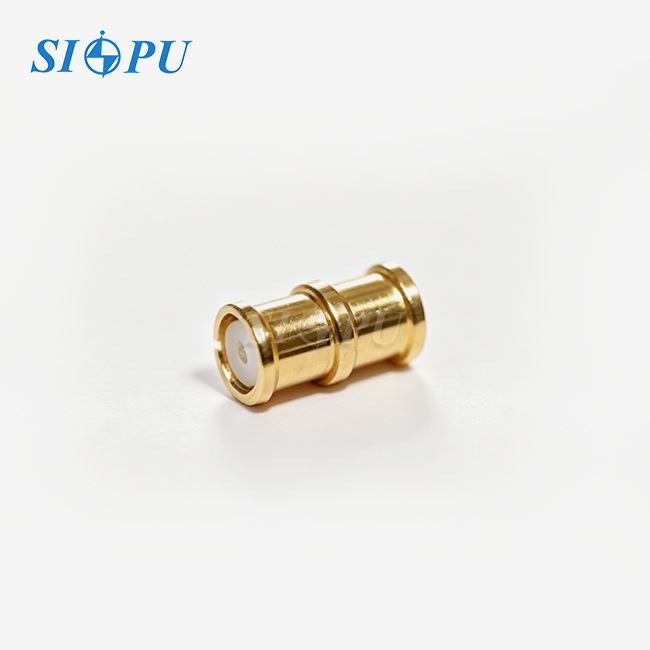
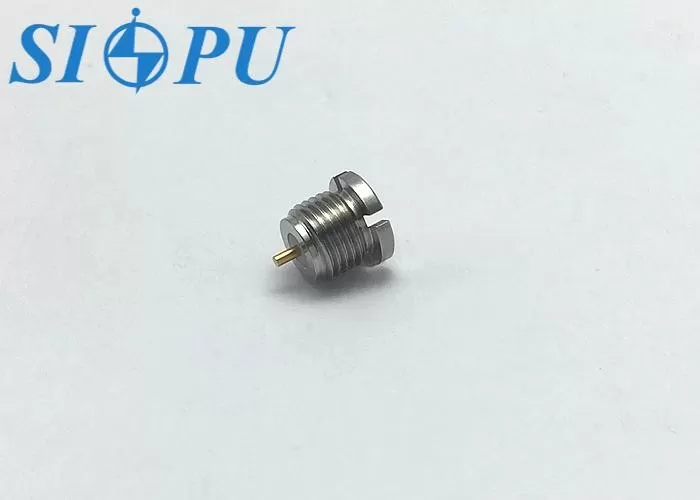
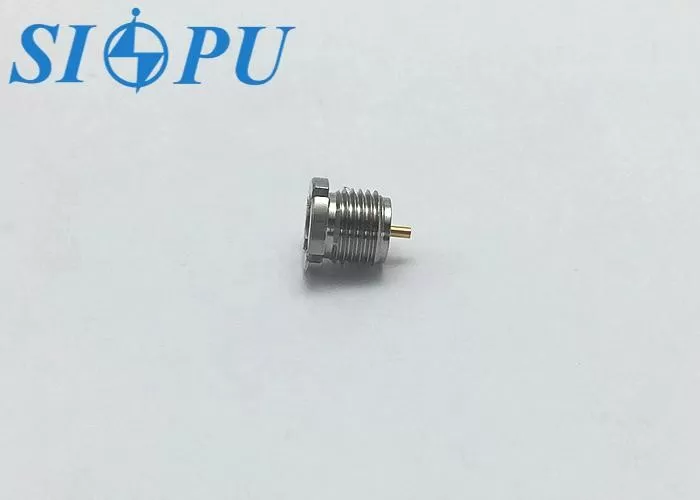
You can connect small radio frequency (RF) devices that work with microwave and millimeter waves to an SMP male straight thread mount connector. This connector's threaded body locks it physically to a panel or PCB standoff. This means that there is no axial play even after many mating cycles. The signal line stays straight and short because of the straight design. This is very important when the frequency gets close to 40 GHz.
Core Electrical Specifications
This link has a normal resistance of 50 Ω from DC to 40 GHz. It is kept within a range of ≤ 0.07√F(GHz) dB, and the VSWR is given as 1.1 + 0.01F(GHz). The insulation resistance is more than 5,000 MΩ, the contact resistance is 6.0 mΩ at the center contact and 2.0 mΩ at the outer contact, and the dielectric can handle up to 500 V of power. As long as these numbers stay the same, the connector doesn't need to be derated in order to keep the signal quality over the full rated bandwidth.
Materials and Construction
The outside conductor is made of passivated stainless steel. This part is made of PTFE, and the center conductor is made of beryllium bronze that has been plated with gold. The materials in this stack can work in ranges from -65 °C to +125 °C and can last for 96 hours under salt spray. Because it has positioning slots, the PCB stays in place while it is being soldered. This makes it less likely that placement mistakes will happen during reflow and stops the impedance gaps that cause VSWR spikes in the final test.
Key Features and Benefits of SMP Male Straight Thread Mount Connectors
The next question is why this form factor is better than others like SMA or MCX once you know how it's put together.
High-Frequency Signal Integrity
At millimeter-wave frequencies, the straight signal path has few physical breaks, which lowers reflection right away. At 40 GHz, a mistake of only 0.1 mm in the center contact can change the resistance enough to make the VSWR worse. The 50 Ω impedance is kept tight across the recommended band by the PTFE dielectric and the gold-plated beryllium bronze center contact. ATE and phased-array systems can use this because it keeps the phase stable.
Mechanical Reliability in Harsh Environments
In chassis with a lot of vibration, snap-on connectors can't match thread mounting for a steady installation that can be controlled by torque. The connector can be mated at least 500 times, which is long enough for most board-level replacements in telecom backplane assemblies. No changes were made to the standard for TNC and N-type nickel-plated connections after 96 hours of salt spray. It shows that the plugs will work in defense-grade enclosures and radio lines outside, where water is a real problem.
Compact Footprint for High-Density Boards
Because the microstrip solder-mount size fits right on to the PCB's transmission lines, there is no need for an adapter gap. The SMP thread-mount format lets the interconnectors be closer together than with full-size coaxial options when there are a lot of ports per square inch, like in 5G radio units, radar signal processors, and automated test boards. It still gives the application the mechanical security it needs, though.
These features fix the three most common issues in RF procurement: VSWR that stays the same across production lots, failures caused by shaking, and supply issues that come up when you only use one source.
Step-by-Step Guide to Selecting the Right SMP Male Straight Thread Mount Connector
Making a choice makes sense with its five steps. They are likely to go wrong during the final test or when they are put into use in the field if you try to rush any of them.
Step 1 — Define Your Frequency and Environmental Requirements
Begin with the highest frequency possible and the worst environment possible. If you want to take your 40 GHz system outside or on the go, you need a connection that works with the whole DC-40 GHz band and has information on how it handles salt spray and changes in temperature. Make sure that the seller can give you test results along with what the datasheet says before you order a sample.
Step 2 — Validate Critical Parameters Against Your Datasheet
To find the number you want at the highest frequency you can use, use the VSWR method, which is -1.1 + 0.01F. Look at how much insertion loss you have and how much money you have for links. When you look at your system, make sure that the intermodulation and passive loss limits are met by the center contact resistance (≤ 6.0 mΩ) and the outer contact resistance (≤ 2.0 mΩ). You should get VNA sweep data from the supplier that covers the whole frequency range. Each production lot should have 100% electrical characterization.
Step 3 — Evaluate Supplier Quality and Batch Consistency
When PCB-mount RF connectors are checked, the main reason they don't connect is that the VSWR changes from batch to batch. Find out from the provider what the CPK data is for the edges of the center contact and the thread pitch limits. Being sure of the quality of the goods you buy is easy if the sellers are ISO 9001 certified, have RF production lines, and have GJB or MIL-STD-348 manufacturing references. Before agreeing to a price for a big order, you should ask for small amounts to be sent for SMT testing.
Step 4 — Review Lead Time, MOQ, and Pricing Structure
Telecom OEMs need a source that can keep safety stock on standard SKUs and guaranty 72-hour shipping on items that are in stock. They buy things every three to six months. Make sure you know right away what mixed-sample pricing means. A lot of procurement teams look at two or three sources at the same time before picking one as their main source. A source that doesn't have a high minimum order quantity (MOQ) and can offer a sample-plus-small-batch price cuts the cost of testing by a lot.
Step 5 — Prototype Testing and Qualification
To make sure everything is okay before you approve a big order, you should test the sample connections again for thermal shock, vibration, and RF. There was a loss of document entry and VSWR before and after stress from the environment. Any change from the rate range at this point means there is a problem with how stable the manufacturing process is, and this problem will show up again in production lots. If you make it through this stage, you can move on to buying in bulk from a known good seller.
Comparing Popular SMP Male Straight Thread Mount Connector Brands
A number of well-known sellers are in this area of goods. People in North America who work in defense and telecom are big fans of Amphenol and TE Connectivity. They have big marketing networks and support programs for a long time. It is known that Pasternack and Huber+Suhner have a large catalog and can give typical setups quickly on the spot. Radiall is known for making parts that are good enough for use in spacecraft. Prices for these names are generally higher because they cost more to get to stores.
From its home in Xi'an, China, SIPU RF Technology Co., Ltd. has been in business since 1998. When they make SMP thread-mount connectors, they do so on special RF lines that are ISO 9001 certified and follow GJB and MIL-STD-348 rules. Since it began making goods 28 years ago, SIPU has a straight factory price, 72-hour stock delivery, and strong ODM/OEM customization options. If your program needs to save money without sacrificing electrical performance, this is something to think about. SIPU works with JNP Supplies LLC in Seattle, Washington, which is in North America. For clients in the US and Canada, they handle fast local planning.
Procurement Best Practices and Tips for B2B Buyers
When you need to buy a lot of SMP male straight thread mount connector, it's not enough to just find the cheapest unit price. Here are some things that can be done during the whole program to make it less risky to buy.
- Run parallel supplier qualification: Evaluate your primary source alongside at least one alternate. Maintain approved vendor list (AVL) status with both so that a supply disruption at one factory does not stall your production line.
- Lock in mixed-sample pricing upfront: Negotiate a sample-plus-small-batch price structure before finalizing your supply agreement. This gives your engineering team room to run qualification tests without inflating pre-production cost.
- Set clear VSWR acceptance criteria in your PO: Specify the VSWR formula and frequency sweep range directly in your purchase order documentation. This creates a contractual quality gate that simplifies incoming inspection and dispute resolution.
- Request batch traceability documentation: Each production lot should carry a certificate of conformance with electrical test data. This protects you during field failure investigations and supports corrective action processes.
You should ask for proof of batch tracking. A certificate of conformance for electrical test data should be kept with each production lot. This keeps you safe while you look into field problems and helps with the process of taking corrective action.
Conclusion
Check that the electrical specs of the thread-mount SMP plug you want to buy meet your frequency and loss goals, that the environmental rates match test data, and that you can find a source that can keep your program volume the same from batch to batch. For more than 500 mating cycles, this type of connection can handle frequencies from DC to 40 GHz. It can also withstand salt spray for 96 hours. Most of the time, it can be used in radar, test tools, and telecom backplanes. You can choose an SMP male straight thread mount connector supplier by following the five steps above. Get sample data that has been checked before placing a large order, and keep an alternative qualified supplier on hand to protect your supply chain.
FAQ
1. What frequency range does this connector support?
The SMP male straight thread mount connector can work from DC to 40 GHz. It works for 5G backhaul, handling radar signals, and automatic test tools because it can handle frequencies from microwaves to millimeter waves.
2. What is the difference between SMP male and SMP female interfaces?
The male contact has a middle pin that fits into a female socket. Most of the time, the male connector goes on the PCB and the female connector hooks up to a cable or another board connector.
3. Can these connectors be customized for specific applications?
You can change things like the plating material, the thread size, and the shape of the PCB layout to fit the needs of a certain program. Many suppliers, such as SIPU, have their own CNC machines and other specialized tools that they can use to make custom models during the production cycle.
4. Are SMP and SMPM connectors interchangeable?
No, an SMP pin is 0.015 inches long and an SMPM pin is 0.012 inches long. The two ports can't work together mechanically, so they need different hardware to connect.
5. Does this connector meet RoHS requirements?
You should ask your provider for a written statement to make sure they follow RoHS rules. This is especially important for goods going to European markets, where customs can have trouble with paperwork that doesn't match up for different lines of products.
Request a Sample or Bulk Quote from SIPU — Your Trusted SMP Male Straight Thread Mount Connector Manufacturer
SIPU RF Technology Co., Ltd. has prices for the SMP male straight thread mount connector that come straight from the plant. They also ship from stock within 72 hours and offer full expert support. SIPU is ready to help you with your next round of purchases. They are ISO 9001 certified, make products that meet GJB and MIL standards, and have a small business in Seattle called JNP Supplies LLC that can help you in your area. To get samples, mixed-batch prices, or custom specifications right away, go to sipuconn.com or email us at info@sipu-rf.com.
References
1. IEEE Transactions on Microwave Theory and Techniques — IEEE, 2021
2. MIL-STD-348B: Radio Frequency Connector Interfaces for MIL-PRF-39012 — U.S. Department of Defense, 2020
3. RF and Microwave Connector Technology — Microwave Journal, 2022
4. IEC 61169-4: Radio Frequency Connectors — International Electrotechnical Commission, 2020
5. Connector and Interconnect Technology for High-Frequency Applications — Microwave Product Digest, 2023
6. ISO 9001:2015 Quality Management Systems — Requirements — International Organization for Standardization, 2015
Contact us directly for customized solutions, quotations and long-term strategic cooperation.