- English
- French
- German
- Portuguese
- Spanish
- Russian
- Japanese
- Korean
- Arabic
- Greek
- German
- Turkish
- Italian
- Danish
- Romanian
- Indonesian
- Czech
- Afrikaans
- Swedish
- Polish
- Basque
- Catalan
- Esperanto
- Hindi
- Lao
- Albanian
- Amharic
- Armenian
- Azerbaijani
- Belarusian
- Bengali
- Bosnian
- Bulgarian
- Cebuano
- Chichewa
- Corsican
- Croatian
- Dutch
- Estonian
- Filipino
- Finnish
- Frisian
- Galician
- Georgian
- Gujarati
- Haitian
- Hausa
- Hawaiian
- Hebrew
- Hmong
- Hungarian
- Icelandic
- Igbo
- Javanese
- Kannada
- Kazakh
- Khmer
- Kurdish
- Kyrgyz
- Latin
- Latvian
- Lithuanian
- Luxembou..
- Macedonian
- Malagasy
- Malay
- Malayalam
- Maltese
- Maori
- Marathi
- Mongolian
- Burmese
- Nepali
- Norwegian
- Pashto
- Persian
- Punjabi
- Serbian
- Sesotho
- Sinhala
- Slovak
- Slovenian
- Somali
- Samoan
- Scots Gaelic
- Shona
- Sindhi
- Sundanese
- Swahili
- Tajik
- Tamil
- Telugu
- Thai
- Ukrainian
- Urdu
- Uzbek
- Vietnamese
- Welsh
- Xhosa
- Yiddish
- Yoruba
- Zulu
What Defines a Reliable SMA Female to N Male Adapter?
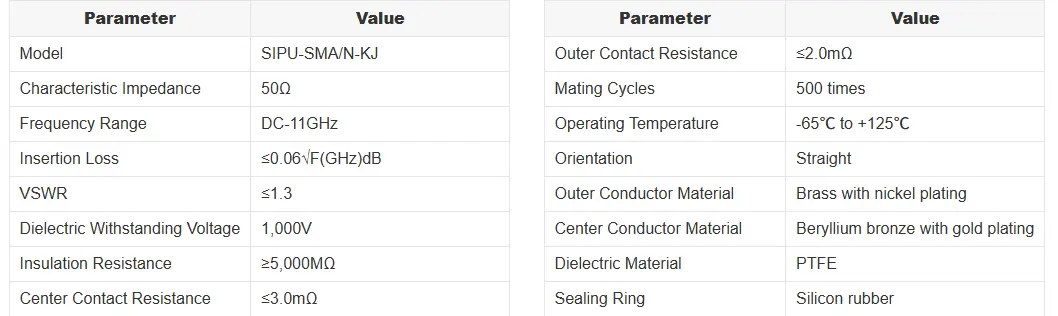
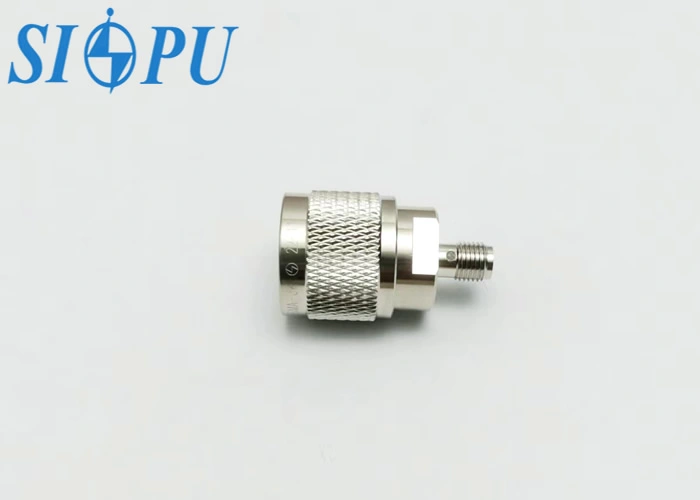
A reliable SMA female to N male adapter delivers consistent 50Ω impedance continuity, low insertion loss, and stable mechanical coupling across its rated frequency range. The quality of this inter-series connector directly affects how well the system works in RF test settings, where a single connecting point can change the accuracy of measurements along a whole signal chain. The SIPU-SMA/N-KJ works from DC to 11GHz and has an insertion loss of -0.06√F(GHz)dB and a VSWR of -1.3. This makes it a good choice for engineers who don't want signal drift between a Vector Network Analyzer port and an N-type cable termination.
Understanding SMA Female to N Male Adapters: Specifications and Key Features
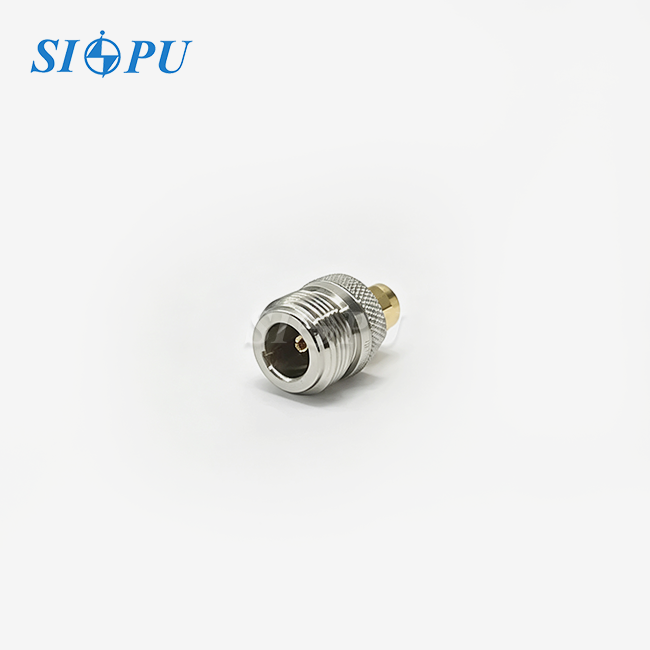
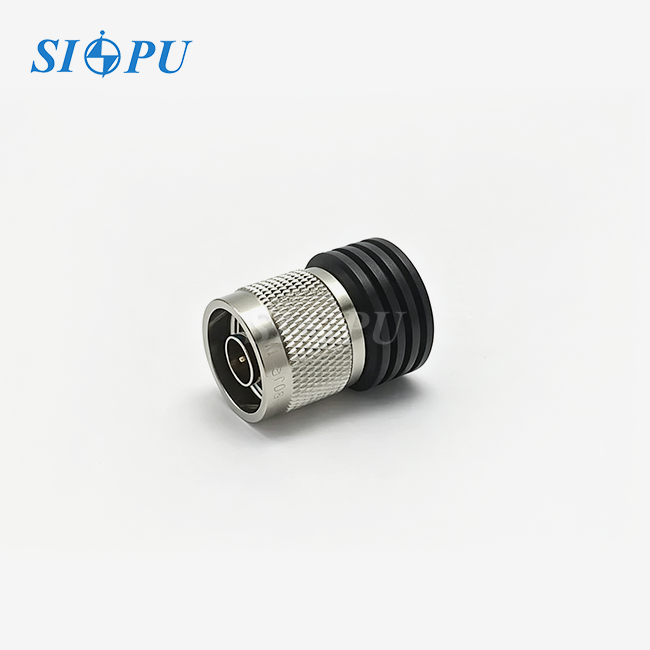
An SMA female to N male adapter connects two widely used types of coaxial connectors. The SMA side has a small, threaded interface that is widespread on lab equipment and modules that are placed on PCBs. The N-type side has a bigger, weatherproof interface that is used in power amplifiers, antenna feedlines, and base station equipment that is used outside.
Basic Interface and Impedance
The standard for both types of connectors is a characteristic impedance of 50©. Signal reflection stays within acceptable limits as long as the adapter keeps that impedance through the transition zone. This is made possible by the SIPU-SMA/N-KJ's PTFE dielectric core, which keeps its low, stable dielectric constant from -65°C to +125°C.
Frequency Range and Insertion Loss
The frequency range from DC to 11GHz covers most telephony, spectrum analysis, and phase-locked loop intermodulation test cases. With an insertion loss of ≒0.06√F(GHz)dB, the theoretical loss stays below 0.18 dB at 9GHz, for example. This level of loss keeps the accuracy of measurements on tools like spectrum analyzers and signal generators.
Mechanical Construction and Durability
This wire's outside is made of nickel-plated brass, which doesn't rust and still works well to carry electricity. The middle pin is made of gold-plated beryllium bronze that has been used 500 times. The adapter's straight shape makes it small enough to fit in high-density rack or test fixture installations, and the silicon rubber sealing ring keeps it safe from the outside world.
Key Criteria That Define a Reliable SMA Female to N Male Adapter
Not every adapter on the market is good enough for use in a lab. Before agreeing to a seller, engineers who do intermodulation tests, cut feedline paths, or make prototypes for large-scale systems need to make sure that the SMA female to N male adapter supplier is reliable. Here are the most important things to look at:
- Impedance that stays the same across the whole frequency range. A 50Ω number on a document doesn't mean anything if the real resistance changes at higher frequencies. Check the VSWR data across the whole working range, not just at one test point. VSWR ≤1.3 across DC-11GHz is what the SIPU-SMA/N-KJ says it needs.
- Stable contact resistance. When the center contact resistance is ≤3.0mΩ and the outer contact resistance is ≤2.0mΩ, ohmic heating and signal loss are lessened at connections that are used over and over again during test campaigns.
- Strength of the plating. Gold-plated contacts don't rust and keep their low contact resistance even after being mated many times. Nickel plating on the outside of the body keeps it from rusting in labs that are humid or have changing temperatures.
- Dielectric withstanding voltage. A rating of 1,000V and insulation resistance ≥5,000MΩ confirm that the adapter will not introduce leakage currents that corrupt sensitive measurements.
All of these things show if a SMA-to-n adapter works consistently throughout the whole buying process, from making sure the sample works to testing it on the production line.
Material Selection and Its Impact
All of the above performance metrics are affected by the materials used. Beryllium bronze center conductors keep their spring force even after 500 mating cycles, which is important in automatic test equipment where connections are put together and taken apart many times. PTFE keeps its dielectric constant from very cold temperatures to over 200°C, which is much higher than the adapter's recommended working range.
Batch Consistency and Manufacturing Tolerances
When test labs handle multiple SKUs in a single purchase order, they are aware of the risk of variation from batch to batch. MIL-STD-348A says that the SMA thread and N-type interface must have the right amount of tolerance in terms of size so that they can work with all of the other connectors in the test rack. In order to control this, SIPU uses CNC cutting and checks the thickness of the metal and the strength of the bonding between batches.
Compliance and Environmental Standards
At SIPU, RoHS compliance is checked for every production batch. This meets the standards for labs that work under EU or similar environmental laws. The products also meet the quality management standards set by CE and ISO 9001. This gives buying teams proof that the suppliers are qualified for checks.
Comparing SMA Female to N Male Adapters: Market Options and How to Choose
A number of well-known companies make inter-series adapters with these connectors. Amphenol makes a lot of RF adapters that meet MIL-spec dimensions and are commonly used in defense and aerospace applications. Industrial-grade reliability and automatic assembly compatibility are important to TE Connectivity. As a brand that focuses on distributors, Pasternack offers quick availability on basic setups but not a lot of customization options.
SIPU is not like the other companies in this market. SIPU has been making RF interconnects for 28 years and has dedicated production lines for both commercial and defense customers. They offer production-grade adapters with electrical verification for each batch, rapid prototyping for non-standard configurations, and domestic inventory that supports the 1–3 month procurement cycles that are common in test labs.
Price Versus Performance Trade-offs
Most low-cost adapters sold by general electronics wholesalers don't have beryllium bronze center contacts. Instead, they use phosphor bronze, which breaks down more quickly when mated more than once. Also, they might not do each batch's RoHS and finishing checks. The price difference might not matter for a one-time operation in the field. For a test lab that does hundreds of mating operations on adapters every month, the total cost of replacing worn-out adapters quickly goes over the initial savings.
Specialty Configurations
Some uses need more than just the standard silicon ring to be waterproof, low-PIM versions for testing passive intermodulation, or special plating combinations. SIPU allows ODM and OEM customization of electrical parameters, materials, and mechanical design, which lets you choose an adapter that is perfectly matched to the needs of a measurement system.
Procurement Guide for SMA Female to N Male Adapters in B2B Markets
It takes more than just picking the adapter with the lowest price from an online store to find one that has been checked and meets your needs. Teams in charge of buying RF components with yearly budgets between $150,000 and $600,000 need SMA female to N male adapter suppliers who offer quality documentation that can be tracked, stable inventory, and quick technical support.
SIPU keeps standard configurations in stock in the United States and can deliver them within 72 hours. Custom orders are given priority when it comes to organizing production, and we promise to answer all inquiries within 12 hours. You can place an order for a sample before committing to full production. This works with the usual inquiry–sample–production process that most test lab buying teams use.
When you buy a lot of more than one SKU, SIPU lets you choose your own prices with mixed-sample pricing methods. This helps engineers figure out the best way to buy a lot of connectors by looking at the different ways they can be put together and how much they will cost.
Ensuring Long-Term Reliability: Best Practices and Maintenance Tips
Proper Handling and Torque Application
When you tighten N-type connections too much, you damage the center contact line and squeeze the dielectric, which raises the resistance at the transition point. Instead of tightening by hand, use a calibrated torque wrench to apply the manufacturer-specified torque, which is usually 1.36 N·m for N-type interfaces.
Routine Inspection Protocols
After every 100 mating cycles in high-frequency automated test applications, check the center contacts for deformation and gold plating wear. Look for dirt or dust in the dielectric gap with a magnifying loupe. If the mating interface is contaminated, the contact resistance can rise by a factor of ten. This will show up as higher insertion loss on a calibrated VNA sweep.
Environmental Protection
Keep adapters that aren't being used in covered cases with desiccant to keep the nickel and gold plating from oxidizing. The silicon rubber sealing ring should be checked once a year for cracks or compression set in field installations where temperatures change a lot. It is much cheaper to replace a worn-out closing ring than to replace an adapter that has let water in and corroded the center contact.
Conclusion
An SMA female to N male adapter is reliable if it has checked electrical parameters, consistent production tolerances, and proof of compliance, not just if it has a low price. Adapters must work the same way from the first mating cycle to the five hundredth for engineers who are in charge of spectrum analyzer setups, VNA calibration chains, or phase-locked loop intermodulation benches. SIPU's SIPU-SMA/N-KJ meets all of these needs with specifications that can be tracked, testing for each batch, and a supply structure that is made for the short purchase cycles and multiple SKU orders that are common in professional RF test environments.
FAQ
1. What is the difference between SMA female to N male and N female to SMA male configurations?
The connector orientation determines which cable or instrument port the adapter connects to. An SMA female to N male adapter accepts an SMA male plug on one side and connects to an N female port on the other. Reversing the configuration requires a different adapter. Always confirm which end of your cable assembly and which port on your instrument carry the male or female interface before ordering.
2. How does VSWR affect measurement accuracy in test applications?
VSWR above 1.3 introduces signal reflections at the adapter interface. These reflections create standing waves in the signal path, which appear as frequency-dependent ripple on a VNA or spectrum analyzer trace. Keeping VSWR ≤1.3 across DC-11GHz, as specified for the SIPU-SMA/N-KJ, limits this ripple to levels that remain below the measurement uncertainty budget in most laboratory setups.
3. Can this adapter be used in outdoor installations?
The nickel-plated brass upper body and silicon rubber closing ring protect against the elements and can handle temperatures from -65°C to +125°C. Self-amalgamating tape over the link is a good way to add extra weatherproofing to projects that will be outside all the time and will be exposed to water or high humidity.
4. What certifications should I request from a supplier?
Request RoHS test reports, ISO 9001 certification, and per-batch plating inspection records. For applications involving export or import under US regulations, verify that the adapter is classified EAR99, which applies to standard DC-11GHz RF interconnects without controlled encryption or defense-specific technology.
Request a Sample or Quote from SIPU — Your SMA Female to N Male Adapter Supplier
Precision RF interconnects from SIPU RF Technology have been sold to test labs, telecom integrators, and original equipment manufacturers (OEMs) for 28 years. The SIPU-SMA/N-KJ is made with production-level engineering and is backed by ISO 9001 quality management, per-batch RoHS verification, and a domestic inventory that lets it be delivered quickly. The technical team at SIPU replies within 12 hours, whether you need a single SMA female to N male adapter sample to try a new test fixture or a large buy of multiple SKUs to support a prototype program. To get a quote right away, email us at info@sipu-rf.com or go to sipuconn.com.
References
1. Amphenol RF. RF Connector Application Guide. Amphenol RF Technical Publications, 2022.
2. Institute of Electrical and Electronics Engineers. IEEE Std 287-2007: Standard for Precision Coaxial Connectors at Frequencies Up to 110 GHz. IEEE, 2007.
3. MIL-STD-348A. Interface Standard: Radio Frequency Connector Interfaces for MIL-PRF-39012, MIL-PRF-55339, MIL-PRF-23053/5, MIL-PRF-85045, and MIL-C-83517. U.S. Department of Defense, 1993.
4. Pozar, David M. Microwave Engineering, 4th ed. Wiley, 2011.
5. IEC 61169-15. Radio-Frequency Connectors — Part 15: Sectional Specification for rf coaxial connectors of Type N. International Electrotechnical Commission, 2013.
6. Pasternack Enterprises. Understanding VSWR and Return Loss in RF Connector Selection. Pasternack Technical Resources, 2021.
Contact us directly for customized solutions, quotations and long-term strategic cooperation.