- English
- French
- German
- Portuguese
- Spanish
- Russian
- Japanese
- Korean
- Arabic
- Greek
- German
- Turkish
- Italian
- Danish
- Romanian
- Indonesian
- Czech
- Afrikaans
- Swedish
- Polish
- Basque
- Catalan
- Esperanto
- Hindi
- Lao
- Albanian
- Amharic
- Armenian
- Azerbaijani
- Belarusian
- Bengali
- Bosnian
- Bulgarian
- Cebuano
- Chichewa
- Corsican
- Croatian
- Dutch
- Estonian
- Filipino
- Finnish
- Frisian
- Galician
- Georgian
- Gujarati
- Haitian
- Hausa
- Hawaiian
- Hebrew
- Hmong
- Hungarian
- Icelandic
- Igbo
- Javanese
- Kannada
- Kazakh
- Khmer
- Kurdish
- Kyrgyz
- Latin
- Latvian
- Lithuanian
- Luxembou..
- Macedonian
- Malagasy
- Malay
- Malayalam
- Maltese
- Maori
- Marathi
- Mongolian
- Burmese
- Nepali
- Norwegian
- Pashto
- Persian
- Punjabi
- Serbian
- Sesotho
- Sinhala
- Slovak
- Slovenian
- Somali
- Samoan
- Scots Gaelic
- Shona
- Sindhi
- Sundanese
- Swahili
- Tajik
- Tamil
- Telugu
- Thai
- Ukrainian
- Urdu
- Uzbek
- Vietnamese
- Welsh
- Xhosa
- Yiddish
- Yoruba
- Zulu
SSMB Connector vs. Other RF Connectors: Top Pick?
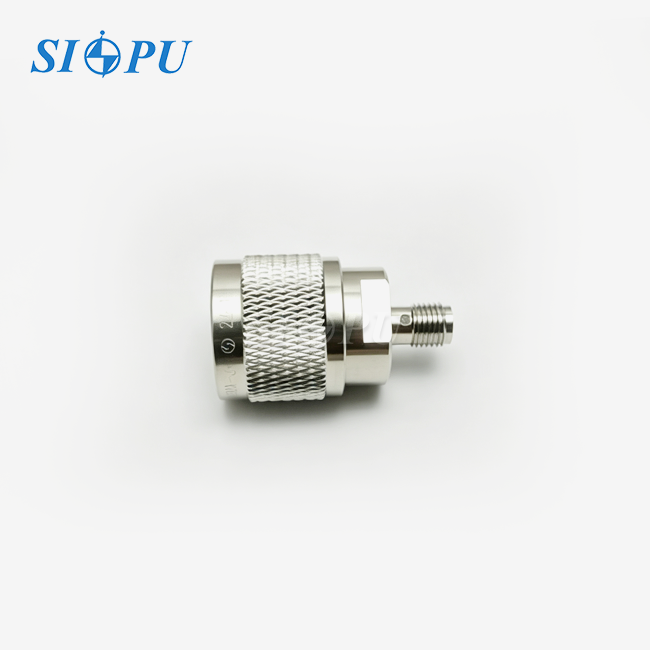
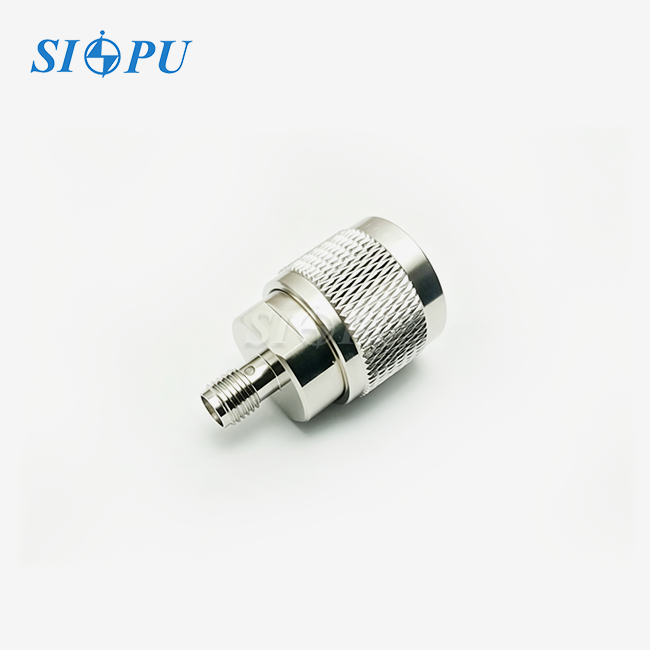
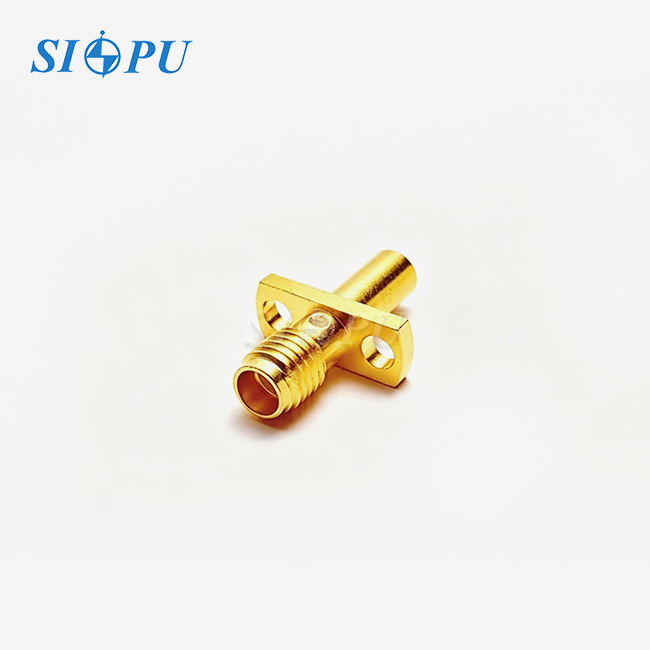
When engineers ask me which RF connector works best for tight-space, high-frequency assemblies, my answer usually comes back to the same starting point: the SSMB female right angle connector for RG316 cable. This tiny, snap-on interface works from DC to 3 GHz with 50 Ω impedance, keeps VSWR ≤ 1.63, and routes easily in crowded PCB layouts where straight connectors wouldn't fit. This type of connector always gives signal integrity and form-factor discipline that prototypes and production runs need for communication test OEMs, GPS module designers, and industrial RF equipment builders.
Understanding SSMB Connectors: Features and Applications
What Makes an SSMB Connector Distinct?
The SSMB connector is another kind of very small snap-on interface. Though it is close to the SMB family, its body is about 30% smaller. For designs with stacked boards, where every millimeter counts, that size drop is important. Snap-on couplings are easier to use and connect faster than threaded ones. The mechanical torque also doesn't put as much stress on the PCB pad.
Key Electrical Specifications
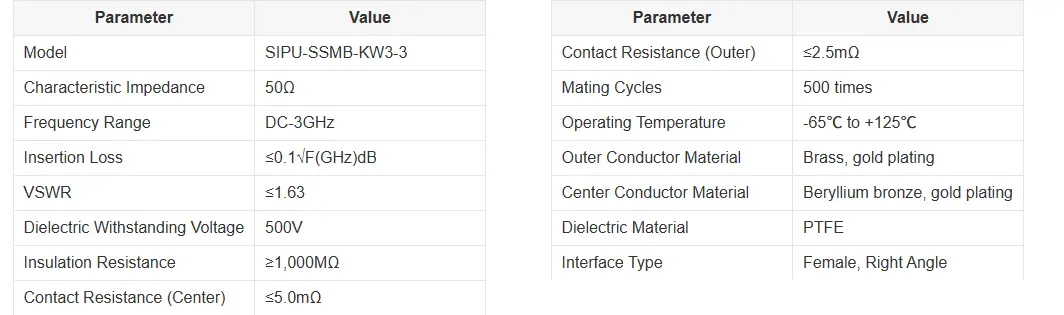
The SIPU-SSMB-KW3-3 type has a 50 Ω characteristic impedance from DC to 3 GHz, an insertion loss of less than 0.1√F(GHz) dB, and an insulator that can handle 500 V. The resistance to insulation is more than 1,000 M©. The SSMB female right angle connector for RG316 cable is often found in telecom test datasheets because these numbers are in line with IEC 61169 and MIL-STD-348 standards for dimensions.
Soldering and Termination Guidance
To properly terminate an SSMB female right angle connector for RG316 cable, you need to cut RG316/U to the right size, solder the center conductor at 300–320 °C for less than three seconds, and crimp the ferrule with a calibrated hex tool. When the PTFE insulator gets too hot, it changes the resistance and raises the VSWR. If you follow the manufacturer's termination drawing, the insertion loss will stay at the rated value.
Comparing SSMB Connectors with Other RF Connectors
It's not always easy to pick the right type of connection. Before completing a plan, engineers often compare SSMB to SMB, SMA, and MCX. Here's how they are different in real life.
SSMB vs. SMB
The SMB works at up to 4 GHz and has the same snap-on system, but it can't be used for grid spacing less than 1 cm because its body width is bigger. The SSMB female right angle connector for RG316 cable takes up less space on the PCB and has the same level of impedance stability below 3 GHz. SSMB is better for units that don't have a lot of room.
SSMB vs. SMA
Because SMA connectors can go up to 18 GHz, they are good for wideband work. The threaded connection, on the other hand, adds height and needs torque wrenches to connect again and again. The SSMB female right angle connector for RG316 cable is lighter, shorter, and faster to connect in portable or high-density test fixtures where the frequency ceiling stays at 3 GHz.
SSMB vs. MCX
The MCX is also very small, but its push-on snap opens with less force than the SSMB's. The SSMB snap-on interface holds better in places where vibrations are common, like outdoor base stations and units placed on vehicles. The SSMB female right angle connector for RG316 cable is more resistant to vibration than the mcx connector for GPS module kits that work at L1/L2 bands (1.2–1.6 GHz) and costs about the same.
Clearance is what makes the difference between a right curve and a straight SSMB. A straight version needs 15–20 mm of axial cable run, while a 90-degree version quickly turns the cable parallel to the board, cutting the keep-out zone by about half.
Benefits of Choosing SSMB Female Right Angle Connectors for RG316 Cable
When engineers specify the SSMB female right angle connector for RG316 cable, they always list three benefits: better electrical performance, longer mechanical life, and more efficient layout.
Here are the main benefits of this set of connectors:
- Low VSWR and stable impedance: VSWR ≤ 1.63 across the full DC–3 GHz band means signal reflections stay low. In communication test equipment, where measurement accuracy depends on a clean signal path, this figure directly affects instrument calibration confidence.
- Gold-plated brass outer conductor and beryllium bronze center contact: Gold plating resists oxidation over 500 mating cycles, keeping contact resistance below 5.0 mΩ (center) and 2.5 mΩ (outer). Beryllium bronze maintains spring tension even after repeated insertions, which matters when field technicians swap cables frequently.
- 90-degree geometry with RG316 optimization: RG316/U's silver-plated copper-clad steel inner conductor and FEP jacket match the connector's mechanical design. The 90-degree exit reduces cable strain at the termination point, which is the most common failure location in flexible coax assemblies.
- Wide operating temperature range: The ssmb female right angle connector for rg316 cable performs from −65 °C to +125 °C. PTFE dielectric maintains its insulation properties at both extremes, which satisfies aerospace and outdoor telecom requirements simultaneously.
The VSWR is less than 1.63 across the whole DC–3 GHz band, which means that signal echoes are low. In communication test equipment, the accuracy of measurements depends on a clear signal path. This number has a direct effect on the confidence in the instrument's calibration.
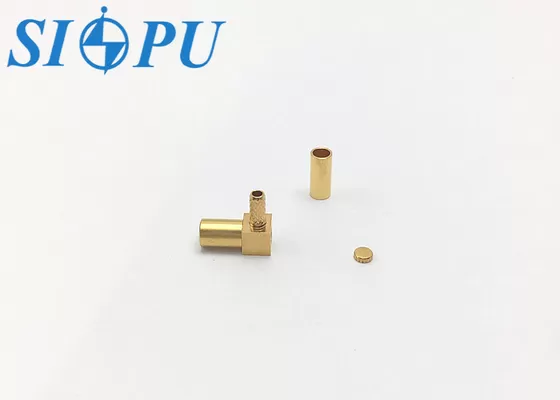
Procurement Guide: How to Select and Source SSMB Connectors for RG316 Cable
Supplier Qualification Criteria
Before you place a large order, make sure that the manufacturer is ISO 9001 certified and gives you test data that can be tracked for each batch. Make sure you get the VSWR sweep data and salt-spray results. Batch-consistency risk is caused by suppliers who can't produce these documents. This is the main complaint from communication test OEM procurement teams.
Pricing and Lead Time Variables
Thickness of the gold coating, customization of the ferrule, and type of packing all have an effect on the unit cost. For small-batch orders with multiple SKUs, which happen a lot during the 1–3 month OEM procurement cycle, a seller with standard stock cuts wait time to 1–2 weeks in the United States. SIPU keeps the SSMB female right angle connector for RG316 cable in stock and lets engineers use mixed-sample pricing for test builds.
Custom Solutions for Specialized Requirements
Some projects need wire lengths that aren't standard, different outer sizes, or exact plating requirements. Getting the manufacturer's engineering team involved early, before the PCB layout is finalized, saves a lot of money on redesigning later. SIPU can make custom frequency ranges, VSWR targets, and mechanical dimensions, and they promise to respond to inquiries within 12 hours.
SSMB Connectors in Action: Case Studies and Application Scenarios
5G Small-Cell Infrastructure
A communication test OEM in Shenzhen needed to route radio waves internally between PCB modules in a 5G small-cell frame that had less than 8 mm of vertical space. When you switch from a SMA to an SSMB female right angle connector for RG316 cable, the keep-out zone got smaller, three more signal paths were added to each board layer, and the VSWR stayed below 1.5 in the 2.4–2.6 GHz operating band.
GPS Module Integration
A GPS module OEM that was making a Beidou terminal that would be placed on a vehicle needed a small 50 © interface that could handle the vibrations that come from cars. The SSMB female right angle connector for RG316 cable, with its beryllium bronze contact and snap-on retention, did not change in impedance after 20 hours of random vibration tests. RoHS compliance also made it possible for the unit to enter the EU market.
Industrial RF Test Equipment
An industrial measurement instrument OEM in Jiangsu wanted samples of six different types of instruments quickly for a redesign of their test fixtures. Inside 72 hours, SIPU sent out mixed samples. Bench testing showed that the difference in insertion loss was less than 0.05 dB across the batch, which met the OEM's requirement for accuracy without having to test each unit individually.
Conclusion
The ssmb female right angle connector for rg316 cable is the practical choice when space, frequency range, vibration resistance, and batch consistency all appear on the same requirements list. For DC–3 GHz uses, it has the best mix of electrical speed and mechanical simplicity compared to SMB, SMA, and MCX options. The SIPU-SSMB-KW3-3 model is compliant with IEC and MIL standards, comes in stock, and can be configured to fit your needs. This connector lowers design risk at every stage, from the sample to production, for OEM engineers who have to keep up with tight prototype schedules and multi-SKU procurement cycles.
FAQ
1. Can this connector work with cables other than RG316?
The SIPU-SSMB-KW3-3 works best with RG316/U. RG174 has a different jacket and conductors, even though it has the same outside diameter. You need to change the ferrule for RG174, so always call the company that makes the wire to make sure it will work before you order it.
2. What is the difference between solder and crimp termination for SSMB connectors?
The middle wire is joined to the solder termination with heat. This makes a low-resistance joint, but the temperature needs to be carefully controlled to protect the PTFE. Crimp termination presses down on the outer ferrule mechanically, which works faster in production settings. A mix of soldering the center and crimping the outside is used in most high-volume OEM assemblies.
3. How do I maintain low VSWR with an SSMB connector on RG316?
Make sure the ferrule crimps correctly, don't solder too much, and keep strip lengths within the error range set by the manufacturer. When TDR is used to check closed circuits, it shows that there is no break in the resistance at the end point.
4. Is this connector suitable for outdoor installations?
Yes. The −65 °C to +125 °C working range covers most outdoor telecom conditions, and the gold-plated brass body doesn't rust. For salt-spray environments, make sure you and your supplier agree on the thickness requirements for plating.
5. Does SIPU provide RoHS documentation?
Yes. The SSMB female right angle connector for RG316 cable goes through RoHS compliance testing with every production batch, and you can get proof of this if you ask for it.
Request Samples or a Quote from SIPU for Your SSMB Connector Needs
Since 1998, SIPU RF Technology has been making high-precision RF connections and is ISO 9001 certified. The SIPU-SSMB-KW3-3 SSMB female right angle connector for RG316 cable can be shipped within 72 hours if it is in stock, and special production lines can handle custom designs. As a reliable SSMB female right angle connector for RG316 cable supplier, SIPU backs up every order with warranty support and instructions on how to install it. Email your requirements or ask for a sample to info@sipu-rf.com, or go to sipuconn.com to start your inquiry right away.
References
1. IEC 61169-4: Radio-Frequency Connectors — Part 4: Sectional Specification for rf coaxial connectors with Inner Diameter of Outer Conductor 1.0 mm (Type SSMB). International Electrotechnical Commission, 2010.
2. Pozar, D. M. Microwave Engineering, 4th ed. Wiley, 2011.
3. MIL-STD-348B: Interface Standard for RF Connector Interfaces for MIL-PRF-39012 Connectors. U.S. Department of Defense, 2013.
4. MIL-STD-202H: Test Methods for Electronic and Electrical Component Parts. U.S. Department of Defense, 2015.
5. Wadell, B. C. Transmission Line Design Handbook. Artech House, 1991.
6. RoHS Directive 2011/65/EU on the Restriction of the Use of Certain Hazardous Substances in Electrical and Electronic Equipment. Official Journal of the European Union, 2011.
Contact us directly for customized solutions, quotations and long-term strategic cooperation.