- English
- French
- German
- Portuguese
- Spanish
- Russian
- Japanese
- Korean
- Arabic
- Greek
- German
- Turkish
- Italian
- Danish
- Romanian
- Indonesian
- Czech
- Afrikaans
- Swedish
- Polish
- Basque
- Catalan
- Esperanto
- Hindi
- Lao
- Albanian
- Amharic
- Armenian
- Azerbaijani
- Belarusian
- Bengali
- Bosnian
- Bulgarian
- Cebuano
- Chichewa
- Corsican
- Croatian
- Dutch
- Estonian
- Filipino
- Finnish
- Frisian
- Galician
- Georgian
- Gujarati
- Haitian
- Hausa
- Hawaiian
- Hebrew
- Hmong
- Hungarian
- Icelandic
- Igbo
- Javanese
- Kannada
- Kazakh
- Khmer
- Kurdish
- Kyrgyz
- Latin
- Latvian
- Lithuanian
- Luxembou..
- Macedonian
- Malagasy
- Malay
- Malayalam
- Maltese
- Maori
- Marathi
- Mongolian
- Burmese
- Nepali
- Norwegian
- Pashto
- Persian
- Punjabi
- Serbian
- Sesotho
- Sinhala
- Slovak
- Slovenian
- Somali
- Samoan
- Scots Gaelic
- Shona
- Sindhi
- Sundanese
- Swahili
- Tajik
- Tamil
- Telugu
- Thai
- Ukrainian
- Urdu
- Uzbek
- Vietnamese
- Welsh
- Xhosa
- Yiddish
- Yoruba
- Zulu
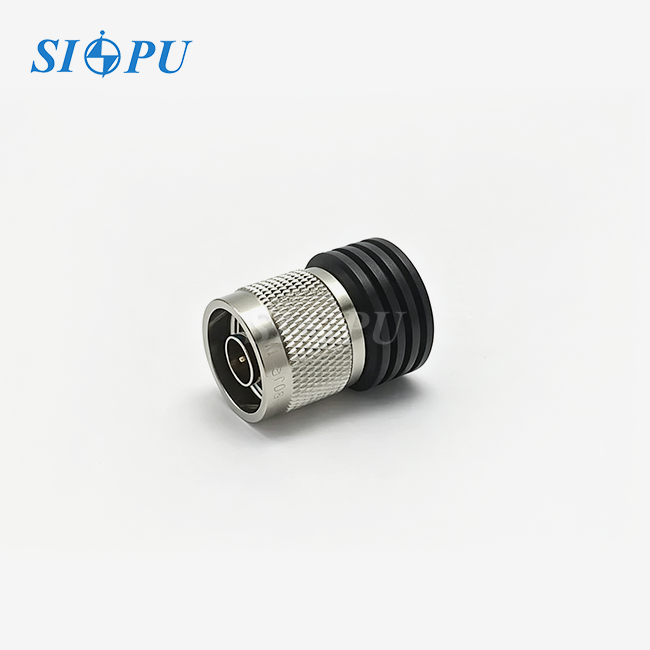
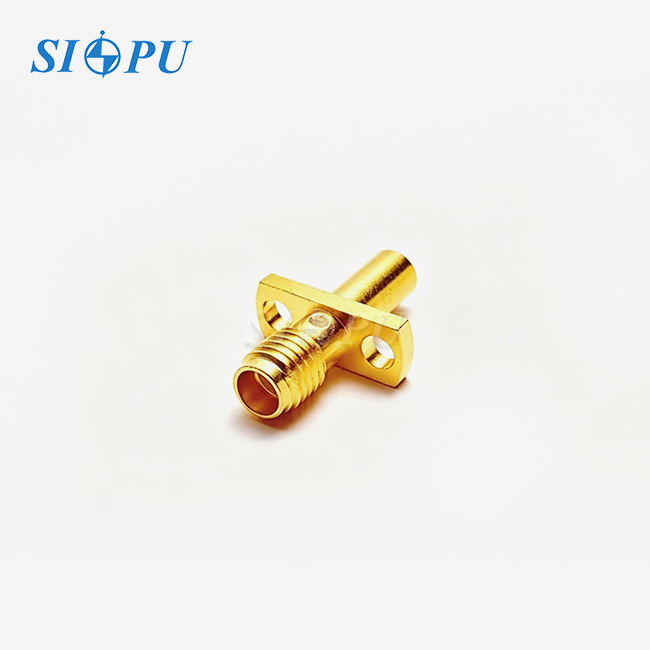
RF Connector N Male for RG142B cable from China manufacturer
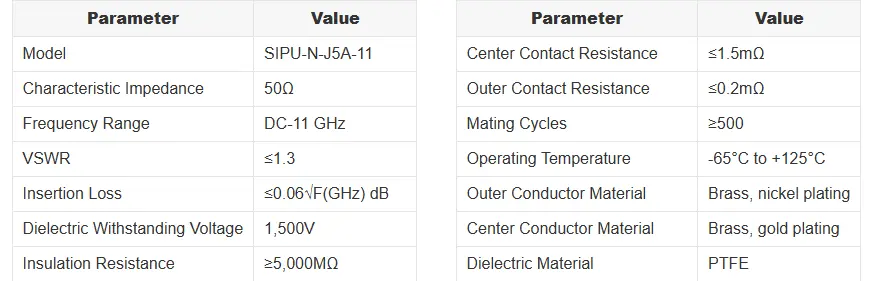
When engineers specify an N male connector for RG142B cable, they need more than a part that physically fits. They need verified electrical performance, batch-to-batch consistency, and a supplier who can scale from prototype to production without specification drift. SIPU RF Technology's Model SIPU-N-J5A-11 addresses exactly these concerns. With a 50Ω characteristic impedance, DC–11 GHz frequency coverage, 1,500V dielectric withstanding voltage, and compliance with IEC 61169-16, MIL-STD-348, RoHS, and CE standards, this connector is designed for base station OEMs, RF power amplifier manufacturers, radio monitoring equipment integrators, and test instrument engineers who cannot afford signal integrity failures in the field.
Understanding N Male Connector and RG142B Cable Compatibility
What Makes RG142B Cable Different?
Impedance of RG142B/U is 50Ω, and it is a coaxial wire with a PTFE covering. It has two shields. The width around the edges is 4.95 mm. The noise it stops is more than 90 decibels, which is why it's often used for high-frequency tests, military, and aircraft. Up to +165°C, you can leave the PTFE jacket and insulator on all the time. The shape of the connection termination must be a perfect match for the inside measurements of the cable so that the impedance doesn't change.
How the SIPU-N-J5A-11 Interfaces with RG142B?
The SIPU-N-J5A-11 N male connector for RG142B wire is made to fit the shape of the strands in the cable. The center contact resistance is 1.5 mΩ because the gold-plated brass center contact fits directly onto the wire's inner conductor. It has an outer contact resistance of 0.2 mΩ on the nickel-plated brass outer conductor that holds the braid shield of the cable in place. Because of this close match, VSWR stays at 1.3 dB throughout the DC–11 GHz range.
Installation Best Practices
It is important to carefully strip a cable so that the center wire, braid, and dielectric are all exposed for the lengths needed by the connection. Put controlled soldering heat on the PTFE dielectric so it doesn't change shape. Like any other N-type interface, put 0.7 to 1.1 Nm (6 to 10 in-lbs) of torque on the threaded connection. If you connect things the right way, they have an insulation resistance of at least 5,000 MΩ and can be mated more than 500 times without losing their electrical integrity.
Comparison of N Male Connector Options for RG142B Cable
N Male vs. SMA and TNC for High-Power RF
Even though SMA links can handle up to 18 GHz, they can only handle wires that are shorter and less powerful. In high-power base station or power booster settings, this means they can't be used with RG142B. When the power is low, the TNC terminals are normally set to 11 GHz, but the threaded connection is the same as on the N type terminals. The N-type interface is set out in IEC 61169-16 (50©) and MIL-STD-348. This kind of interface can handle sending more power and withstanding a voltage of 1,500V, which is needed in OEM designs for RF power amplifiers.
Brass vs. Stainless Steel Body Construction
Because it doesn't rust and is easy to machine, brass with a nickel coating like the kind used in the SIPU-N-J5A-11 is a good choice. It also doesn't cost too much to buy in bulk every year (about $100,000 to $1.2 million USD). It is better for frames made of stainless steel to not rust in salty or wet places, but they cost more and are harder to work with. The nickel-plated brass body works reliably between -65°C and +125°C in controlled or normal outdoor settings for most base station OEM and radio monitoring equipment jobs.
Where SIPU-N-J5A-11 Stands Among China-Manufactured Options
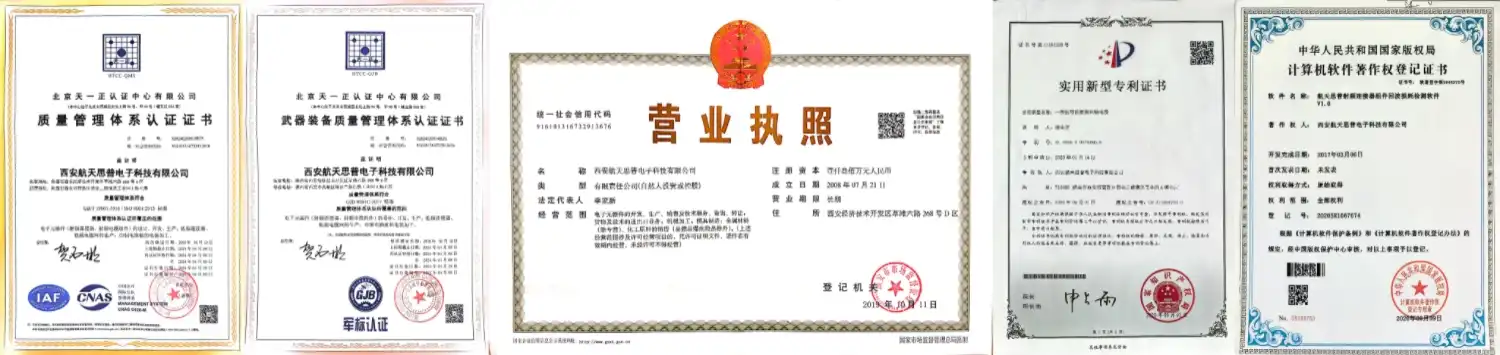
SIPU RF Technology has been making RF connections since 1998. ISO 9001 quality standards are used to run the production lines that make the SIPU-N-J5A-11 N male connector for RG142B cable. Each batch goes through CNC cutting, coating proof, and dielectric withstanding voltage tests that are all done in-house. Standard stock can be sent out within 72 hours, and ODM/OEM production lines can make custom versions with things like different coating, non-standard mechanical measurements, or packing that is designed for a certain use.--
Benefits and Performance Optimization of N Male Connector for RG142B Cable
RF experts in OEM settings for base stations, power amplifiers, and monitoring tools most often see certain types of breakdowns. This is taken care of by the SIPU-N-J5A-11. This connection makes things work better in these main ways:
- Consistent impedance across production batches: Precision CNC machining holds connector geometry to tolerances that keep VSWR ≤1.3 across DC–11 GHz, preventing the specification drift that disrupts production schedules.
- 1,500V dielectric withstanding voltage: Meeting IEC and MIL-STD-348 requirements, this rating supports high-power RF transmission in base station and power amplifier OEM assemblies without insulation breakdown risk.
- ≥500 mating cycles with stable contact resistance: Gold-plated center contacts and nickel-plated outer conductors maintain contact resistance specifications through repeated connection cycles, reducing field maintenance intervals.
- PTFE dielectric for thermal stability: The dielectric retains its electrical properties from -65°C to +125°C, supporting outdoor base station enclosures and aerospace test rack installations.
- RoHS, REACH, CE, and UL compliance: Every production batch receives environmental compliance verification, satisfying procurement requirements from both publicly listed private OEMs and state-owned enterprise integrators.
RF engineers who are in charge of buying millions of dollars worth of parts every year say that batch inconsistency and supplier reliability are the biggest risks they face when they source parts.
How to Choose the Best N Male Connector for RG142B Cable: A B2B Procurement Guide
Define Your Frequency, Power, and Environmental Requirements
Check to see if your system can work below 11 GHz before you send out an RFQ for a N male connector for RG142B cable. If it can, let people know. Check the highest continuous RF power and see if the worth of 1,500V for the dielectric is enough for your needs. Find out what temperatures the device can work in and whether it will be put in a place that is likely to shake, get wet, or be exposed to UV light.
Evaluate Supplier Certification and Batch Consistency
Ask for proof that the company is ISO 9001 certified and for batch test reports that show how much voltage the dielectric can handle and how thick the plating is. That they have the process control you need for long-term relationships is shown by the fact that they can give you the same test data for more than one production run. SIPU RF Technology helps engineers place trial orders at a mixed sample price before committing to a big order. They also offer high-quality paperwork at the batch level.
Assess Lead Time, Stock Availability, and Custom Support
Having stock on hand and being able to send out samples quickly are very important for short-cycle buying projects with decision windows of one to three months. Standard N male connectors for RG142B cables are kept in stock by SIPU and can be sent out within 72 hours. Technical questions are also answered within 12 hours. Engineering trial samples can be sent out quickly to help test designs before they are made on a larger scale.
Where and How to Buy N Male Connectors for RG142B Cable from China
Ordering Process with SIPU RF Technology
You can email info@sipu-rf.com or use sipuconn.com to send your cable specification (RG142B/U), the number of cables you need, and any other special requests. For those who want to buy something, this is the first step. The SIPU engineering team gets back to you in 12 hours with a technical confirmation and sample price quotes. It takes 72 hours to send out sample orders for standard setups.
Custom Connector Options for OEM Projects
SIPU can do both ODM and OEM work, which means they can change the mechanical design and the electrical performance to meet non-standard housing or termination needs. For example, they can change the VSWR limits, insertion loss goals, and coating specs. This means that the RG142B N male connector can be used in some OEM base stations, power amplifiers, radio monitoring tools, and test instruments.
Logistics and After-Sales Support for U.S. Buyers
The company JNP Supplies LLC in Seattle, Washington, is SIPU's partner in North America. They help people in the US and Canada in a way that fits their needs as a team. Because of this relationship, it's easier to talk to each other, get orders ready, and make sure customers are happy without the delays that come with buying something from another country.
Conclusion
Choosing the right N male connector for RG142B cable can change how well the signal works, how reliable the system is, and how much it costs to maintain over time. Tests have shown that the SIPU-N-J5A-11 can work between DC and 11 GHz, and its dielectric can handle 1,500V. Under ISO 9001 factory controls, the product is also the same from batch to batch. SIPU RF Technology has been making RF connectors for 28 years. They keep stock that can be sent out within 72 hours, and they can help OEMs with their custom needs. This makes it easy to buy from them, from the first sample to the whole run. Find out more about the process at sipuconn.com or give the team a call.
FAQ
1. Can this connector be used with standard RG142 or RG400 cable?
RG142B, RG142, and RG400 share similar physical outer diameters, and the connector's internal geometry accommodates these variants. However, SIPU-N-J5A-11 is optimized for RG142B/U dimensional tolerances. Confirm cable specifications before ordering to ensure proper impedance continuity.
2. What impedance does the N male connector for RG142B cable use?
The characteristic impedance is 50Ω, which is the same as what is required by IEC 61169-16 and MIL-STD-348 for N-type interfaces. When 50© and 75© N-type connectors are mixed in the same system, they cause impedance mismatches and signal reflection.
3. How do I achieve a weatherproof installation outdoors?
Apply adhesive-lined heat shrink over the completed termination zone. Inspect O-ring seating before final torquing. For immersion-rated installations, confirm that the assembled connector and cable jacket meet IP67 requirements with appropriate sealing compounds.
4. What is the recommended torque for N-type threaded coupling?
Apply 0.7–1.1 Nm (6–10 in-lbs) using a calibrated torque wrench. Over-torquing damages the thread interface; under-torquing allows vibration-induced disconnection.
5. Does SIPU support engineering sample orders before volume procurement?
Yes. SIPU provides mixed sample pricing for engineering trial orders, allowing procurement and engineering teams to validate the N male connector for RG142B cable in their specific application before committing to volume production.
Partner with SIPU for Your N Male Connector for RG142B Cable Requirements
Precision RF plugs from SIPU RF Technology have been bought by OEMs of base stations, power amplifiers, and test instruments for more than 28 years. SIPU offers both standard-stock N male connector for RG142B cable that can be shipped right away and a custom-engineered OEM option. Both of these options have been tested for performance and come with full compliance documents. You can email your needs to info@sipu-rf.com or visit sipuconn.com right now to ask for engineering models. We'll get back to you in 12 hours.
References
1. International Electrotechnical Commission. IEC 61169-16: Radio-Frequency Connectors – Part 16: Sectional Specification for rf coaxial connectors with Screw Coupling – Characteristic Impedance 50 Ω (Type N). IEC, 2013.
2. U.S. Department of Defense. MIL-STD-348: Radio Frequency Connector Interfaces for MIL-PRF-39012 Connectors. DoD, 2011.
3. Pozar, David M. Microwave Engineering, 4th ed. Wiley, 2011.
4. Amphenol RF. RF Connector and Cable Assembly Reference Guide. Amphenol RF Technical Publications, 2020.
5. Pasternack Enterprises. Understanding VSWR and Return Loss in RF Coaxial Connectors. Pasternack RF Technical Library, 2019.
6. Gore, W. L. & Associates. RG142B/U Coaxial Cable Technical Data Sheet and Application Notes. Gore Technical Publications, 2021.
Contact us directly for customized solutions, quotations and long-term strategic cooperation.