- English
- French
- German
- Portuguese
- Spanish
- Russian
- Japanese
- Korean
- Arabic
- Greek
- German
- Turkish
- Italian
- Danish
- Romanian
- Indonesian
- Czech
- Afrikaans
- Swedish
- Polish
- Basque
- Catalan
- Esperanto
- Hindi
- Lao
- Albanian
- Amharic
- Armenian
- Azerbaijani
- Belarusian
- Bengali
- Bosnian
- Bulgarian
- Cebuano
- Chichewa
- Corsican
- Croatian
- Dutch
- Estonian
- Filipino
- Finnish
- Frisian
- Galician
- Georgian
- Gujarati
- Haitian
- Hausa
- Hawaiian
- Hebrew
- Hmong
- Hungarian
- Icelandic
- Igbo
- Javanese
- Kannada
- Kazakh
- Khmer
- Kurdish
- Kyrgyz
- Latin
- Latvian
- Lithuanian
- Luxembou..
- Macedonian
- Malagasy
- Malay
- Malayalam
- Maltese
- Maori
- Marathi
- Mongolian
- Burmese
- Nepali
- Norwegian
- Pashto
- Persian
- Punjabi
- Serbian
- Sesotho
- Sinhala
- Slovak
- Slovenian
- Somali
- Samoan
- Scots Gaelic
- Shona
- Sindhi
- Sundanese
- Swahili
- Tajik
- Tamil
- Telugu
- Thai
- Ukrainian
- Urdu
- Uzbek
- Vietnamese
- Welsh
- Xhosa
- Yiddish
- Yoruba
- Zulu
How to Choose SMP Male Straight Thread Mount Connector for RF Systems
Choosing the right SMP male straight thread mount connector for your RF system is not as straightforward as picking the lowest-priced option from a catalog. You need a part that works the same way across the whole DC-40 GHz range, can handle being exposed to salt spray for 96 hours, and gives you the same VSWR every time. This guide walks procurement managers, RF engineers, and OEM teams through every decision point, from technical specs to qualifying suppliers, so you can buy with confidence and knowledge before the first sample even gets to your bench.
Understanding SMP Male Straight Thread Mount Connectors
What This Connector Actually Is
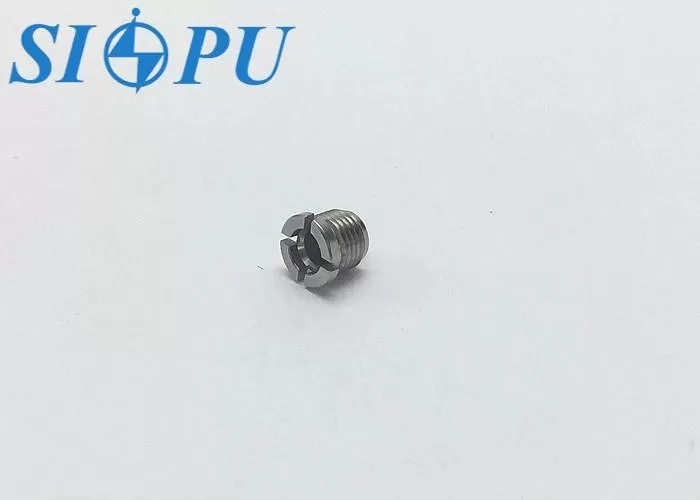
A subminiature RF connector called an SMP male straight thread mount connector is made for microwave and millimeter-wave data paths up to 40 GHz. The threaded body of this connection locks it physically against the PCB surface, unlike standard snap-on or push-on types. This stops axial play that would otherwise break impedance continuity at high frequencies. Because it is straight, the signal line is as short and straight as it can be.
Where These Connectors Are Deployed
You can find this kind of connector in phased-array radar front ends, 5G backplane systems, electronic warfare signal processors, and automatic test equipment. In every situation, the threaded mounting provides positional stability that push-on designs can't match, even when the parts are vibrating or mating over and over again. A small footprint and a safe mechanical link are especially helpful for high-density RF devices.
Core Material and Construction
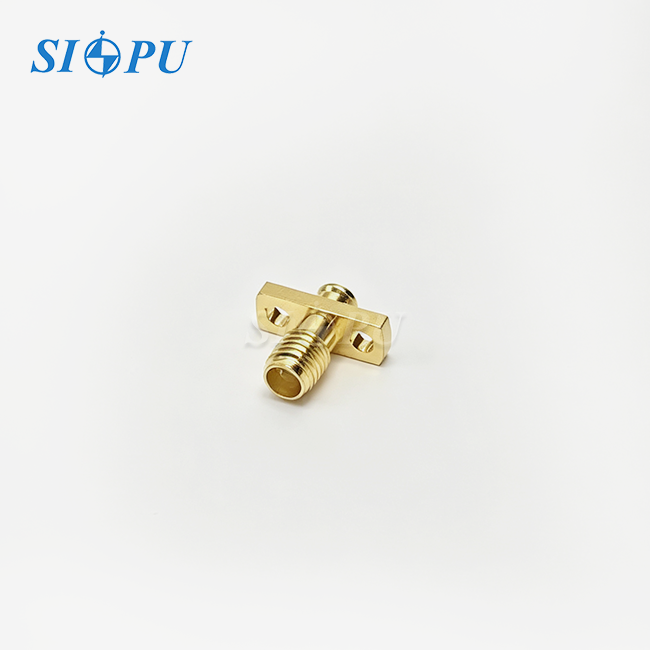
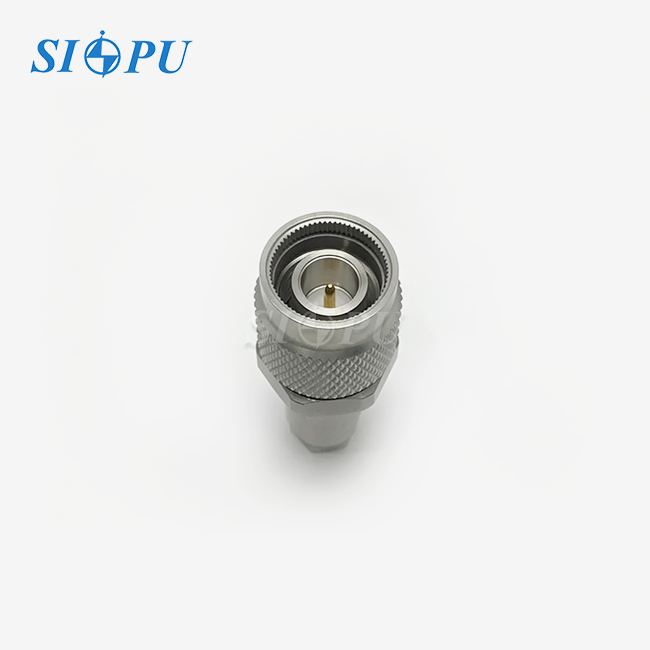
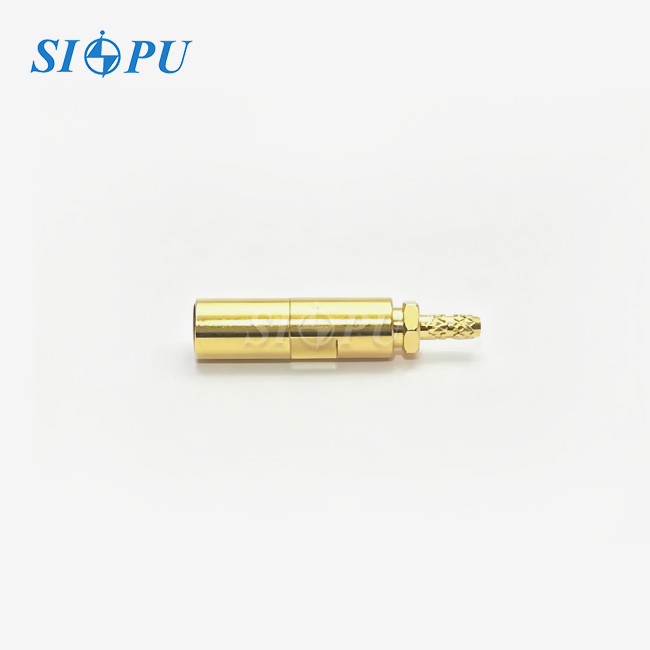
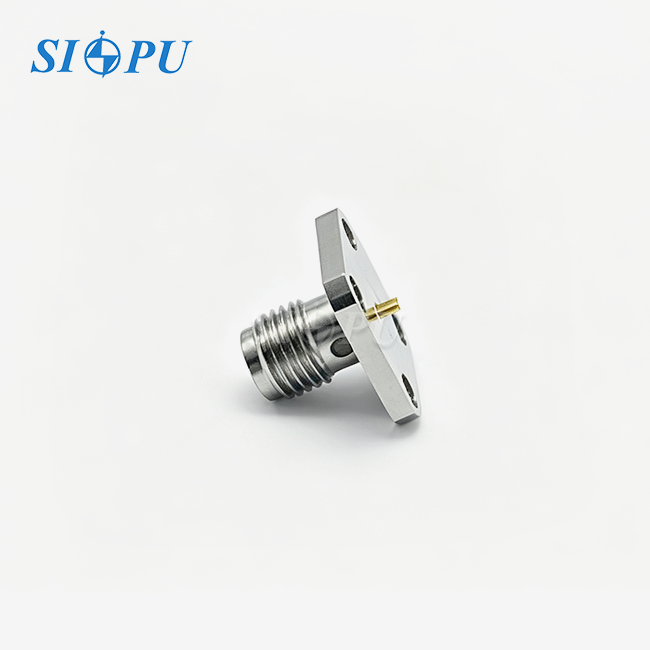
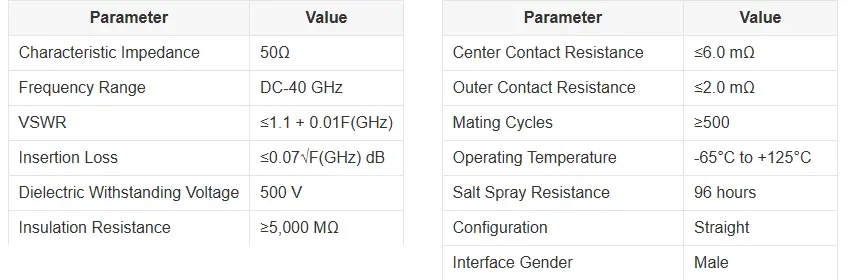
The SMP male straight thread mount connector from SIPU has a passivated stainless steel outer conductor, a gold-plated beryllium bronze center contact, and a PTFE insulation medium. These material decisions directly support stable performance across the operating temperature range of -65°C to +125°C and help the 96-hour salt spray rating—two numbers that are very important in harsh deployment settings.
Critical Factors to Consider When Choosing SMP Male Straight Thread Mount Connectors
Frequency Range and VSWR Budget
The connector needs to work with your system's whole operating range without adding too many reflections. Between DC and 40 GHz, SIPU's SMP male straight thread mount connector keeps VSWR at ≤ 1.1 + 0.01F(GHz) and insertion loss at ≤ 0.07√F(GHz) dB. At 40 GHz, even a small change in impedance causes return loss degradation that can be seen. Make sure the seller gives you per-batch VNA sweep data, not just standard values from a datasheet.
Environmental and Mechanical Ratings
The range of temperatures it can work in and its ability to withstand salt spray are not just marketing points; they affect how well your board-level assembly will work in the field. The metal will last, as shown by the 96-hour salt spray grade in ASTM B117. It can handle temperatures between -65°C and +125°C, which is what the military needs. It is important to make sure that the connection can handle at least 500 joining cycles before the contact resistance goes over the limits of 6.0 mΩ for the center contact and 2.0 mΩ for the outer contact.
Mounting Method and PCB Integration
When there is vibration, push-on systems can't provide the same level of security and repeatability as threaded fitting. SIPU's version has a microstrip solder-mount design that lets the connection link straight to normal PCB microstrip lines without having to make any extra transitions. This cuts down on the amount of solder joints in the RF path, which is important at millimeter-wave frequencies because each joint is a source of possible reflection. Insulation resistance of ≥ 5,000 MΩ and a dielectric withstanding voltage of 500 V show that the PTFE medium can keep its electrical separation even when it is stressed mechanically.
Comparing SMP Male Straight Thread Mount Connector to Other Connectors
SMP Thread Mount vs. Push-On SMP
are standard push-on SMP connections that mate quickly and work well in blind-mate situations from one board to another. But they don't offer much protection to vibration because holding is only based on detent force. The SMP male straight thread mount connector has a mechanical thread lock instead, which makes it the best choice for panel-mount installations, bulkhead installations, or any system where the connector is loaded with axial pull or vibration.
SMP Thread Mount vs. SMA and SMB
In standard versions, SMA connectors can handle up to 18 GHz, and in precision versions, they can handle up to 26.5 GHz. Even less frequency can go through SMB connectors. If your machine works above 26.5 GHz, neither SMA nor SMB will work. Because the SMP male straight thread mount connector has a smaller footprint and a wider usable bandwidth up to 40 GHz, high-density RF modules for 5G mmWave and radar applications have moved away from SMA over the past ten years.
SMP Thread Mount vs. SMPM (Mini-SMP)
Because SMPM connectors have a 0.012-inch center pin and SMP connectors have a 0.015-inch pin, they can't be used mechanically together. The SMP male straight thread mount connector can handle more power and is more durable for most backplane and high-power RF link uses, while the SMPM has a smaller size for very dense groups. Choose SMPM only when board space is the most important factor and power levels stay low.
Procurement Considerations for SMP Male Straight Thread Mount Connectors
Evaluating Supplier Qualification
To find a provider of an SMP male straight thread mount connector for mass production, you should make sure that they meet three criteria: the dimensions must match MIL-STD-348, the electrical properties must be fully characterized by VNA, and the external stress testing must be documented. Ask for reports on the first inspection and certificates of salt spray testing. SIPU has a quality management system that is ISO 9001 approved and follows GJB, MIL, and IEC standards when making products. They have specialized production lines that can handle both small orders and large ones.
Pricing, Lead Times, and MOQ
Before you agree to a sample run, you should make sure that any SMP male straight thread mount connector provider meets these key procurement benchmarks:
- Lead time for standard stock: SIPU ships standard versions within 72 hours, which protects short-cycle projects from schedule risk.
- Custom variant lead time: Dedicated production lines handle custom configurations with priority logistics, reducing the gap between engineering freeze and first article.
- Sample and mixed pricing: Mixed-sample pricing supports the compare-then-qualify workflow common in OEM procurement cycles, where engineering validation precedes volume commitment.
- Minimum order quantity: Confirm MOQ aligns with your pilot-run quantity to avoid excess inventory during the sample comparison phase.
Customization and After-Sales Support
SIPU can do both ODM and OEM work. They can tune electrical performance (VSWR, insertion loss, frequency range), choose the right material, and change the mechanical design. You can get full technical support at info@sipu-rf.com, which includes help choosing the right connectors and fixing problems with your application. Customers in North America can get localized support from JNP Supplies LLC in Seattle, Washington, which speeds up response times for project coordination and warranty handling.
Best Practices for Selecting SMP Male Straight Thread Mount Connectors
Pre-Procurement Compatibility Checklist
Check that the following are true for your system schematic before you place an order: characteristic impedance (50 Ω confirmed), frequency band coverage (DC–40 GHz), PCB microstrip line width compatibility, operating temperature range, and environmental certification relevance (salt spray, thermal shock). Because of missing even one item on this list, production has had to do work over and over again for weeks.
Quality Assurance During Incoming Inspection
Only accept connections that have VNA data at the batch level. Use a four-wire resistance tester to check the contact resistance of arriving lots in specific areas. Check the gold plating on the center contact with the naked eye. Beryllium bronze with the right gold plating keeps the contact resistance stable for the 500 mating cycles that are rated. Before it gets to your assembly line, you should throw away any batch that has a center contact resistance of more than 6.0 m© right out of the box.
Avoiding Common Procurement Mistakes
VSWR uniformity across production runs is often overlooked by procurement teams, which is a mistake. It's very hard to figure out what's wrong with a connector that works fine on the sample but not so well on the third production lot because it drifts. You should get at least three separate batch reports from the company that sells you SMP male straight thread mount connectors, not just one golden-sample datasheet. The easiest way to figure out if one batch is the same as another is to look at the supplier's certifications and check records.

Conclusion
Selecting an SMP male straight thread mount connector for a demanding RF system comes down to three things: verified electrical performance across the full DC-40 GHz band, confirmed environmental durability through salt spray and thermal testing, and a supplier with the manufacturing discipline to repeat those results across every production batch. The specifications covered in this guide—VSWR, insertion loss, contact resistance, operating temperature, and salt spray rating—give you a concrete checklist to apply at every stage of the procurement cycle. When those parameters are met consistently, your RF system performs as designed from prototype through production.
FAQ
1. What frequency range does this SMP connector support?
The SMP male straight thread mount connector supports DC to 40 GHz, covering standard microwave bands through millimeter-wave applications. VSWR remains ≤ 1.1 + 0.01F(GHz) across this range.
2. How do I verify PCB compatibility before ordering?
Confirm that your microstrip line width matches the connector's solder footprint dimensions. Request the mechanical drawing and compare it against your PCB layout before placing a sample order.
3. What is the typical lead time for standard and custom versions?
SIPU ships standard stock versions within 72 hours. Custom configurations with modified electrical or mechanical parameters are processed through dedicated production lines with priority logistics; Contact Us for project-specific lead time estimates.
4. Can this connector handle military-grade temperature cycling?
Yes. The operating temperature range of -65°C to +125°C and 96-hour salt spray resistance align with military and defense-grade environmental requirements, making it suitable for radar and electronic warfare system integration.
5. Is the center contact material safe for production handling?
The center contact is beryllium bronze with gold plating. Beryllium copper alloys require standard handling precautions for machining dust; finished connectors in normal assembly handling do not present a beryllium exposure risk.
Get Reliable SMP Connectors from SIPU — Request a Quote Today
The SMP male straight thread mount connector works with DC to 40 GHz, so it can be used for uses ranging from normal microwave bands to millimeter waves. In this band, VSWR stays between 1.1 and 0.01F(GHz).Contact info@sipu-rf.com for project-specific lead time estimates.
References
1. RF Industries. RF Connector and Cable Assembly Technical Reference Guide. RF Industries, 2021.
2. Pozar, David M. Microwave Engineering, 4th ed. Wiley, 2011.
3. IEC 61169-51. Radio-Frequency Connectors — Part 51: Sectional Specification for SMP Series Connectors. International Electrotechnical Commission, 2016.
4. MIL-STD-348B. Radio Frequency Connector Interfaces for MIL-DTL-3655, MIL-DTL-55339, MIL-DTL-83517. U.S. Department of Defense, 2013.
5. Moure, Michael. "Millimeter-Wave Connector Performance at 40 GHz and Beyond." Microwave Journal, Vol. 63, No. 4, 2020.
6. ASTM B117-19. Standard Practice for Operating Salt Spray (Fog) Apparatus. ASTM International, 2019.
Contact us directly for customized solutions, quotations and long-term strategic cooperation.