- English
- French
- German
- Portuguese
- Spanish
- Russian
- Japanese
- Korean
- Arabic
- Greek
- German
- Turkish
- Italian
- Danish
- Romanian
- Indonesian
- Czech
- Afrikaans
- Swedish
- Polish
- Basque
- Catalan
- Esperanto
- Hindi
- Lao
- Albanian
- Amharic
- Armenian
- Azerbaijani
- Belarusian
- Bengali
- Bosnian
- Bulgarian
- Cebuano
- Chichewa
- Corsican
- Croatian
- Dutch
- Estonian
- Filipino
- Finnish
- Frisian
- Galician
- Georgian
- Gujarati
- Haitian
- Hausa
- Hawaiian
- Hebrew
- Hmong
- Hungarian
- Icelandic
- Igbo
- Javanese
- Kannada
- Kazakh
- Khmer
- Kurdish
- Kyrgyz
- Latin
- Latvian
- Lithuanian
- Luxembou..
- Macedonian
- Malagasy
- Malay
- Malayalam
- Maltese
- Maori
- Marathi
- Mongolian
- Burmese
- Nepali
- Norwegian
- Pashto
- Persian
- Punjabi
- Serbian
- Sesotho
- Sinhala
- Slovak
- Slovenian
- Somali
- Samoan
- Scots Gaelic
- Shona
- Sindhi
- Sundanese
- Swahili
- Tajik
- Tamil
- Telugu
- Thai
- Ukrainian
- Urdu
- Uzbek
- Vietnamese
- Welsh
- Xhosa
- Yiddish
- Yoruba
- Zulu
How TNC Male Self Locking Connector Prevents Vibration Loosening
A TNC male self locking connector prevents vibration loosening by adding a mechanical lock to the standard threaded coupling. Ordinary threads rely on friction alone, and vibration can slowly turn the nut back. The radial self-locking design of the SIPU-TNC-J5-ZS holds the coupling nut in place, so contact pressure stays steady and VSWR stays low. I wrote this guide for reliability engineers, project managers, and repair buyers. It explains how the lock works, which tests prove it, how to choose and install it, and what to send a supplier before you order. I also include the real numbers from our datasheet.
What a TNC Male Self Locking Connector Is and Why Threads Loosen?
What Is a TNC Male Self Locking Connector?
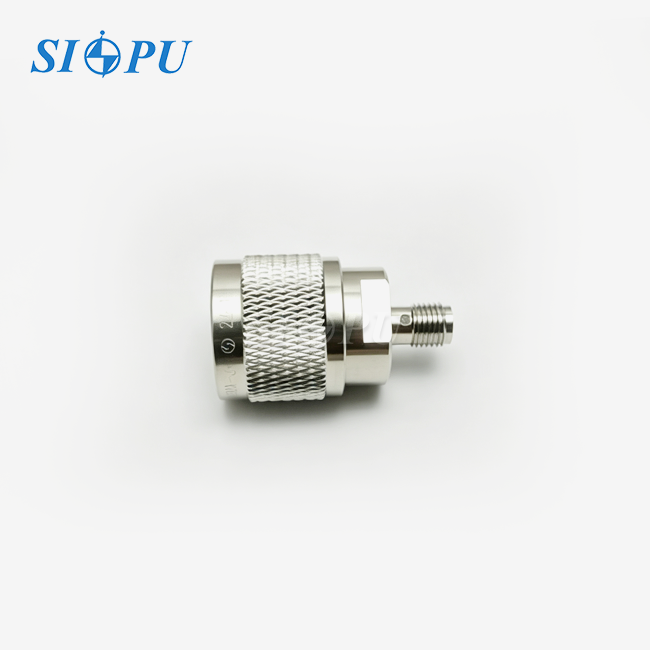
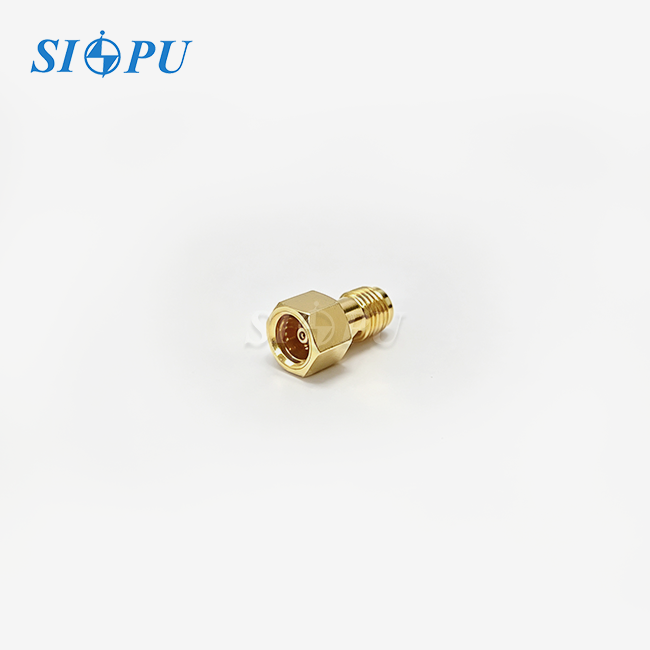
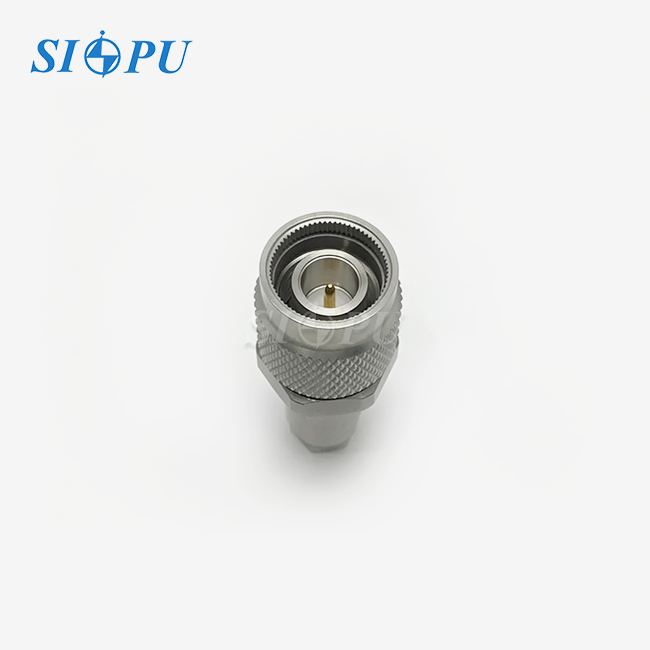
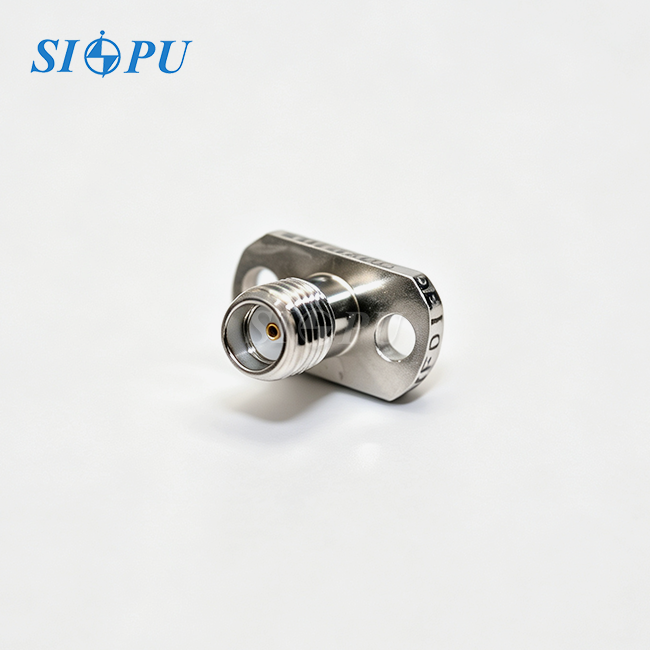
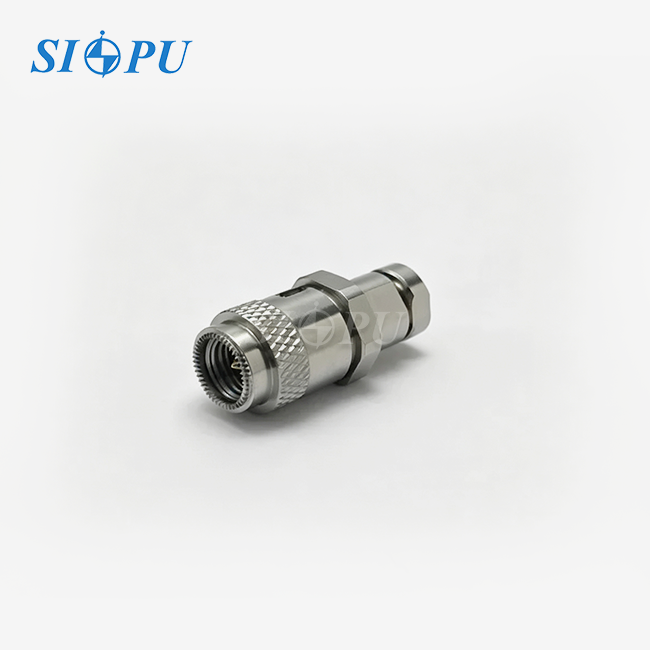
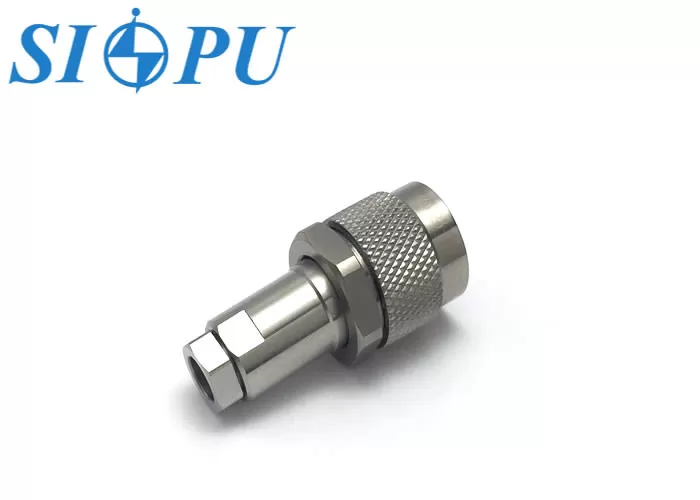
A TNC male self-locking connector is a coaxial plug with threads that doesn't come loose on its own. Threaded Neill–Concelman is what TNC stands for. The interface has an impedance of 50 Ω, which is the same as IEC 61169-17 around the world and MIL-PRF-39012 in North America. "Male" means that the center pin and coupling nut are on the plug. The SIPU-TNC-J5-ZS we sell is a straight plug for RG142B/U cable. Because it is radial self-locking, the coupling nut has a mechanical lock built in. Not only does this TNC male self-locking connector work with normal TNC female interfaces that meet MIL-STD-348, you can also use the tools you already have.
Why Standard Threaded Connectors Loosen Under Vibration?
There is friction between the threads of a plain threaded nut that holds it in place. Vibration can break that friction. In 1969, G.H. Junker did study that showed that sideways slip between threads is a main reason why bolted joints come loose on their own. The same laws of physics apply to a coupling nut. Each cycle includes small turns caused by shock loads, thermal cycling, and the weight of a wire that swings back and forth. When you cross-thread, use the wrong torque, or leave a cable hanging down, the risk goes up before the equipment even ships. The mating faces move when the nut turns back, and fretting wear starts. Paul Slade's work on electrical contacts talks about how fretting makes contacts less resistant to current over time. One link in that chain is the turning of the nut, which is what a TNC male self-locking connector is for.
What Loosening Does to RF Performance?
It's not often that a loose coupling nut breaks all at once. First, the contact pressure goes down. Then the contact resistance goes up, and the VSWR changes. Part of the signal is reflected by the mismatch, insertion loss goes up, and the link starts to go in and out. This is how the math works: a VSWR of 1.3 means that the reflection coefficient is close to 0.13, which means that there is 17.7 dB of return loss. There isn't much room for drift in a connection that is close to that limit. When you're outside, a loose nut also lets water in. When the problem happens in a car or plane while it's moving, it's hard to make it happen again on a test bench. Another issue that a TNC male self-locking connector is meant to stop is that drift.
How the TNC Male Self Locking Mechanism Prevents Vibration Loosening
Radial Self-Locking at the Coupling Nut
The locking part of our design is on the coupling nut. This is how a TNC male self locking connector works: the threads pull the two halves together when you tighten the nut. Then, the radial self-locking structure stops the nut from turning back. The mechanism only works with mechanical parts, so it doesn't touch the dielectric or the center conductor. You don't need a safety wire or any other hardware to tighten the plug. You can do it by hand or with a standard torque wrench. Putting in and checking safety wires takes an extra step, but a built-in lock gets rid of that step. As long as the connection is in use, the electrical performance will stay stable because of the way it works on the inside. I think you should ask for the product drawing to see the exact locking geometry.
Materials Behind the Lock
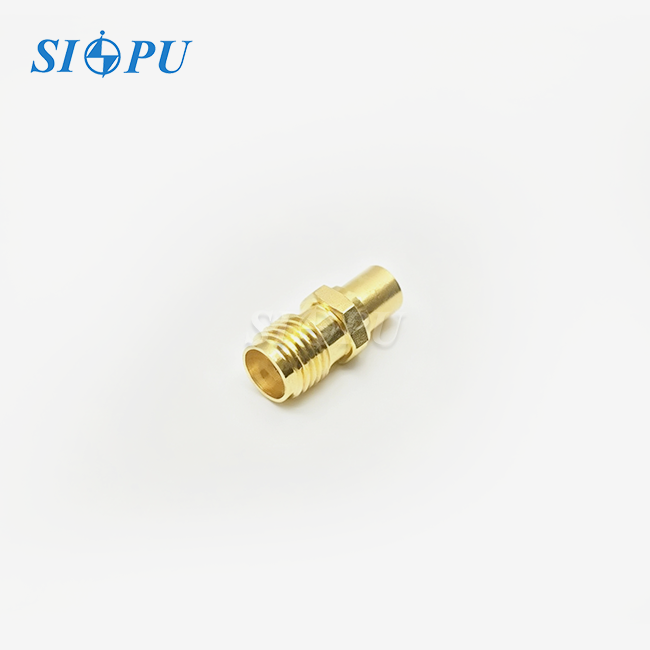
The parts around a lock must stay in place for it to work. The outer conductor is made of passivated stainless steel, which doesn't rust when exposed to water, salt spray, or other industrial pollution. Gold-plated beryllium bronze is used in the center conductor to make it more conductive and lower the contact resistance. When the temperature changes a lot, the PTFE dielectric keeps the loss low and the electrical properties stable. A silicone rubber sealing ring keeps water out of the interface, and a slate-finish treatment on the surface makes it more resistant to wear, which is important when you have to mate a part a lot of times. The TNC male self-locking connector can withstand temperatures between -65 °C and +125 °C thanks to the combination of these materials.
Electrical Specifications of the SIPU-TNC-J5-ZS
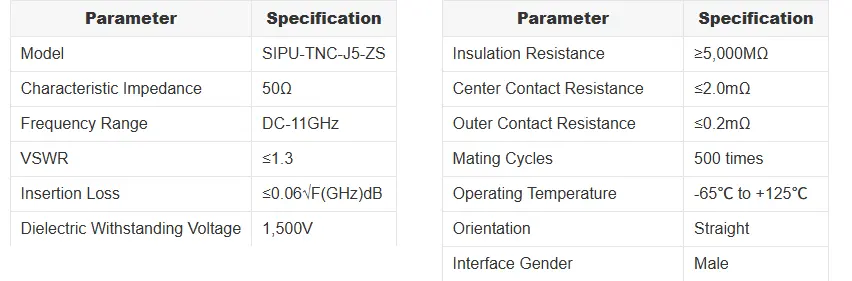
The following numbers are from the datasheet for the SIPU-TNC-J5-ZS, which is our TNC male self-locking connector. DC to 11 GHz is the frequency range, and VSWR is 1.3 GHz or less. Up to 0.06√F(GHz) dB, or about 0.2 dB at 11 GHz, is the most that loss can go. The insulation resistance must be at least 5,000 MΩ, and the dielectric must be able to withstand 1,500 V. The center contact resistance must be at least 2.0 mΩ, and the outer contact resistance must be at least 0.2 mΩ. The part can be used 500 times to connect. These numbers show how the connector was meant to work. You can see how well it works in your system by measuring the finished wire setup before and after you put it together.
How to Verify Vibration-Resistant Performance
Test Methods to Request
A threaded contact does not show that it is resistant to vibrations on its own. The company that sells any TNC male self-locking connector should be asked about the test method, the conditions, and the outcome. Most of the time, MIL-STD-202 is used in the US. Method 204 is about high-frequency vibration, Method 214 is about random vibration, Method 213 is about shock, and Method 101 is about plating corrosion in a salty atmosphere. The MIL-STD-202 series is the same as GJB 360B, which is often used in programs that follow GJB standards. It's important to look at the frequency range, acceleration, duration, mounting fixture, and cable that were used in the test because they can all change the outcome. Also, make sure that the report shows electricity continuity both during and after the test.
Unlock Torque, Mating Cycles, and VSWR Drift
When you check a TNC male self-locking connector, there are three things that are most important. Just take a few parts and measure their unlock torque. Then, look at the range, not just the average. A small spread means that the lock works the same in all parts. Second, measure again after each mating cycle. A lock that loses its strength over time is no longer useful. Our connector is designed to last for 500 cycles, and our endurance test makes sure that the self-locking mechanism stays strong during that time. Third, write down the VSWR before, during, and after the vibration run. Then, compare the drift to your own limit.
What We Inspect in Every Batch
The factory is the first place where quality control for each TNC male self-locking connector begins. Specialized test equipment is used to check each production batch for dielectric withstanding voltage and insulation resistance. Every batch, we check the thickness and stickiness of the metal, and every production run, we make sure it meets RoHS standards. SIPU has a quality control system that is ISO 9001 approved. We do CNC machining and RF testing in-house, and our goods meet MIL, GJB, and IEC standards. From 1998 to now, our Xi'an team has been making RF connectors for users in test and measurement, aircraft, defense, and telecommunications. Tell us what you need if your program needs batch records, and we'll talk about which files we can give you.
TNC vs. Other RF Connectors: Selection and Installation
TNC vs. BNC, SMA, and N-Type
The type of connection, the size, and the surroundings all affect which connector to use. The quick bayonet lock used by BNC saves time but doesn't hold as well when there is a lot of shaking as a threaded connection. However, the small nut on SMA makes it harder to work with in the field because it is smaller and doesn't fit as well. Most of the time, N-type is used for outdoor antenna ports and higher power. Something called a TNC male self locking connector is in the middle of them. The body is still in the BNC style, but it has a threaded connection added. The self-locking version has a lock added for situations where it might shake. Never use the name of a connector to match it. Before you order, make sure you know the interface standard, impedance, and gender. Pairs that aren't matched correctly can damage or bind the threads.
Selecting by Cable, Frequency, and Environment
Start with your full list of requirements. The SIPU-TNC-J5-ZS is a straight male 50 Ω plug for RG142B/U cable. It works with frequencies from DC to 11 GHz. Tell us before you order if your cable or impedance is different, as the plug and cable must match. Next, check your temperature range against -65 °F to +125 °F. Write down your power level and any salt spray or humidity exposure. Outdoor integrators should make sure that the silicone seal and stainless steel body will work with the conditions at the site. Not just the part number, but also the adapter and wire should match when someone buys a repair. It is possible for our OEM and ODM team to change the electrical performance, materials, and mechanical design of a TNC male self-locking connector to meet specific needs.
Installation Steps and Common Mistakes
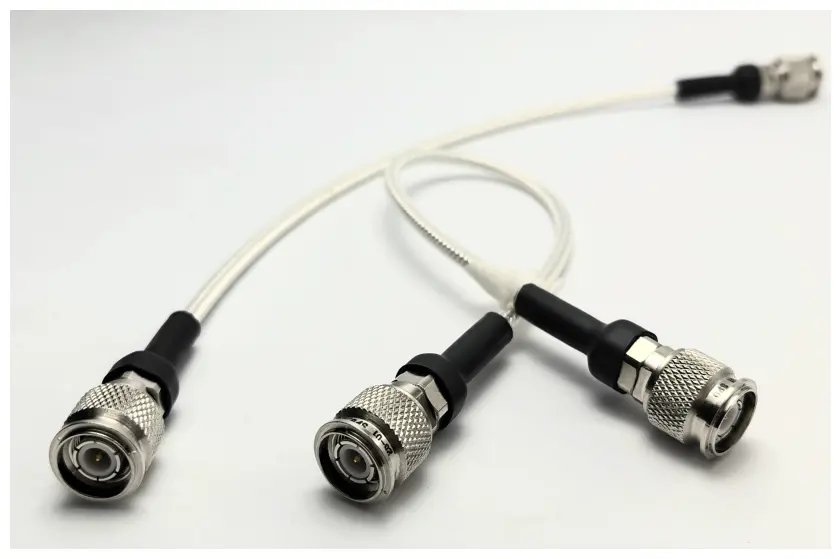
The lock in a TNC male self-locking connector is safe if it is installed correctly. Check the part number, tape size, threads, and seal before you start. Cut the RG142B/U cable to the size shown on the drawing, being careful not to damage the braid, center conductor, or dielectric. For your termination method, use the tools that are named in the drawing. To keep the threads from crossing, align the plug by hand first. Then, use your hand or a standard torque wrench to tighten it. Not too tight or too loose, and clamp the wire so that its weight doesn't pull on the plug. The last checks should be for consistency, shielding, and VSWR. Run the pull or shaking test on the finished assembly if your software needs it.
Applications and B2B Procurement for TNC Male Self Locking Connectors
Where These Connectors Work
A TNC male self-locking connector works for RF links that move around or sit in places where you don't want to tighten the nuts again. Our list of applications includes avionics telemetry and communication in the cockpit, tactical radios and electronic countermeasure equipment on armored vehicles, and railroad signaling, such as Positive Train Control. Test and measurement companies use it in mobile labs where numbers stay stable because the electricity works well all the time. Communication and base station feeders that are mounted on vehicles fit the same profile. However, you should compare the fit to your own vibration and environmental data. When working on airplanes, the self-locking feature gets rid of the need for a safety wire step. Test results, not application labels, should be used to make the final decision.
Needs of Integrators and MRO Buyers
If you want to buy a project or fix something, you need different things. Outdoor durability, installation speed, batch consistency, and delivery that meets project milestones are all things that base-station integrators care about. The stainless steel body, rubber seal, and hand-tightening design make it long-lasting and quick, and we check each batch of production before it ships. Buyers of MRO need to have stock, equivalence documents, and small orders ready to go. Standard RF plugs are kept in stock at SIPU and can be delivered within 72 hours. We also respond to questions within 12 hours. Replacement matching is made easier because the TNC male self-locking connector fits MIL-STD-348 TNC female interfaces. We will compare interfaces and make sure we have stock for your model after you send us the original part number and the number you want.
Writing a Clear Purchase Specification
There will be no need for weeks of back and forth if the request is clear. Make a list of the impedance, frequency range, cable type and diameter, orientation of the connector, method of termination, temperature range, and conditions of vibration or shock. Include the amount of salt spray you need, how you want it packaged, and when you need it delivered. Then, make sure that the datasheet, drawing, sample, and test documents you ask for meet your needs. Not just the unit price should you use to judge a TNC male self-locking connector provider; you should also look at the quality of the datasheet, their ability to make the connector, their testing processes, their wait time, and their technical support. Our North American partner, JNP Supplies LLC in Seattle, Washington, handles communication and project coordination for customers in the US and Canada. Our team helps customers choose the right products, figure out how to use them, and fix problems.
Conclusion
Normal threaded connections become looser when they are vibrated because friction alone isn't enough to keep the coupling nut from turning back. A loose nut increases contact resistance, VSWR, and insertion loss. The coupling nut has a mechanical lock added by a TNC male self locking connector. This means that contact pressure stays steady even without a safety wire. Steel, gold-plated beryllium bronze, PTFE, and a rubber seal are all part of the SIPU-TNC-J5-ZS. It can handle DC to 11 GHz, 1,500 V, 500 mating cycles, and temperatures between -65 ° and +125 °. Before and after cycling, engineers should use MIL-STD-202 style tests to make sure it works, as well as unlock torque spread and VSWR. With the right choice, careful installation, and a clear purchase specification, you can keep that result in service.
FAQ
1. Does a TNC male self locking connector need special tools?
You can't use a normal torque wrench to tighten it. You can do it by hand. The closing force comes from inside, so you don't need any extra hardware. This makes fitting easy, and you don't even need to add the safety wire.
2. Can it mate with standard TNC female interfaces?
Yes. You can keep using the gear you already have because it works with any standard TNC female interface that meets MIL-STD-348.
3. How does the lock affect signal transmission?
It doesn't get in the way. The lock is mechanical and sits on the coupling nut, which keeps it away from the insulator and the center wire. This keeps the electrical performance the same.
4. How many mating cycles does a TNC male self locking connector support?
The connection can join and disconnect 500 times. Our endurance test makes sure that the self-locking device stays strong through that grade. However, you should still use your own samples to measure VSWR drift.
5. Does it include environmental sealing?
Yes. When you connect the connector correctly, a silicone rubber sealing ring keeps water out of the interface. Compare the seal and the stainless steel body to the level of exposure at your site.
Request a TNC Male Self Locking Connector Quote from SIPU
With 72-hour stock delivery on standard RF connectors, OEM and ODM customization, and a 12-hour question answer, SIPU, a TNC male self locking connector maker in Xi'an, serves your sample and production needs. Our engineers will help you find the right part by asking for your impedance, frequency, cable type, vibration conditions, and quantity via email to info@sipu-rf.com. For more information on the device, go to sipuconn.com.
References
1. SAE Transactions, "New Criteria for Self-Loosening of Fasteners Under Vibration" by G.H. Junker, 1969
2. MIL-STD-202H, Test Method Standard: Electronic and Electrical Component Parts, 2015
3. Electrical Contacts: Principles and Applications by Paul G. Slade, CRC Press, 2014
4. Microwave Engineering, 4th Edition by David M. Pozar, Wiley, 2011
5. Vibration Analysis for Electronic Equipment, 3rd Edition by Dave S. Steinberg, Wiley, 2000
6. An Introduction to the Design and Behavior of Bolted Joints by John H. Bickford, Marcel Dekker, 1995
Contact us directly for customized solutions, quotations and long-term strategic cooperation.