- English
- French
- German
- Portuguese
- Spanish
- Russian
- Japanese
- Korean
- Arabic
- Greek
- German
- Turkish
- Italian
- Danish
- Romanian
- Indonesian
- Czech
- Afrikaans
- Swedish
- Polish
- Basque
- Catalan
- Esperanto
- Hindi
- Lao
- Albanian
- Amharic
- Armenian
- Azerbaijani
- Belarusian
- Bengali
- Bosnian
- Bulgarian
- Cebuano
- Chichewa
- Corsican
- Croatian
- Dutch
- Estonian
- Filipino
- Finnish
- Frisian
- Galician
- Georgian
- Gujarati
- Haitian
- Hausa
- Hawaiian
- Hebrew
- Hmong
- Hungarian
- Icelandic
- Igbo
- Javanese
- Kannada
- Kazakh
- Khmer
- Kurdish
- Kyrgyz
- Latin
- Latvian
- Lithuanian
- Luxembou..
- Macedonian
- Malagasy
- Malay
- Malayalam
- Maltese
- Maori
- Marathi
- Mongolian
- Burmese
- Nepali
- Norwegian
- Pashto
- Persian
- Punjabi
- Serbian
- Sesotho
- Sinhala
- Slovak
- Slovenian
- Somali
- Samoan
- Scots Gaelic
- Shona
- Sindhi
- Sundanese
- Swahili
- Tajik
- Tamil
- Telugu
- Thai
- Ukrainian
- Urdu
- Uzbek
- Vietnamese
- Welsh
- Xhosa
- Yiddish
- Yoruba
- Zulu
How Gold-Plated SMA Female to MCX Female Adapter Improves Reliability
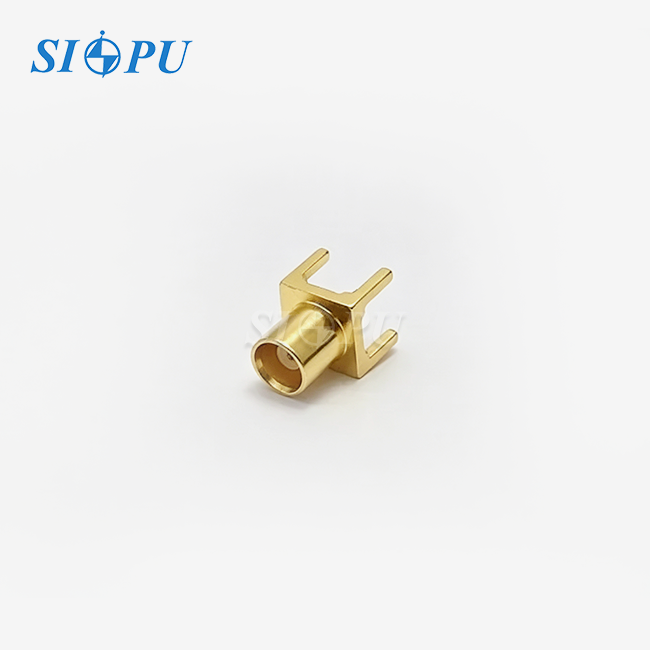
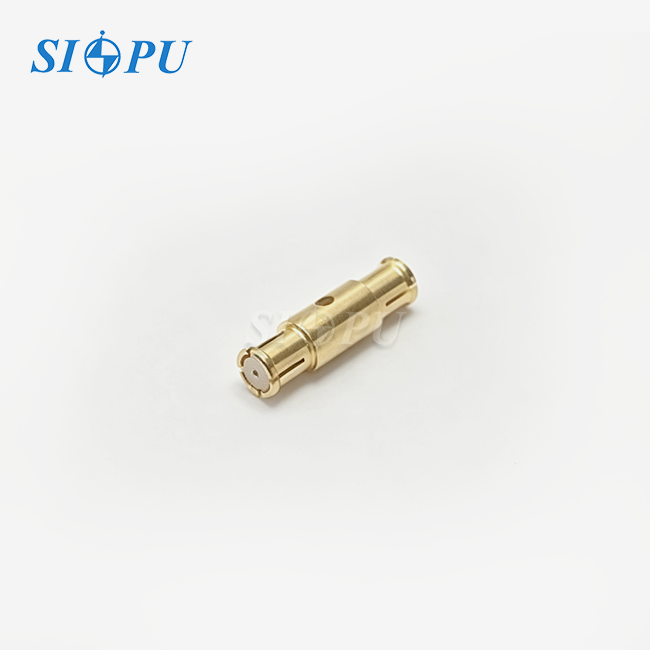
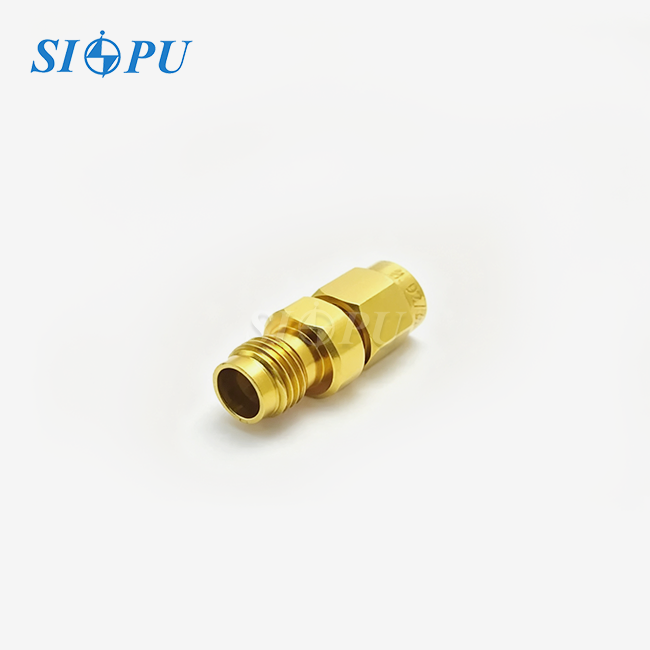
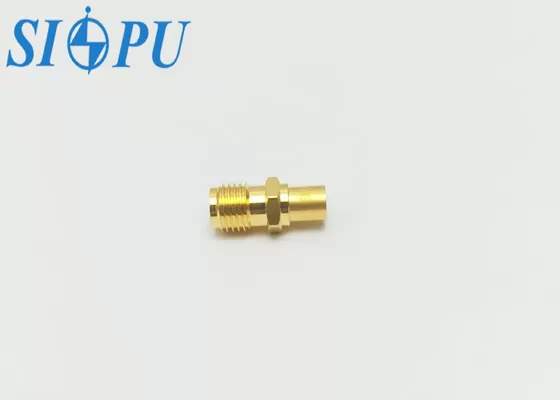
A gold-plated SMA female to MCX female adapter improves reliability by keeping the contact surfaces clean, conductive, and stable through repeated mating. Gold resists oxidation in normal air, so contact resistance stays low as connections wear in. When the plating covers precisely machined brass and a beryllium bronze center contact, the adapter also holds a 50 Ω path with low insertion loss and a VSWR of 1.3 or better from DC to 6 GHz. For a test bench, that means readings you can repeat after every swap, every shift, and every temperature cycle. SIPU builds this adapter as model SIPU-SMA/MCX-KK.
Why Adapter Reliability Matters in RF Systems
Small Parts Can Spoil Big Measurements
But even if you buy a high-end analyzer, a weak SMA female to MCX female adapter can change what it shows. Every change in a connector is an impedance discontinuity, and Pozar's Microwave Engineering says that a discontinuity sends some of the wave back to the source. They make the signal look rough, which makes a good device under test look worse than it really is. If the center contact is worn or there is a film of oxide on it, the effect is bigger and harder to predict. Most of the damage is done in labs that compare results from week to week. When you connect an SMA female to MCX female adapter that is stable, the reflection is small and stays the same every time.
Common Failure Sources
Most problems with SMA female to MCX female adapters can be traced back to five things: oxidation, contamination, vibration, choosing the wrong connection, and dimensional mismatch. Oxidation covers many bare metals with a thin layer of insulation, which makes them less likely to conduct electricity. From the outside, dust, oil, and flux residue do the same thing. Vibration makes connections less tight and contacts happen and then stop. A mating port can be broken by the wrong gender or a slightly different interface. When the sizes don't match, the center contact moves, which changes the impedance. Because metals and PTFE move at different rates between -65℃ and +125℃, chamber testing adds to these risks. It is easier to figure out which design choices are important when you start by naming the failure causes.
Where Gold Plating Fits?
An SMA female to MCX female adapter is gold-plated as part of a bigger design. A bad center contact, a loose tolerance, or a low-grade dielectric can't be fixed by this, but the contact surface is safe. The ASTM B488 standard talks about electrodeposited gold coatings for engineering purposes. This standard sees plating as a designed feature. The same way of thinking is used at SIPU. A brass outer conductor and a beryllium bronze center contact hold the gold in place. CNC machining and lot checking help keep the gold in place. The plating does its real job when these parts work together. It keeps the surface chemistry stable while the geometry keeps the impedance stable.
What Is an SMA Female to MCX Female Adapter?
Two Interfaces in One Body
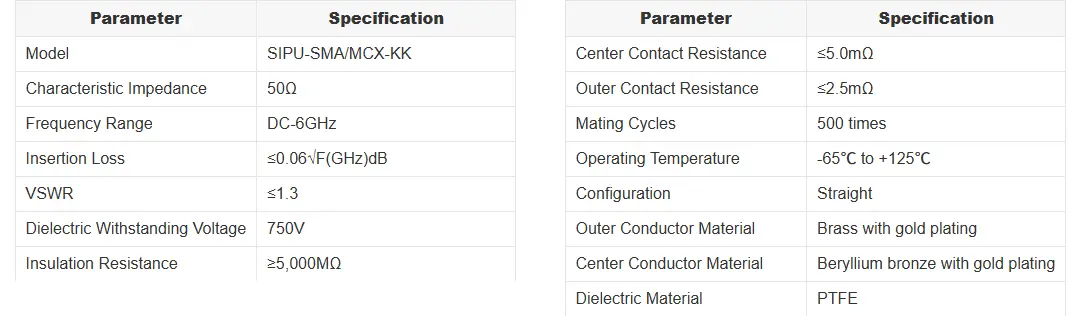
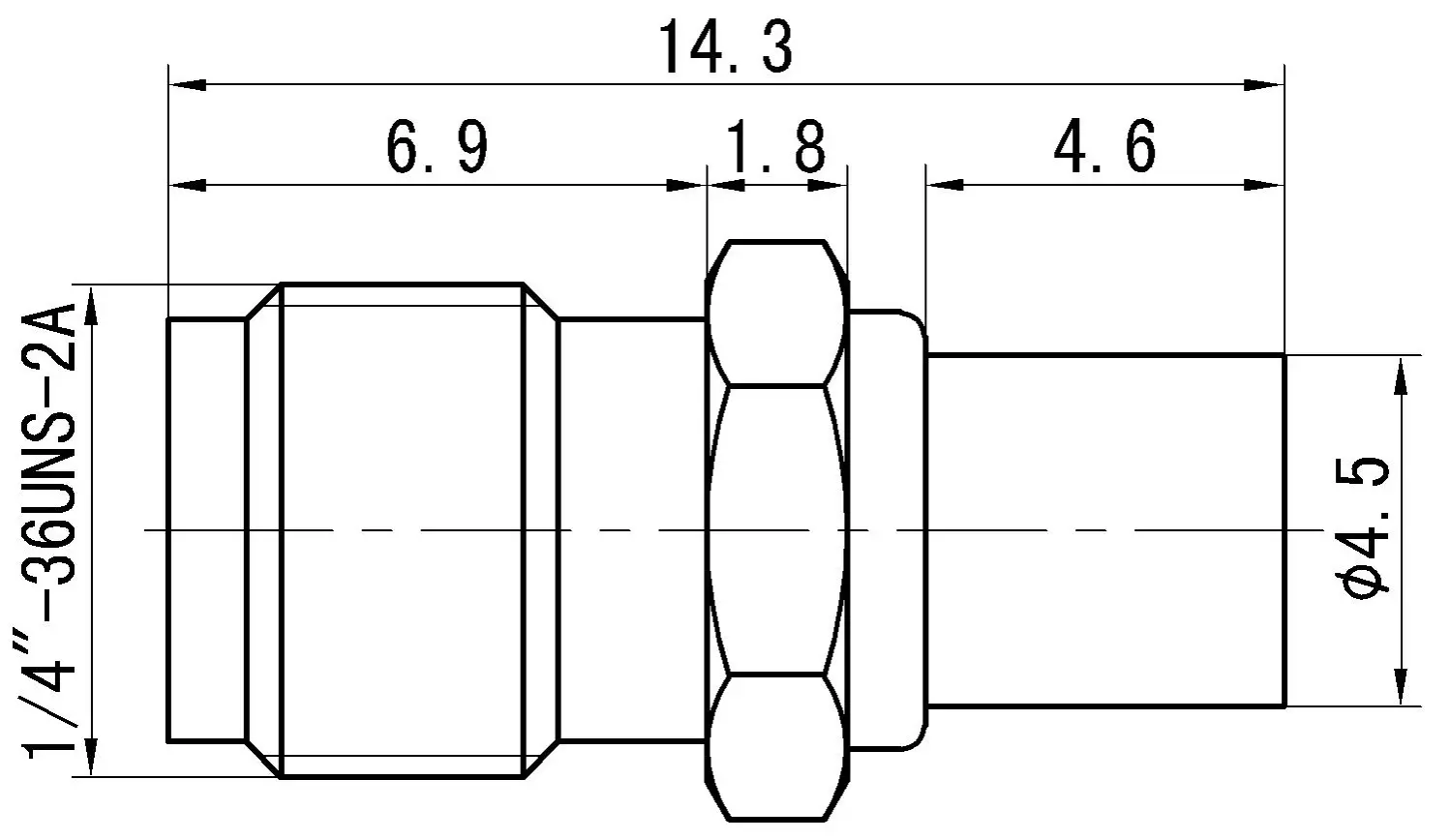
This SMA female to MCX female adapter connects an SMA female port with threads to an MCX female port with a snap-on cap. SMA follows IEC 61169-15 and uses screw coupling, which stays in place even when the cable moves. MCX snaps on and follows IEC 61169-36. This saves room and speeds up connection on small boards and modules. To connect, the adapter pairs with an SMA male on one end and an MCX male on the other. Before you order, check the supplier's drawing to make sure of the gender and dimensions. Because the SIPU model is set up in a straight line, the signal path stays short and straight, and you don't need to add any extra cable assembly.
Construction of the SIPU-SMA/MCX-KK
The outer conductor of the SIPU SMA female to MCX female adapter is made of brass and is plated with gold. The center conductor is made of beryllium bronze that has been plated with gold. The dielectric is made of PTFE. The spring force in the contact is kept by the beryllium bronze, so the center pin can still grip a matching pin after many connections. PTFE works well at temperatures between -65℃ and +125℃. The impedance is set by the dimensions that are controlled by CNC machining. Making the part follows the rules set by MIL, GJB, and IEC. Our production lines work for both military and civilian clients. Since 1998, SIPU has been making RF connectors in Xi'an. This SMA female to MCX female adapter has been made for more than 25 years.
Key Specifications at a Glance
These are the numbers that are most important for a test bench. The characteristic impedance of this SMA female to MCX female adapter is 50 Ω, and it works from DC to 6 GHz. There is an insertion loss of ≤0.06√F(GHz) dB, which is about 0.09 dB at 2.4 GHz and 0.15 dB at 6 GHz. VSWR is ≤1.3, which is about 17.7 dB of return loss. The dielectric can handle 750 V of power, and its insulation resistance is ≥5,000 MΩ. The resistance of the center contact is ≤5.0 mΩ, and the resistance of the outer contact is ≤2.5 mΩ. It is rated to handle 500 mating cycles. These numbers are easy to put into a lab record, so you can save one datasheet and link each adapter to it.
How Gold Plating Improves SMA Female to MCX Female Adapter Reliability
Resisting Oxidation and Corrosion
Gold is a noble metal. Because it doesn't make an oxide film in normal air, contact designers use it on surfaces that need to stay conductive. Copper and brass alloys that aren't coated get tarnished and form films that make them harder to touch. That process can't happen in humid rooms, during chamber cycles, or when the metal is stored on a shelf for a long time because of a gold layer on top of it. Putting extra SMA female to MCX female adapters away in a box will keep them ready for when you need them. Putting gold on the adapter doesn't make it waterproof, and it doesn't change the dielectric either. It keeps the metal surface safe, which is what keeps the contact behavior stable.
Keeping Contact Resistance Low Over 500 Mating Cycles
There is a small scratch on the contact surface during each mating cycle. The scrape exposes new metal that oxidizes again on bare metal. As long as gold is present, the worn surface will still conduct electricity. It says that the SIPU SMA female to MCX female adapter has a center contact resistance of ≤5.0 mΩ and an outer contact resistance of ≤2.5 mΩ. It can be used 500 times to connect and disconnect. The center contact made of beryllium bronze keeps the spring pressure up, so the contact force stays the same from one connection to the next. For a lab technician, this means that readings taken more than once will show less shift. If your process needs to be changed often, keep track of how many times each SMA female to MCX female adapter has been used and replace it when it reaches its recommended limit. A spare that doesn't cost much makes that easy to do.
Staying Stable from -65℃ to +125℃
Chambers with high and low temperatures are bad for connectors. Metals can expand or contract, and materials that expand at different rates push against each other. The PTFE insulator keeps working well from -65℃ to +125℃, which is the range of this SMA female to MCX female adapter. The contact surface doesn't change between the cold soak and the hot rest because gold doesn't change over the range. Gold plating is still just one of many things to think about. Results are also affected by coupling torque, cable strain, and how clean the system is. Tighten the SMA nut to a certain torque, support the weight of the cable, and use isopropyl alcohol to clean the interface if it looks dirty.
Selecting and Buying the Right Adapter
Match Gender, Impedance, and Frequency
Start with the hardware that is attached. Even if the product names look the same, an SMA female to MCX female adapter and an SMA male to MCX female model are not the same thing. Make sure both ends are correct with a drawing. Next, make sure the system is 50 Ω. It only works with 50 Ω systems. It would not work with 75 Ω systems because the impedance would not match up, and there would be reflections. First, make sure that your working frequency is between DC and 6 GHz. Next, ask for data that was collected under certain test settings. Lastly, write down how often mating happens each week and the temperature range of the chamber. Those four answers quickly rule out most of the other options that are wrong.
Avoid Common Purchasing Risks
You can find cheap SMA female to MCX female adapters, but they often fail in three ways. First, there aren't strict rules, so VSWR varies from lot to lot. Second, there are no plating details, so you can't tell what you're getting. Third, there isn't enough stock, and a test slot is empty for a week. If you only look at the unit price, you don't take these costs into account. Failure rates, rework time, and replacement delay time should be added to the price for a better comparison. Before you make another order, ask each seller for records of lot inspections, mating-cycle ratings, and lead times. In real life, the cheaper part is the one that comes on time, measures the same, and costs a little more per piece.
What to Request from a Supplier
A professional company that sells SMA female to MCX female adapter should quickly hand over documents. You should ask for a datasheet that lists the temperature range, materials, plating, contact resistance, insulation resistance, VSWR, frequency range, insertion loss, and impedance. Ask for a 2D drawing so you can check the dimensions and gender. Ask for RoHS and REACH statements or other compliance documents that are relevant to your end use. Also, make sure that each claim is true for the type of product before you rely on it. Please add the following to the list: warranty, lead time, sample policy, stock condition, and MOQ. SIPU offers free samples, warranty service, and technical help with choosing products. We also answer questions within 12 hours.
Manufacturing Support and Real-World Use
How Consistent Manufacturing Protects Repeatability
Plating by itself can't guarantee the same results every time. Control of production does. When CNC machines are used, the center contact position and impedance geometry stay the same from one batch to the next. Every SMA female to MCX female adapter lot that comes from SIPU is checked for RoHS compliance, coating adhesion, and plating thickness. Every batch of parts is also put through a dielectric withstanding voltage test at 750 V and an insulation resistance test above 5,000 MΩ. Our quality system has been approved by ISO 9001. We offer both prototype samples and volume production, so the part you accept during the sample stage is the same part that comes with bigger orders. Standard items are sent out 72 hours after an order is confirmed.
Use in Test Labs and Production Lines
An SMA female to MCX female adapter is used in RF labs to connect small test devices to common tools like vector network analyzers and spectrum analyzers. In this case, repeatability is most important because a measurement that changes every time you swap it doesn't tell you much. When you use the same type of SMA female to MCX female adapter across benches and save its datasheet in the lab file, the setup stays the same. All through the shift, the same connection is made many times at the production test stations. Keep extras at every station and keep track of how many times each adapter has been paired against the 500-cycle rate. A few spares don't cost much and save you time from having to wait for a new one because the unit price is low.
Use in Telecom, GNSS, and IoT Systems
An SMA female to MCX female adapter connects small PCB modules to standard antenna systems in 5G base stations and distributed antenna systems when they are not in the lab. In GNSS work, it links small receivers to outside antennas in places like cars and aerospace, where signal routing needs to be kept clean. IoT in industry and smart cities use it to connect wireless modules with MCX ports to antennas that are based on SMA. The same traits are important to maintenance teams. Gold-plated contacts can handle changing cables often, and ready stock makes it possible to make quick swaps. In all cases, the small, straight body fits into crowded racks without the need for extra cable assemblies.
Conclusion
An SMA female to MCX female adapter that is gold-plated is more reliable because gold keeps the contact surface stable and conductive, and good machining and materials keep the shape stable. Most failures are caused by oxidation, contamination, vibration, and choosing the wrong gender. A brass body, a beryllium bronze center contact, and a PTFE dielectric all work to fix these problems. The SIPU-SMA/MCX-KK values, which include 50 Ω, DC to 6 GHz, VSWR ≤1.3, ≥5,000 MΩ insulation resistance, and 500 mating cycles across -65℃ to +125℃, make it possible for labs to take measurements over and over again. Even though the part is gold-plated, it is not waterproof. This means that the gender, impedance, frequency, paperwork, and lot inspection must all be checked at the same time. That mix helps test labs, production lines, and field systems all get the same results.
FAQ
1. Does gold plating lower insertion loss in an SMA female to MCX female adapter?
Not by itself. Insertion loss is different for different shapes, dielectrics, and materials. The contact surface stays stable thanks to the gold. This helps the SMA female to MCX female adapter keep its loss of ≤0.06√F(GHz) dB over time.
2. Can I use this SMA female to MCX female adapter in a 75 Ω system?
No. The connector is made to work with 50 Ω devices. In a 75 Ω setting, it leads to a mismatch in impedance and signal reflections.
3. How many mating cycles does it handle?
It is supposed to last for 500 mating cycles. Keep track of how many of each SMA female to MCX female adapter you have and replace them when they reach the limit to keep the contact resistance within the allowed range.
4. What temperature range does it cover?
It works from -65℃ to +125℃, so it can be used for both high and low temperature chamber testing. The PTFE dielectric performance stays the same in that range.
5. Does SIPU offer help with selection?
Yes. Our engineers help you choose the right product, give you advice on how to use it, and give you expert support. We will get back to you within 12 hours if you send your interface, frequency, and quantity to info@sipu-rf.com.
Request a Datasheet, Sample, or Quote for the SIPU SMA Female to MCX Female Adapter
Contact SIPU today to get a datasheet, sample, or quote for the SIPU-SMA/MCX-KK. We are a supplier of SMA female to MCX female adapter and have standard stock that ships within 72 hours. We also do OEM customization and volume production. Send an email to info@sipu-rf.com with your interface, frequency, and quantity. One of our engineers will get back to you within 12 hours. Customers in the United States can get help from our partner, JNP Supplies LLC in Seattle. We have a choice of RF connectors that you can see at sipuconn.com.
References
1. IEC 61169-15, Radio-frequency connectors – Part 15: Sectional specification for rf coaxial connectors with inner diameter of outer conductor 4.13 mm (0.163 in) with screw coupling – Characteristic impedance 50 ohms (type SMA), 2012
2. ASTM B488, Standard Specification for Electrodeposited Coatings of Gold for Engineering Uses, 2018
3. MIL-STD-202H, Test Method Standard: Electronic and Electrical Component Parts, 2015
4. IEEE Std 287, IEEE Standard for Precision Coaxial Connectors (DC to 110 GHz), 2007
5. Pozar, D. M., Microwave Engineering (4th ed.), Wiley, 2011
6. Mroczkowski, R. S., Electronic Connector Handbook, McGraw-Hill, 1998
Contact us directly for customized solutions, quotations and long-term strategic cooperation.